
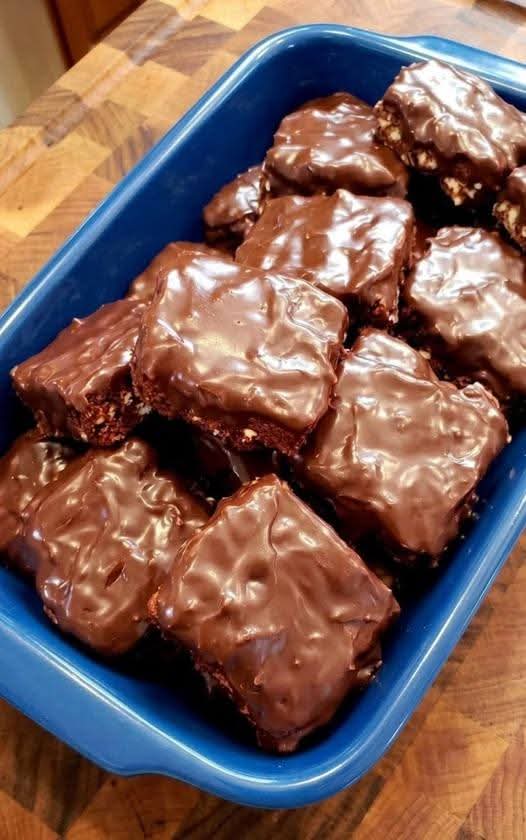
If a classic, crackly-topped brownie and a glossy, snappable chocolate shell had the most irresistible love child, it would be these Chocolate Covered Brownie Bars. They’re everything you want in a dessert: incredibly fudgy, deeply chocolatey, and wrapped in a thin, glossy layer of melted chocolate that crackles when you bite and gives way to the dense, chewy brownie beneath. Each bar is the perfect intersection of two beloved treats—part brownie, part chocolate bar, and entirely unforgettable. Whether you’re upgrading a bake sale contribution, building a holiday cookie box, or simply treating yourself to a midnight fridge raid, these brownie bars deliver a double dose of chocolate in the most elegant, handheld form. Bake the brownies, chill them until firm, drench them in melted semi-sweet chocolate, and let them set into a shiny, professional-looking confection. They slice beautifully, keep for days, and are guaranteed to steal the spotlight on any dessert table.
The process is simpler than it looks, yet the result is nothing short of spectacular. You’ll start with a one-bowl brownie batter—the fudgy kind, with melted butter, cocoa powder, and just enough flour to hold it together. That batter is baked in a square pan until the edges are set and the center is just slightly underdone, which ensures a moist, dense crumb. Once the brownie slab has cooled completely, it goes into the refrigerator or freezer to firm up, making it easy to cut into neat rectangles without crumbling. The magic happens when each brownie bar is dipped into melted chocolate—semi-sweet, dark, or even white—and placed on a parchment-lined tray to set. The chocolate coating adds a satisfying snap, an extra layer of richness, and a beautiful, glossy finish. A sprinkle of flaky sea salt, chopped nuts, or a drizzle of contrasting chocolate turns them into a bakery-worthy treat that tastes as good as it looks. And because the brownies are already baked, the dipping and decorating can be done at your leisure, making these bars a fantastic make-ahead dessert. They’re perfect for gifting, for satisfying a serious chocolate craving, or for impressing guests with minimal effort. Once you taste that first snappy, fudgy bite, you’ll never look at plain brownies the same way again.
In this comprehensive guide, we’ll walk through every detail of creating the perfect chocolate-covered brownie bars: the secrets to the fudgiest brownie base, how to achieve a flawless tempered-like chocolate coating without any special equipment, creative decorating ideas, and all the tips for storing, gifting, and serving. Whether you’re a lifelong brownie devotee or new to the world of chocolate-dipped confections, this recipe is straightforward, endlessly customizable, and destined to become a treasured favorite. Let’s preheat the oven and get ready to make something truly special.
Why You’ll Love These Chocolate Covered Brownie Bars
Twice the chocolate, twice the indulgence. A rich, fudgy brownie base is already a near-perfect dessert. Enrobing it in a thin layer of melted chocolate takes it to a whole new level of decadence. The contrast between the soft, dense brownie and the firm, snappy chocolate shell is a textural masterpiece. Every bite starts with a satisfying crackle, followed by the intense, chewy brownie—it’s the best of a chocolate bar and a bakery brownie in one.
Beautiful, professional-looking results with zero fancy skills. There’s something undeniably elegant about a chocolate-dipped confection. These bars look like they came from a high-end chocolate shop, yet they require no tempering, no special molds, and no candy-making expertise. Simply melt the chocolate, dip the chilled brownie bars, and let them set. The glossy finish and clean edges make them a stunning addition to any dessert platter, and they’re guaranteed to impress your friends and family.
Make-ahead friendly and perfect for gifting. Brownie bars can be made days in advance and stored in the refrigerator. The chocolate coating keeps the brownies fresh and moist, and they actually improve in texture after a day or two. They’re sturdy, portable, and pack beautifully in boxes or bags for edible gifts. Whether you’re preparing for a holiday cookie exchange, a birthday party, or just stocking the freezer for emergencies, these bars are the answer.
Endlessly customizable with toppings and flavors. Once you’ve mastered the basic brownie and chocolate coating, the variations are limitless. Use dark chocolate for a sophisticated, less-sweet finish. Use white chocolate for a snowy look, then drizzle with dark chocolate for a striking contrast. Sprinkle the wet chocolate with crushed candy canes, toasted nuts, freeze-dried raspberries, flaky sea salt, or colorful sprinkles to suit any season or celebration. You can even infuse the brownie batter with peppermint extract, espresso powder, or orange zest. These bars are a canvas for your creativity.
Ingredient Deep Dive: The Fudgy Brownie and Chocolate Coating
Understanding each component ensures the brownies are perfectly fudgy and the chocolate coating is smooth and snappy. Let’s break it all down.
For the Brownie Base
Unsalted Butter: Half a cup (1 stick) of melted unsalted butter provides the rich, moist foundation. Melting the butter (rather than just softening it) creates a denser, fudgier brownie, which is exactly what we want for a bar that will hold its shape when dipped. You can also brown the butter for an incredible nutty depth, but plain melted butter is classic and delicious. Using unsalted allows you to control the salt level. If you only have salted butter, reduce the added salt by a pinch.
Granulated Sugar: One cup of white sugar sweetens the brownies and contributes to the shiny, crackly top that’s the hallmark of a great brownie. The sugar is dissolved into the hot melted butter, which helps create that signature crust. Do not reduce the sugar significantly, as it also provides structure. For a deeper flavor, you can replace up to half of the granulated sugar with packed brown sugar, but the crackly top may be less pronounced. The sugar is what creates the glossy, paper-thin crust that cracks when you cut into it.
Eggs: Two large eggs, at room temperature, provide structure and richness. They’re beaten into the butter-sugar mixture until the batter is thick and glossy. The eggs are what help create that shiny top; the more you beat them with the sugar, the shinier the crust will be. Room-temperature eggs incorporate more easily and create a more even texture. Beat them for a full minute or two to dissolve the sugar and incorporate air.
Cocoa Powder: Half a cup of unsweetened natural cocoa powder (not Dutch-process) gives the brownies their deep, classic chocolate flavor. Natural cocoa is slightly acidic, which reacts with the eggs and sugar to create that shiny crust. If you use Dutch-process cocoa, the brownies will be darker and have a mellower, less sharp chocolate taste, and the shiny top may be less pronounced. Both work, but natural cocoa is the traditional choice for that iconic brownie appearance. Sift the cocoa if it’s lumpy to ensure a smooth batter.
All-Purpose Flour: Just half a cup of flour is all you need for a fudgy, dense brownie. Using more flour would make the brownies cakey, which isn’t ideal for dipping. The flour is stirred in gently, just until combined, to avoid developing gluten. Measure carefully by spooning it into the measuring cup and leveling it off. For a gluten-free version, a 1:1 gluten-free flour blend works well here; the brownies will be slightly more crumbly but still delicious.
Vanilla Extract and Salt: One teaspoon of pure vanilla extract enhances the chocolate flavor and adds a warm, aromatic note. A half teaspoon of salt balances the sweetness and makes the chocolate taste more intense. A tiny pinch of espresso powder (optional) can be added to deepen the chocolate flavor without making the brownies taste like coffee. This is a baker’s trick that works beautifully.
For the Chocolate Coating
Semi-Sweet or Dark Chocolate: Eight to ten ounces of high-quality semi-sweet chocolate chips or chopped chocolate bars form the glossy coating. Semi-sweet (around 55–60% cacao) is the classic choice, offering a balanced sweetness that complements the brownie. Dark chocolate (60–72% cacao) creates a more sophisticated, less-sweet finish. Milk chocolate is sweeter and creamier, great for kids or for a milder chocolate experience. You can also use white chocolate for a snowy, decorative look. The chocolate should be real, good-quality chocolate for the best melting and snap. Melting wafers or candy melts can also be used for a foolproof coating that doesn’t require tempering and sets with a shine, but real chocolate tastes superior. If using real chocolate and you want a firm, glossy snap without tempering, you can add 1 teaspoon of coconut oil or vegetable shortening to the chocolate as it melts; this thins it slightly and helps it set with a shine, though it may be slightly softer at room temperature.
Coconut Oil or Shortening (Optional): One teaspoon of refined coconut oil or vegetable shortening can be added to the melting chocolate. This thins the chocolate, making it easier to dip and resulting in a thinner, snappier shell. It also helps the chocolate set with a glossy sheen and remain stable at room temperature. This is optional but recommended for the smoothest coating. Do not use butter, as it contains water and can cause the chocolate to seize. If you’re using high-quality melting wafers, you don’t need any added oil; they’re designed to melt and coat perfectly on their own.
Toppings (Optional): After dipping, while the chocolate is still wet, you can sprinkle with flaky sea salt, chopped toasted nuts (pecans, almonds, walnuts), crushed candy canes, freeze-dried raspberry powder, or colorful sprinkles. These add visual appeal and another layer of flavor and texture. For drizzling, reserve a few tablespoons of melted chocolate (or use a contrasting color), let it cool slightly, and drizzle it over the dipped bars with a fork or piping bag. The toppings should be added before the chocolate sets so they adhere properly. This is where you can get creative and make the bars uniquely yours.
Step-by-Step: From Batter to Beautiful Bars
Follow these detailed steps for brownies that are perfectly fudgy and bars that are elegantly enrobed in chocolate.
Step 1: Preheat and Prepare the Pan
Preheat your oven to 350°F (175°C). Line an 8×8-inch square baking pan with parchment paper, leaving a little overhang on two opposite sides for easy lifting. Lightly grease the parchment with butter or nonstick spray. An 8×8 pan yields a thicker brownie, which is perfect for cutting into bars. You can also use a 9×9-inch pan; the brownies will be slightly thinner and bake a bit faster. The parchment sling will make it easy to lift the entire brownie slab out of the pan.
Step 2: Make the Brownie Batter
In a large microwave-safe bowl, melt the butter in 30-second bursts until completely liquid. Alternatively, melt it in a saucepan over low heat. While the butter is still hot, whisk in the sugar and cocoa powder. The heat helps dissolve the sugar and bloom the cocoa, creating a deeper chocolate flavor. The mixture will be thick and grainy. Let it cool for a minute or two until it’s just warm, not hot. Beat in the eggs, one at a time, beating vigorously after each addition until the batter is thick and glossy. Stir in the vanilla extract and salt. Add the flour and fold it in gently with a spatula just until no streaks remain. Do not overmix. The batter should be thick and smooth. Pour it into the prepared pan and spread it evenly to the corners.
Step 3: Bake and Cool
Bake the brownies in the preheated oven for 22–28 minutes. The exact time will depend on your pan size and how fudgy you like your brownies. For the fudgiest result, bake until a toothpick inserted in the center comes out with a few moist crumbs attached—not wet batter, but not completely dry. The edges should be set and pulling away slightly from the sides. Avoid overbaking; the brownies will continue to set as they cool. Remove the pan from the oven and place it on a wire rack to cool completely. This will take about 1–2 hours at room temperature. Do not rush this step—if the brownies are warm, the chocolate coating will melt and slide off. For even cleaner cuts and easier dipping, once the brownies are room temperature, place the pan in the refrigerator for at least 1 hour, or in the freezer for 30 minutes. Cold brownies are much easier to cut into neat bars.
Step 4: Cut into Bars
Use the parchment overhang to lift the entire brownie slab out of the pan and place it on a cutting board. Using a sharp chef’s knife, trim a very thin slice off all four edges to create clean, straight sides (save the scraps for snacking!). Then cut the slab into bars. For classic brownie bars, cut 4 rows by 4 rows to make 16 squares, or cut longer rectangles, about 2 inches by 1 inch. The size is up to you; just make them small enough to handle and dip easily. Wipe the knife clean between cuts for the neatest edges. Place the cut brownie bars on a parchment-lined baking sheet and return them to the refrigerator or freezer to keep them very cold while you prepare the chocolate coating. Cold bars dip more cleanly and the chocolate sets faster.
Step 5: Melt the Chocolate Coating
Place the chocolate chips (or chopped chocolate) and the optional coconut oil in a microwave-safe bowl. Microwave in 30-second bursts, stirring thoroughly between each, until the chocolate is completely melted and smooth. This usually takes 1–2 minutes total. Be careful not to overheat, which can cause the chocolate to seize. Alternatively, melt the chocolate in a double boiler over barely simmering water, stirring until smooth. Let the melted chocolate cool for a minute or two so it’s not piping hot, but still fluid. It should be glossy and pourable. Transfer the chocolate to a small, deep bowl that’s wide enough to dip the bars easily. A bowl with a small diameter but deep sides works better than a wide, shallow dish, as it allows you to fully submerge the bar without needing a large volume of chocolate.
Step 6: Dip the Brownie Bars
Remove the cold brownie bars from the fridge or freezer. Working one at a time, drop a bar into the melted chocolate. Use a fork to submerge it, then lift it out, letting the excess chocolate drip back into the bowl. Gently tap the fork against the side of the bowl to remove any drips, and use a toothpick or a second fork to slide the coated bar off the fork and onto a parchment-lined baking sheet. You can dip the entire bar for full coverage, or dip just the top and sides, leaving the bottom uncoated if you prefer. Full coverage gives a more elegant, bonbon-like result. If the chocolate in the bowl starts to thicken as it cools, you can reheat it gently in the microwave for 10–15 seconds. While the chocolate is still wet, sprinkle with your desired toppings. Repeat with all the bars. If you’re drizzling with a contrasting chocolate, dip all the bars first, let them set, then drizzle with the contrasting melted chocolate using a fork or piping bag. Place the baking sheet of dipped bars in the refrigerator for 15–20 minutes, or at room temperature for about 1 hour, until the chocolate coating is completely set and firm to the touch. The refrigerator speeds up the process and gives a nice, snappy finish.
Step 7: Serve and Enjoy
Once the chocolate is fully set, the bars are ready to serve. Arrange them on a platter, with the different toppings facing up for a beautiful display. They can be served chilled (which gives a firmer brownie and a very crisp chocolate shell) or at room temperature (which yields a slightly softer brownie and a creamy chocolate mouthfeel). Both are wonderful. Store any leftovers as directed below. Prepare for them to disappear quickly—these brownie bars are dangerously easy to eat.
Pro Tips for Perfectly Fudgy Brownies and a Snappy Coating
- Chill the brownies thoroughly before cutting and dipping. Warm brownies are soft, sticky, and will crumble when you try to cut them. Cold brownies are firm, cut cleanly, and are much easier to handle. They also help the chocolate coating set quickly, resulting in a thicker, more even shell. You can freeze the brownie slab for 30 minutes or refrigerate it for at least 1 hour. The colder the brownies, the better the result.
- Don’t overbake the brownies. The brownie base should be fudgy and moist, not dry and cakey. Overbaked brownies will be crumbly and won’t hold together well during dipping. Bake until a toothpick comes out with moist crumbs, not clean. The residual heat will finish cooking them as they cool. If your brownies seem too crumbly even after chilling, they were likely overbaked. You can still dip them, but handle them very gently and consider using two forks to lower them into the chocolate to minimize breakage. For future batches, shave a few minutes off the bake time.
- Use the right chocolate and add a little oil for the best coating. If you want a beautiful, glossy finish that stays shiny at room temperature, chocolate melting wafers or candy melts are the easiest option—they’re designed to set with a shine and don’t require tempering. If you’re using real chocolate, adding a teaspoon of coconut oil or vegetable shortening helps it melt thinner, coat more evenly, and set with a slight gloss. Real chocolate may develop a slight bloom (white streaks) if not tempered, but it will still taste delicious. For the smoothest coating, make sure the chocolate is completely melted and stir it well before dipping.
- Work efficiently but carefully when dipping. If you take too long, the chocolate can start to set, and the brownies can warm up. Set up your workstation with everything you need: melted chocolate in a bowl, a fork for dipping, a baking sheet lined with parchment, and any toppings opened and ready. Dip one bar at a time, tap off the excess, and place it on the sheet. If the chocolate in the bowl gets too thick, microwave it for 10 seconds. If the brownies start to soften too much, return them to the freezer for a few minutes between batches.
- Experiment with toppings for every season. A sprinkle of flaky sea salt is always elegant. For the holidays, use crushed candy canes, festive sprinkles, or a drizzle of white chocolate. For a nutty twist, top with toasted almonds or hazelnuts. Freeze-dried raspberries or strawberries add a tart, fruity crunch and a pop of color. Toasted coconut and a drizzle of dark chocolate make a beautiful combination. Have fun and let your creativity run wild.
Flavor Twists & Decorative Ideas
Once you’ve mastered the basic brownie bar, try these delicious variations to mix things up.
- Peanut Butter Swirl Brownie Bars: Before baking the brownies, drop spoonfuls of creamy peanut butter over the batter and swirl with a knife. Proceed with baking and dipping as directed. The peanut butter adds a salty, creamy layer that pairs beautifully with the chocolate coating. For an extra peanutty finish, sprinkle chopped peanuts on the wet chocolate.
- Mint Chocolate Brownie Bars: Add ½ teaspoon of pure peppermint extract to the brownie batter along with the vanilla. After dipping in dark chocolate, sprinkle with crushed candy canes or drizzle with white chocolate. The cool mint flavor is refreshing and perfect for the holidays. Use a few drops of green food coloring in the batter if you want a festive green hue.
- Raspberry Dark Chocolate Bars: Fold ½ cup of fresh raspberries (or freeze-dried raspberries) into the brownie batter before baking. Be gentle, as fresh berries will bleed slightly and create pockets of jammy goodness. Dip in dark chocolate and top with crushed freeze-dried raspberries for a tart, fruity contrast that’s incredibly elegant.
- Salted Caramel Brownie Bars: Before baking, pour a layer of thick caramel sauce over the brownie batter and swirl it in. Bake as directed. After dipping in milk chocolate, drizzle with more caramel and sprinkle with flaky sea salt. This is over-the-top indulgent and a guaranteed crowd-pleaser. You can also stuff a small caramel square inside each brownie bar before dipping for a gooey caramel center.
- Espresso Dark Chocolate Bars: Add 1 tablespoon of instant espresso powder to the brownie batter along with the cocoa. The coffee intensifies the chocolate flavor dramatically. Dip in dark chocolate (70% cacao) for a sophisticated, adult treat. Sprinkle a tiny bit of espresso powder on the wet chocolate for a beautiful speckled finish.
Serving, Gifting & Presentation
Chocolate-covered brownie bars are a gorgeous addition to any dessert table. Arrange them on a tiered stand or a large platter, grouping different toppings together for visual impact. For gifting, place a few bars in a clear cellophane bag tied with a ribbon, or layer them in a decorative tin with parchment between each layer. They’re sturdy enough to ship, making them a wonderful homemade gift for friends and family who live far away. Include a note with the name of the treat and a list of ingredients, especially if nuts or other allergens are present. For a party, set out a platter with a variety of bars—some dark chocolate, some white, some with nuts, some with sprinkles—and let guests choose their favorites. They’re equally welcome at a casual coffee date as they are at a formal celebration. Pair them with a cold glass of milk, a hot espresso, or a dessert wine for an elevated tasting experience. The bars can also be served slightly chilled on a warm day for a refreshing treat that won’t melt in your hand.
Storage, Freezing & Make-Ahead
Make-Ahead: These bars are ideal for making ahead. The brownie base can be baked, cooled, and cut up to 2 days in advance. Store the cut bars in an airtight container in the refrigerator. When ready to dip, simply melt the chocolate and coat the cold bars. You can also dip the bars up to a week before serving; just keep them refrigerated. The chocolate coating will stay glossy and snappy. This makes them perfect for holiday baking sessions—spread the work over a couple of days to avoid stress.
Storing: Store the finished chocolate-covered brownie bars in an airtight container in the refrigerator. They will keep for up to 2 weeks. The chocolate coating protects the brownies from drying out, so they stay incredibly moist and fudgy. For the best flavor and texture, remove them from the fridge about 10–15 minutes before serving to take the chill off, though many people enjoy them cold as well. If your kitchen is cool (below 70°F), they can also be stored at room temperature for about 3–4 days, but the refrigerator extends their shelf life and keeps the chocolate firm.
Freezing: These bars freeze beautifully. Place the fully set, dipped bars in a single layer on a parchment-lined baking sheet and freeze until solid. Then transfer them to a freezer-safe bag or container with parchment between layers. They will keep for up to 3 months. Thaw in the refrigerator overnight, or at room temperature for about an hour. The chocolate coating may develop a slight condensation as it comes to room temperature, but it will still taste wonderful. You can also enjoy them straight from the freezer for a firmer, ice-cream-like brownie bite. Freezing is a fantastic way to get ahead for the holidays or to always have a stash of treats on hand for unexpected guests.
Want the full truth and the practical next steps?
Page 2 continues with the real explanation, the key details many readers skip, and the simple takeaways that make this guide more useful.