
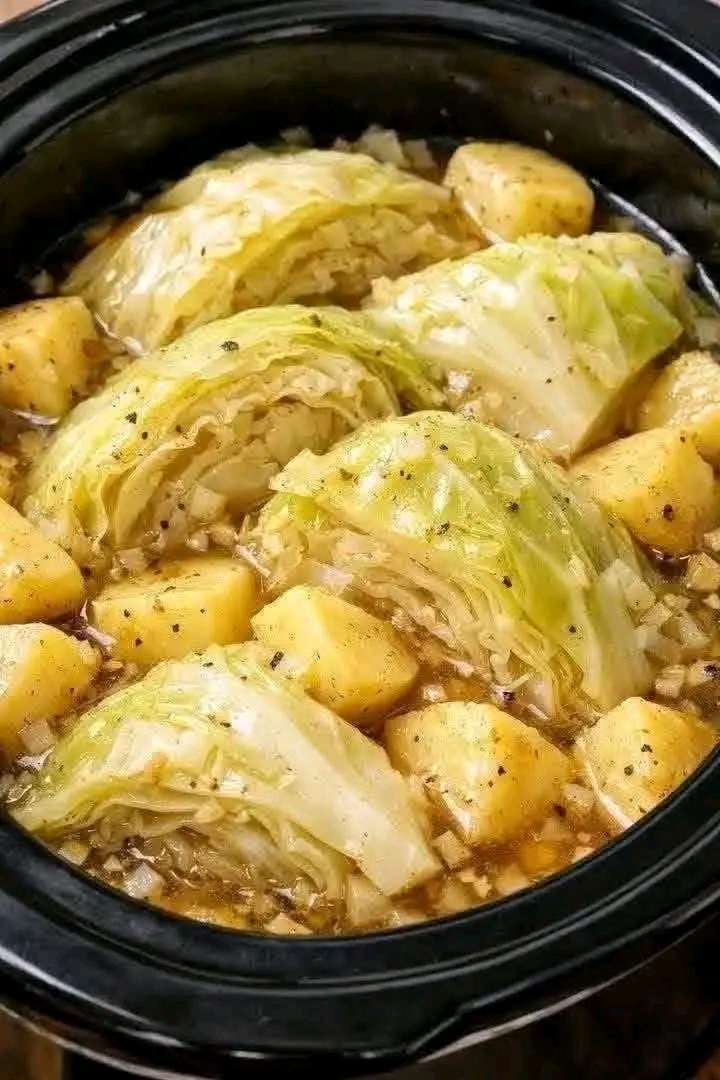
This Slow Cooker Cabbage and Potato Stew is warm, hearty, affordable, and filled with tender potatoes, soft cabbage, carrots, onions, garlic, and savory broth. It is the kind of simple comfort-food meal that requires only a few minutes of preparation before the slow cooker handles the rest.
The potatoes become creamy and tender as they cook, while the cabbage softens and absorbs the flavor of the broth, herbs, garlic, and vegetables. A small amount of tomato paste adds color and depth without turning the stew into a heavy tomato soup.
This easy cabbage stew is perfect for busy weeknights, cold-weather dinners, Sunday meals, meal prep, grocery-budget cooking, and days when you want a filling dinner made with basic pantry ingredients.
The recipe is naturally meatless when prepared with vegetable broth, but it can easily be customized with smoked sausage, bacon, ham, chicken, ground beef, or white beans. It can also be made vegan, gluten-free, or dairy-free with very little adjustment.
Serve the stew with crusty bread, cornbread, dinner rolls, grilled cheese, or a simple green salad. The leftovers taste even better after the vegetables have had more time to absorb the seasoned broth.
Why You Will Love This Cabbage and Potato Stew
This recipe uses inexpensive ingredients that are easy to find throughout the year. Cabbage, potatoes, carrots, onions, and broth can create a large slow cooker full of food without requiring costly meat or specialty products.
It is also extremely easy to prepare. The vegetables are chopped, added to the slow cooker, covered with seasoned broth, and cooked until tender.
The slow cooker allows the flavors to develop gradually. The cabbage becomes sweet and soft, the potatoes release some starch into the broth, and the garlic and herbs create a savory homemade taste.
Another advantage is flexibility. You can keep the stew light and brothy, mash some of the potatoes for a thicker texture, add cream for richness, or include beans or sausage for additional protein.
The recipe is also useful for meal prep because it reheats well. Divide the cooled stew among airtight food storage containers for convenient lunches or dinners throughout the week.
What Is Cabbage and Potato Stew?
Cabbage and potato stew is a rustic vegetable dish made by simmering cabbage and potatoes in broth with onions, garlic, herbs, and other vegetables.
Similar combinations appear in many traditional cuisines because cabbage and potatoes are inexpensive, filling, and easy to store.
Some versions include tomatoes, milk, cream, bacon, sausage, ham, or beans. Others remain completely plant-based.
This slow cooker version uses a savory broth base with carrots, celery, tomato paste, thyme, and paprika. It produces a hearty but flexible stew that can be served as a main dish or side.
Ingredients for Slow Cooker Cabbage and Potato Stew
- 1 small head green cabbage, approximately 1 1/2 to 2 pounds
- 2 pounds potatoes, peeled or scrubbed and cut into chunks
- 3 medium carrots, peeled and sliced
- 2 celery stalks, sliced
- 1 medium yellow onion, diced
- 3 cloves garlic, minced
- 6 cups vegetable or chicken broth
- 2 tablespoons tomato paste
- 1 teaspoon dried thyme
- 1 teaspoon smoked or sweet paprika
- 1 teaspoon onion powder
- 1/2 teaspoon garlic powder
- 1 teaspoon salt, or to taste
- 1/2 teaspoon black pepper
- 1 bay leaf
- 1 tablespoon olive oil or butter, optional
Optional Finishing Ingredients
- Fresh parsley
- Fresh dill
- Lemon juice
- Apple cider vinegar
- Red pepper flakes
- Grated Parmesan cheese
- Sour cream
Ingredient Notes
Green Cabbage
Green cabbage is the best all-purpose choice for this stew. It becomes tender and mildly sweet without completely disappearing into the broth.
Choose a cabbage that feels heavy and firm, with tightly packed leaves.
Remove damaged outer leaves before chopping.
Potatoes
Yukon Gold potatoes create a creamy texture and hold their shape reasonably well.
Russet potatoes release more starch and naturally thicken the broth, but they may break apart more easily.
Red potatoes remain firm and are a good choice when you prefer clearly defined potato pieces.
Carrots
Carrots add sweetness, color, and texture.
Slice them into pieces of similar thickness so they cook evenly.
Celery
Celery adds savory flavor and helps create a classic soup base.
It can be omitted when unavailable.
Onion and Garlic
Onion adds natural sweetness, while garlic gives the broth a deeper savory flavor.
Fresh garlic is recommended, but garlic powder can be used in a pinch.
Broth
Vegetable broth keeps the recipe vegetarian or vegan.
Chicken broth creates a richer flavor.
Use low-sodium broth when possible so you can adjust the salt near the end.
Tomato Paste
Tomato paste adds color and depth without creating a strongly tomato-flavored stew.
It can be omitted for a lighter, clearer broth.
Thyme
Thyme pairs naturally with cabbage, potatoes, carrots, chicken, sausage, and beans.
Italian seasoning can be substituted.
Paprika
Sweet paprika adds color and mild flavor.
Smoked paprika gives the stew a deeper flavor similar to bacon or smoked sausage.
Bay Leaf
Bay leaf adds subtle depth during slow cooking.
Remove it before serving.
Best Potatoes for Slow Cooker Stew
Yukon Gold Potatoes
Yukon Gold potatoes are creamy, buttery, and dependable. They soften without becoming completely mushy.
Russet Potatoes
Russets make the broth thicker because they release more starch.
Cut them into larger chunks to reduce the chance of complete breakdown.
Red Potatoes
Red potatoes retain their shape well and are ideal when you prefer a firmer texture.
Baby Potatoes
Small potatoes can be halved or quartered and usually do not need peeling.
Kitchen Equipment
You will need a six-quart slow cooker, sharp knife, cutting board, vegetable peeler, measuring cups, measuring spoons, wooden spoon, and ladle.
A potato masher can be used to thicken the stew near the end.
A wide spoon or silicone spatula is useful for stirring without breaking too many potatoes.
How to Prepare the Cabbage
Step 1: Remove the Outer Leaves
Peel away any damaged, wilted, or dirty outer leaves.
Step 2: Cut the Cabbage
Place the cabbage on a sturdy cutting board.
Cut it in half through the core, then cut each half into quarters.
Step 3: Remove the Core
Cut away the thick triangular core from each quarter.
Step 4: Chop the Leaves
Cut the cabbage into pieces approximately one to two inches wide.
Avoid chopping it too finely because small pieces can become overly soft during long slow cooking.
How to Make Slow Cooker Cabbage and Potato Stew
Step 1: Prepare the Vegetables
Chop the cabbage, potatoes, carrots, celery, onion, and garlic.
Cut the potatoes into pieces approximately one-and-a-half inches wide.
Keeping the pieces similar in size helps them cook evenly.
Step 2: Add the Firm Vegetables
Place the potatoes, carrots, celery, onion, and garlic in the bottom of the slow cooker.
The firmer vegetables benefit from being closer to the heat source.
Step 3: Add the Cabbage
Place the chopped cabbage over the other vegetables.
The slow cooker may look very full at first, but the cabbage shrinks significantly as it cooks.
Step 4: Prepare the Broth Mixture
In a bowl or measuring jug, combine the broth, tomato paste, thyme, paprika, onion powder, garlic powder, salt, and black pepper.
Whisk until the tomato paste is mostly dissolved.
Step 5: Add the Liquid
Pour the broth mixture over the vegetables.
Add the bay leaf and optional olive oil or butter.
The vegetables do not need to be completely submerged. They release additional moisture during cooking.
Step 6: Cover and Cook
Place the lid on the slow cooker.
Cook on low for approximately six to eight hours, or on high for three to four hours.
Begin checking at the lower end of the cooking range.
Step 7: Check the Potatoes
Insert a fork into one of the largest potato pieces.
The stew is ready when the potatoes are tender and the cabbage is soft.
If the potatoes remain firm, continue cooking in 20- to 30-minute intervals.
Step 8: Remove the Bay Leaf
Locate and discard the bay leaf before serving.
Step 9: Adjust the Seasoning
Taste the broth and add more salt, pepper, paprika, garlic, or herbs as needed.
Step 10: Finish the Stew
Add a small splash of lemon juice or apple cider vinegar to brighten the flavor.
Stir in fresh parsley or dill.
Serve hot.
Slow Cooker Cooking Times
Low Setting
Cook for approximately six to eight hours.
This setting produces tender vegetables and a well-developed broth.
High Setting
Cook for approximately three to four hours.
Check the potatoes carefully because cooking speed varies between slow cooker models.
Why Timing Varies
Cooking time depends on potato variety, vegetable size, slow cooker shape, appliance temperature, and how full the insert is.
Large potato pieces and tightly packed vegetables require more time.
How to Thicken Cabbage and Potato Stew
Mash Some of the Potatoes
Use a potato masher to crush several potato pieces directly in the slow cooker.
Stir gently. The released starch thickens the broth naturally.
Blend a Small Portion
Transfer one or two cups of vegetables and broth to a blender.
Blend until smooth, then return the mixture to the slow cooker.
Use caution when blending hot liquid.
Use a Cornstarch Slurry
Mix two tablespoons of cornstarch with two tablespoons of cold water.
Stir it into the hot stew and cook on high for approximately 15 to 20 minutes.
Add Cream
Stir in heavy cream, half-and-half, or a dairy-free cooking cream near the end.
This makes the stew richer but does not thicken it as strongly as mashed potatoes or cornstarch.
How to Keep the Potatoes from Becoming Mushy
Use Yukon Gold or red potatoes.
Cut the potatoes into large, even chunks.
Place them near the bottom of the slow cooker.
Begin checking at the lower end of the cooking range.
Avoid leaving the stew on warm for several hours after the potatoes are tender.
Stir gently and only when necessary.
How to Keep the Cabbage from Becoming Too Soft
Cut the cabbage into larger pieces.
Add it during the final two to three hours when you prefer more texture.
Use green cabbage rather than delicate Napa cabbage.
Do not cook longer than necessary after the potatoes are tender.
Keep in mind that traditional cabbage stew is usually soft and comforting rather than crisp.
How to Prevent Bland Cabbage Stew
Use a flavorful broth.
Add enough salt, but adjust gradually.
Include garlic, onion, thyme, paprika, and black pepper.
Add tomato paste for deeper flavor.
Finish with lemon juice or vinegar to brighten the broth.
Fresh herbs added after cooking also improve the final flavor.
Parmesan, sour cream, bacon, sausage, or hot sauce can provide additional richness.
Tips for the Best Slow Cooker Cabbage and Potato Stew
Cut the potatoes into large, even chunks.
Place firmer vegetables near the bottom.
Do not worry when the slow cooker looks full of cabbage.
Use low-sodium broth and adjust seasoning near the end.
Keep the lid closed during cooking.
Test the largest potato piece before serving.
Remove the bay leaf.
Add acidity at the end for a fresher flavor.
Mash several potatoes when you prefer a thicker broth.
Easy Cabbage and Potato Stew Variations
Smoked Sausage Cabbage Stew
Add one pound of sliced smoked sausage or kielbasa.
Place it near the bottom with the potatoes.
Reduce added salt because sausage can be salty.
Ham and Cabbage Stew
Add two cups of diced cooked ham.
A ham bone can also be added for extra flavor and removed before serving.
Bacon Cabbage Stew
Cook bacon separately until crisp.
Add part during the final hour and reserve the rest for garnish.
Chicken Cabbage Stew
Add boneless chicken thighs to the slow cooker.
Remove and shred them once fully cooked, then return the meat to the stew.
Ground Beef Cabbage Stew
Brown one pound of ground beef, drain it, and add it with the vegetables.
White Bean Cabbage Stew
Add two cans of drained and rinsed cannellini or great northern beans during the final hour.
Chickpea Cabbage Stew
Add drained chickpeas for a filling plant-based variation.
Tomato Cabbage and Potato Stew
Add one can of diced tomatoes and reduce the broth slightly.
Creamy Cabbage Potato Stew
Stir in one cup of heavy cream, half-and-half, or dairy-free cooking cream during the final 20 minutes.
Cheesy Potato Cabbage Stew
Stir in shredded cheddar after the potatoes are tender.
Add the cheese gradually over low heat.
Spicy Cabbage Stew
Add cayenne, crushed red pepper, hot sauce, Cajun seasoning, or diced jalapeño.
Irish-Inspired Cabbage Stew
Use potatoes, cabbage, carrots, leeks, thyme, and chicken broth.
Add cooked bacon or ham when desired.
Polish-Inspired Cabbage Stew
Add kielbasa, caraway seed, smoked paprika, and a small amount of mustard.
Italian Cabbage Stew
Add diced tomatoes, white beans, Italian seasoning, and Parmesan.
Can You Add Raw Sausage?
Raw sausage can be cooked in the slow cooker when handled safely, but browning it first improves flavor and removes excess grease.
Ground or loose sausage should be browned and crumbled before adding.
Whole sausages should reach a safe internal temperature appropriate for their ingredients.
Fully cooked smoked sausage is the easiest option.
Can You Add Beans?
Yes. White beans, kidney beans, chickpeas, or butter beans make the stew more filling.
Use canned beans that have been drained and rinsed.
Add them during the final hour so they warm without breaking apart.
Dried beans require separate preparation and should not be added without a safe tested method.
Can You Use Red Cabbage?
Yes. Red cabbage gives the stew a deeper color and slightly stronger flavor.
It may color the potatoes and broth purple.
A little apple cider vinegar works especially well with red cabbage.
Can You Use Sweet Potatoes?
Yes. Replace some or all of the regular potatoes with sweet potatoes.
Sweet potatoes soften faster, so cut them into larger chunks and begin checking early.
Smoked paprika, thyme, sausage, beans, and kale pair well with sweet potatoes.
Can You Make It Vegan?
Use vegetable broth and olive oil.
Omit dairy, bacon, sausage, ham, and chicken.
Add white beans, chickpeas, lentils, or plant-based sausage when desired.
Finish with nutritional yeast, fresh herbs, lemon, or dairy-free sour cream.
Can You Make It Gluten-Free?
The basic recipe is naturally gluten-free when the broth, spices, tomato paste, and optional additions do not contain gluten.
Check sausage, bacon, ham, broth, spice blends, and sauces for gluten or cross-contact warnings.
Can You Make It Dairy-Free?
Use olive oil instead of butter.
Do not add cream, sour cream, or Parmesan.
A dairy-free cooking cream or unsweetened plant milk can be added near the end when you want a creamy texture.
Can You Prepare the Vegetables Ahead?
The cabbage, carrots, celery, and onion can be chopped one day ahead and refrigerated in airtight containers.
Potatoes should be cut closer to cooking time because they can darken.
If necessary, store cut potatoes covered with cold water in the refrigerator for several hours, then drain them thoroughly before use.
The broth and seasoning mixture can also be prepared in advance.
What to Serve with Cabbage and Potato Stew
Crusty Bread
Rustic bread is ideal for soaking up the flavorful broth.
Cornbread
Warm cornbread adds sweetness and makes the meal more filling.
Dinner Rolls
Soft buttered rolls are an easy family-friendly side.
Grilled Cheese
A grilled cheese sandwich turns the vegetable stew into a hearty comfort-food meal.
Green Salad
A crisp salad with vinaigrette adds freshness and contrast.
Roast Chicken
Serve the stew as a side beside roasted or baked chicken.
Sausage
Grilled or pan-seared sausage pairs naturally with cabbage and potatoes.
Pork Chops
The mild stew works well with savory pork chops.
How to Turn the Stew into a Complete Meal
Add beans, lentils, sausage, chicken, ham, or ground beef.
Serve it with bread and a salad.
Top each bowl with sour cream, Parmesan, cheddar, or chopped bacon.
Add cooked barley, rice, or quinoa near the end.
Serve with a poached or fried egg for a simple lunch.
How to Store Leftovers
Allow the stew to cool slightly.
Transfer it to airtight food storage containers.
Refrigerate within two hours.
Store for up to four days.
The broth becomes slightly thicker during storage because the potatoes continue releasing starch.
How to Reheat Cabbage and Potato Stew
Stovetop Method
Place the stew in a saucepan.
Add a small amount of broth or water when it has thickened.
Warm over medium-low heat, stirring gently.
Microwave Method
Place one portion in a microwave-safe bowl.
Cover loosely and heat in short intervals.
Stir between intervals and allow the stew to rest briefly before eating.
Slow Cooker Method
A larger amount can be reheated on low or warm until hot throughout.
Do not keep reheated stew warm for an extended period.
Can You Freeze Cabbage and Potato Stew?
The stew can be frozen, but potatoes may become softer or slightly grainy after thawing.
Allow the stew to cool completely.
Transfer it to freezer-safe containers, leaving space for expansion.
Freeze for up to two months.
Thaw overnight in the refrigerator.
Reheat gently and add fresh broth when necessary.
For better freezer texture, prepare the stew without potatoes, freeze it, and add freshly cooked potatoes after thawing.
Meal-Prep Ideas
Divide the cooled stew into individual containers.
Store bread or crackers separately so they remain dry.
Add beans or shredded chicken to some portions for variety.
Keep sour cream, cheese, herbs, or bacon in separate small containers.
Label the containers with the preparation date and refrigerate promptly.
Common Mistakes to Avoid
Do not cut the potatoes too small.
Avoid using too much broth before the vegetables release their moisture.
Do not overcook the potatoes.
Avoid chopping the cabbage too finely.
Do not forget to season the broth.
Avoid lifting the lid repeatedly.
Do not leave the bay leaf in the finished stew.
Avoid freezing large amounts without considering the change in potato texture.
Frequently Asked Questions
How Long Does Cabbage and Potato Stew Cook?
Cook for six to eight hours on low or three to four hours on high.
What Potatoes Are Best?
Yukon Gold potatoes offer the best balance of creaminess and structure.
Can I Leave the Potato Skins On?
Yes. Scrub thin-skinned potatoes thoroughly before cutting.
Can I Add Sausage?
Yes. Smoked sausage, kielbasa, or browned Italian sausage all work well.
Can I Add Chicken?
Yes. Boneless chicken thighs are a good slow cooker option.
Can I Add Beans?
Yes. Add drained canned beans during the final hour.
Why Are My Potatoes Still Hard?
The pieces may be too large, the slow cooker may be overfilled, or the appliance may cook gently.
Why Is My Cabbage Too Soft?
It may have been chopped too finely or cooked too long.
Why Is My Stew Bland?
It may need additional salt, garlic, herbs, paprika, broth, or a splash of lemon or vinegar.
How Can I Thicken It?
Mash some potatoes, blend a small portion, or add a cornstarch slurry.
Can I Make It Creamy?
Yes. Add cream, half-and-half, sour cream, or a dairy-free alternative near the end.
Can I Make It Vegan?
Yes. Use vegetable broth and olive oil and add beans for extra substance.
Can I Make It Gluten-Free?
Yes, provided all packaged ingredients are gluten-free.
How Long Does It Keep?
Store it in the refrigerator for up to four days.
Can It Be Frozen?
Yes, but the potatoes may become softer after thawing.
How Many People Does It Serve?
The recipe serves approximately six to eight people.
Food Safety and Allergy Notes
Wash the cabbage, potatoes, carrots, celery, and herbs thoroughly.
Use a stable cutting board and a sharp knife.
Keep raw meat separate from vegetables when adding chicken, beef, or sausage.
Cook meat to an appropriate safe internal temperature.
Use caution when removing the slow cooker lid because hot steam can escape.
Refrigerate leftovers within two hours.
Review broth, sausage, bacon, ham, dairy alternatives, seasonings, and sauces for allergens.
Why This Recipe Is Great for Families
Cabbage and potatoes are affordable and widely available.
The recipe makes a large amount of food with minimal preparation.
The flavor is mild enough for children and easy to adjust for adults.
It can be vegetarian or customized with different proteins.
Leftovers reheat well for lunches and busy evenings.
The slow cooker frees the stovetop and oven for other dishes.
Printable Slow Cooker Cabbage and Potato Stew Recipe
Slow Cooker Cabbage and Potato Stew
Prep Time: 20 minutes
Cook Time: 6 to 8 hours on low
Total Time: Approximately 8 hours 20 minutes
Yield: 6 to 8 servings
Category: Soup or stew
Cooking Method: Slow cooker
Cuisine: Homestyle comfort food
Ingredients
- 1 small head green cabbage, chopped
- 2 pounds potatoes, cut into large chunks
- 3 medium carrots, sliced
- 2 celery stalks, sliced
- 1 medium yellow onion, diced
- 3 cloves garlic, minced
- 6 cups vegetable or chicken broth
- 2 tablespoons tomato paste
- 1 teaspoon dried thyme
- 1 teaspoon smoked or sweet paprika
- 1 teaspoon onion powder
- 1/2 teaspoon garlic powder
- 1 teaspoon salt, or to taste
- 1/2 teaspoon black pepper
- 1 bay leaf
- 1 tablespoon olive oil or butter, optional
- Fresh parsley, dill, lemon juice, or vinegar for finishing, optional
Instructions
- Remove damaged outer leaves from the cabbage.
- Cut out the core and chop the cabbage into one- to two-inch pieces.
- Cut the potatoes into large, even chunks.
- Place the potatoes, carrots, celery, onion, and garlic in the slow cooker.
- Add the chopped cabbage over the other vegetables.
- Combine the broth, tomato paste, thyme, paprika, onion powder, garlic powder, salt, and pepper.
- Pour the broth mixture over the vegetables.
- Add the bay leaf and optional olive oil or butter.
- Cover and cook on low for six to eight hours or on high for three to four hours.
- Begin checking the potatoes near the lower end of the cooking range.
- The stew is ready when the largest potato pieces are tender.
- Remove and discard the bay leaf.
- Taste and adjust the seasoning.
- For thicker stew, mash several potato pieces and stir gently.
- Finish with parsley, dill, lemon juice, or apple cider vinegar.
- Serve hot with bread, cornbread, or rolls.
Storage
Store leftovers in airtight containers in the refrigerator for up to four days.
Reheating
Reheat gently on the stovetop or in the microwave with additional broth when necessary.
Freezing
Freeze cooled stew for up to two months. The potatoes may become softer after thawing.
Important Tip
Cut the potatoes into large pieces and check them early to prevent them from becoming mushy.
Final Thoughts
This Slow Cooker Cabbage and Potato Stew turns simple vegetables into a warm, satisfying meal with very little hands-on work.
Cabbage, potatoes, carrots, celery, onion, and garlic cook slowly in a seasoned broth until tender and flavorful.
The potatoes provide substance and naturally thicken the broth, while the cabbage adds mild sweetness and comforting texture.
Customize the stew with smoked sausage, ham, bacon, chicken, ground beef, white beans, chickpeas, tomatoes, cream, cheddar, or spicy seasonings.
For the best result, cut the potatoes into large even chunks, keep the lid closed, test the largest potato before serving, and finish the stew with fresh herbs or a small amount of acidity.
Serve it with crusty bread, cornbread, grilled cheese, dinner rolls, salad, roasted meat, or sausage.
With affordable ingredients, flexible variations, easy meal-prep storage, and comforting slow-cooked flavor, Cabbage and Potato Stew is a dependable family recipe for cold evenings, busy weekdays, and relaxed weekend meals.