
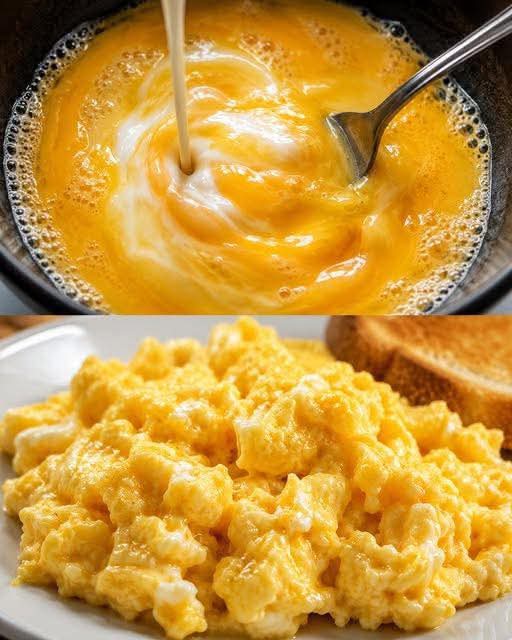
Delicious Variations (Same Scrambled Egg Base)
Once you master the basic scrambled egg, try these fun twists. These scrambled egg variations will keep your breakfasts exciting.
1. Cheesy Scrambled Eggs
During the last 30 seconds of cooking, sprinkle ¼ cup of shredded cheddar, Monterey Jack, or goat cheese over the eggs. Fold gently to melt. This is a cheesy scrambled eggs recipe that is irresistible.
2. Herbed Scrambled Eggs
Add 1 tablespoon of fresh chopped chives, parsley, or dill at the end. The fresh herbs add brightness and color. This is a herb scrambled eggs perfect for brunch.
3. Mushroom and Onion Scrambled Eggs
Sauté ½ cup of sliced mushrooms and ¼ cup of diced onion in the skillet before adding the eggs. Remove the vegetables, cook the eggs, then fold them back in. The umami flavor is wonderful.
Add a handful of fresh spinach (about 1 cup) during the last minute of cooking, letting it wilt. Fold in 2 tablespoons of crumbled feta cheese. This is a Greek scrambled eggs dish.
5. Smoked Salmon and Cream Cheese Scrambled Eggs
After cooking, fold in 2 tablespoons of cream cheese and 2 ounces of chopped smoked salmon. Top with fresh dill. This is an elegant lox scrambled eggs perfect for brunch.
Add ¼ cup of diced bell peppers, 2 tablespoons of chopped jalapeños, and ¼ cup of pepper jack cheese. Serve with salsa and avocado. This is a southwest scrambled eggs dish.
7. Keto / Low‑Carb Scrambled Eggs
Use heavy cream instead of milk. Add extra butter and cheese. Serve with avocado and bacon. This keto scrambled eggs recipe is high in fat and protein.
For a plant‑based version, crumble firm tofu and cook with turmeric, black salt (kala namak), and nutritional yeast. The texture is similar to scrambled eggs. This is a vegan scrambled eggs alternative.
How to Store, Reheat, and Meal Prep
Refrigerator
Store leftover scrambled eggs in an airtight container for up to 3 days. They will lose some texture but are still safe to eat. Reheat gently.
Freezer
Scrambled eggs do not freeze well – they become watery and rubbery upon thawing. Make fresh for best results.
Meal Prep for the Week
You can meal prep scrambled eggs by cooking them slightly underdone, then reheating quickly in the microwave or skillet. For best results, add a splash of milk or cream before reheating. However, scrambled eggs are best fresh.
Reheating Best Practices
Skillet: Reheat over low heat, adding a splash of milk or butter to restore creaminess. Microwave: Heat in 15‑second bursts, stirring between, until warm. Do not overheat – they will become rubbery.
What to Serve with Scrambled Eggs
Toast, English muffin, or bagel – Classic pairing.
Bacon, sausage, or ham – Protein‑packed breakfast.
Avocado or guacamole – Creamy contrast.
Sautéed mushrooms or roasted tomatoes – Adds depth.
Fresh fruit or fruit salad – Sweet contrast.
Hot sauce or salsa – For a spicy kick.
Hash browns or home fries – A hearty breakfast plate.
Frequently Asked Questions
How many eggs per person?
Typically 2‑3 eggs per person for a main breakfast. For a side or for kids, 1‑2 eggs is plenty.
Why are my scrambled eggs watery?
Watery eggs usually come from overcooking, which squeezes out moisture, or from adding too much milk. Also, if you salt the eggs too early, salt can draw out water. Cook just until set and avoid high heat.
What is the best pan for scrambled eggs?
A non‑stick skillet is best. It prevents sticking and allows you to use less butter or oil. An 8‑10 inch pan is perfect for 4 eggs.
Can I use oil instead of butter?
Yes, but butter adds better flavor. If using oil, choose a neutral oil like avocado or canola. Olive oil can be used but adds a distinct taste.
How do I make scrambled eggs in the microwave?
Whisk 2 eggs with a splash of milk in a microwave‑safe mug. Microwave for 30 seconds, stir, then microwave for 15‑20 seconds more until set. This is a microwave scrambled eggs method for when you are in a rush.
How many calories are in scrambled eggs?
Two large eggs (without add‑ins) contain approximately 140‑160 calories, 10g fat, 2g carbohydrates, and 12g protein. Adding milk, butter, or cheese increases calories. This is a low calorie high protein breakfast.
Can I make scrambled eggs without milk?
Absolutely. Many people prefer eggs without milk – they are still delicious and fluffy. Use a little water for extra fluffiness, or just cook the eggs as is.
The Science Behind Perfect Scrambled Eggs
Eggs are made of proteins (ovalbumin, ovotransferrin, etc.) that coagulate when heated. Gentle, low heat allows the proteins to form tender, soft curds. High heat causes the proteins to bond tightly, squeezing out water and resulting in dry, rubbery eggs. Adding fat (butter, milk, cream) coats the proteins, slowing coagulation and keeping the eggs tender. Stirring technique also matters: constant stirring (French style) creates small, creamy curds; less stirring (American style) creates larger, fluffier curds. This egg cooking science is the key to mastering scrambled eggs.
Why You Should Master Scrambled Eggs
Scrambled eggs are one of the first things many people learn to cook, but they are also one of the easiest to mess up. Mastering this simple dish will boost your confidence in the kitchen and give you a go‑to meal for any time of day. With the techniques in this guide, you will be able to make eggs that are creamy, fluffy, and flavorful – better than any diner. This how to make fluffy scrambled eggs guide is a fundamental cooking skill that will serve you for life.
So crack those eggs, heat that skillet, and get ready to make the best scrambled eggs of your life.
Final Thoughts
Scrambled eggs are a timeless classic, but they are also a canvas for creativity. Whether you like them soft and custardy (French style) or fluffy and pillowy (American style), the techniques in this guide will help you achieve perfection every time. With a few simple adjustments – low heat, gentle stirring, and knowing when to stop – you can transform a humble egg into a restaurant‑worthy meal. This truly is the best scrambled eggs recipe for beginners and pros alike.
So go ahead – make them today. Serve them on toast, with a side of bacon, or all on their own. And enjoy every creamy, fluffy, golden bite.
Have you tried these scrambled egg techniques? What’s your favorite add‑in – cheese, herbs, or smoked salmon? Share your photos and tips in the comments below. And if this guide helped you master scrambled eggs, save it for later or send it to a friend who needs breakfast help.