
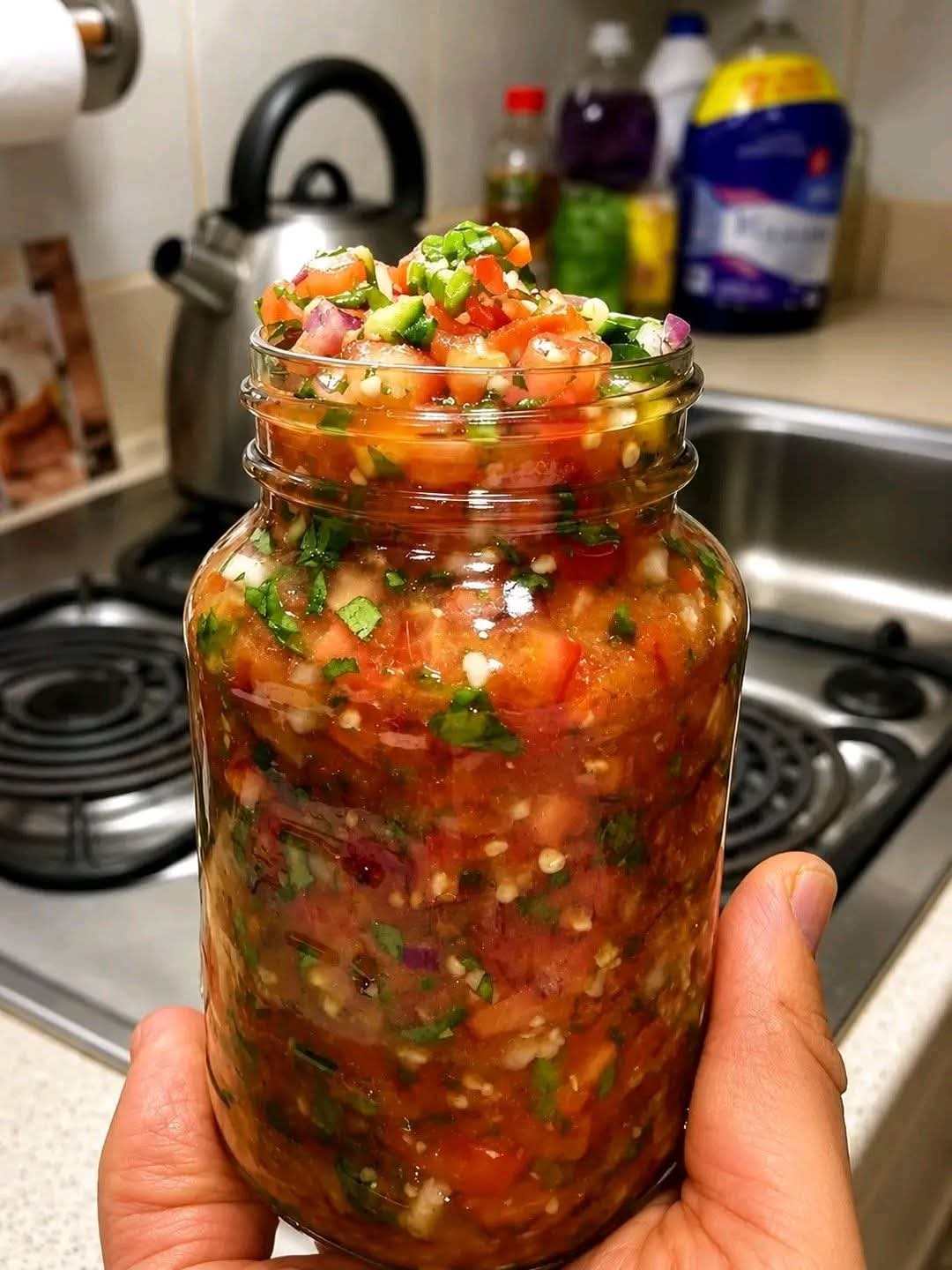
Nutritional Information
Approximate values per ½‑cup serving:
- Calories: 25
- Carbohydrates: 5g
- Protein: 1g
- Fat: 0g
- Fiber: 1.5g
- Sugar: 3g
- Sodium: 150mg
Adding avocado or olive oil will increase the fat and calorie content.
Frequently Asked Questions
Q: Can I use a different type of tomato?
A: Yes. Roma tomatoes are ideal, but you can use vine‑ripened, cherry, or heirloom tomatoes. Just make sure they’re ripe and flavorful.
Q: How do I make pico de gallo less watery?
A: Remove the seeds and inner pulp from the tomatoes before dicing. Also, let the pico de gallo rest and drain off any excess liquid before serving.
Q: Can I make pico de gallo without cilantro?
A: Yes. If you’re not a fan of cilantro, you can omit it or substitute with flat‑leaf parsley. The flavor will be different but still delicious.
Q: How long does pico de gallo last in the fridge?
A: Pico de gallo will last for up to 2 days in the refrigerator. The flavors will meld and deepen, but the tomatoes will soften over time.
Q: Can I add garlic to pico de gallo?
A: Yes. A clove of minced garlic adds a wonderful depth of flavor. Add it with the other ingredients.
Q: Can I use lime juice from a bottle?
A: Fresh lime juice is essential for the best flavor. Bottled lime juice has a different, often metallic taste that will affect the final result.
Q: How do I make pico de gallo spicier?
A: Leave the seeds in the jalapeño, use serrano peppers instead, or add a dash of cayenne or hot sauce.
Q: Can I make pico de gallo ahead of time?
A: Yes. Pico de gallo is best made 1–2 hours ahead to allow the flavors to meld. It will keep for up to 2 days in the refrigerator.
The Tradition of Fresh Salsa
Fresh salsa has been a cornerstone of Mexican cuisine for centuries. The combination of tomatoes, chiles, and herbs dates back to the Aztecs, who used a similar mixture to flavor their meals. The word “salsa” simply means “sauce” in Spanish, and it encompasses a wide variety of preparations – both cooked and raw. Pico de gallo, or salsa fresca, is one of the simplest and most beloved versions.
In Mexico, pico de gallo is often served as a condiment alongside tacos, grilled meats, and seafood. It’s also a key component of dishes like ceviche and is used as a topping for tostadas. The beauty of pico de gallo is its versatility – it’s equally at home on a taco, in a burrito, or as a dip for chips.
By making pico de gallo at home, you’re participating in a rich culinary tradition that spans generations. It’s a reminder that the best food is often the simplest – fresh ingredients, expertly combined, and shared with the people you love.
Final Thoughts
Pico de Gallo is the salsa that delivers on every level. It’s fresh, vibrant, and bursting with flavor – the kind of condiment that elevates any dish. With just a handful of simple ingredients and a few minutes of prep, you can create a salsa that’s far superior to anything you’ll find in a jar.
Whether you’re making it for taco night, a summer barbecue, or simply because you’re craving something fresh and zesty, this recipe is a guaranteed winner. It’s proof that you don’t need complicated techniques or exotic ingredients to create something truly delicious. Sometimes, the simplest recipes – made with fresh ingredients and a little bit of love – are the most satisfying.
So grab your tomatoes, cilantro, and limes, and get ready to make a salsa that will become a staple in your kitchen. This Pico de Gallo is about to become a family favorite – and once you try it, you’ll never go back to store‑bought salsa again.