
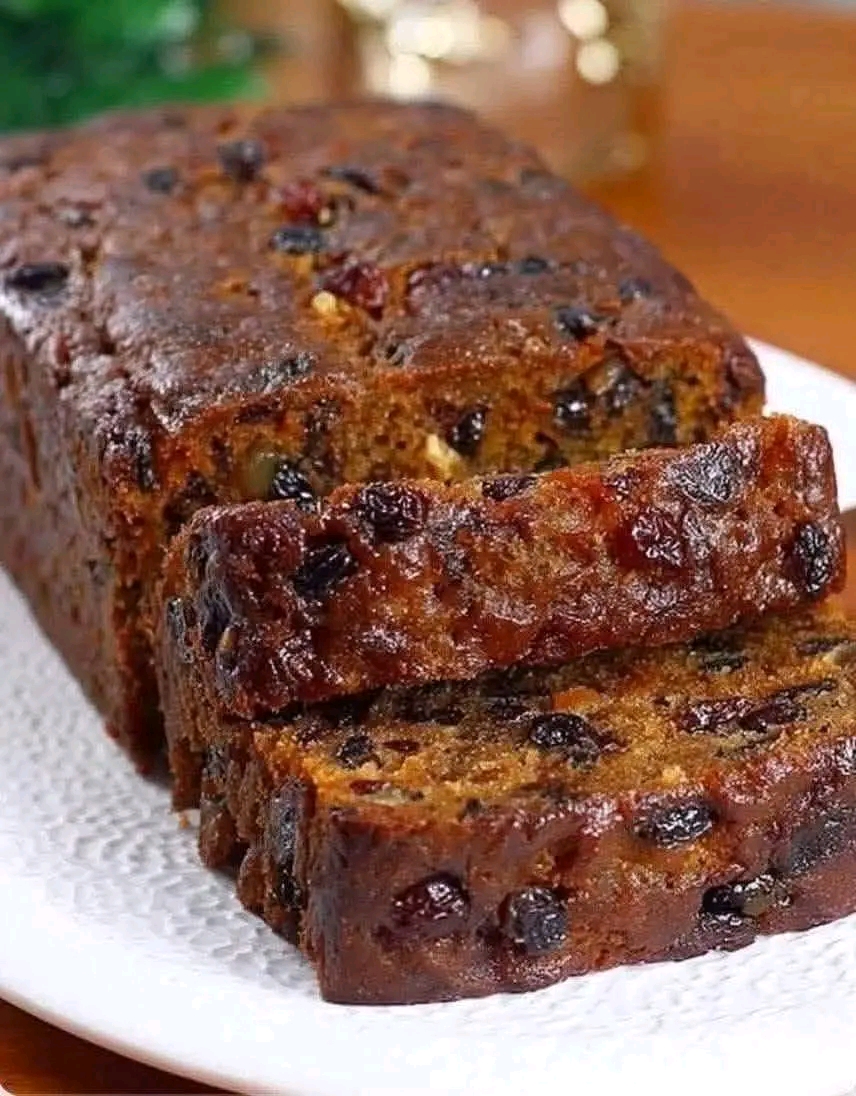
This Moist Apple Raisin Loaf is dense, tender, buttery, and packed with finely grated apples and plump raisins in every slice. The apples release their natural juice into the batter as the loaf bakes, creating a soft, melt-in-your-mouth crumb and a dark, slightly sticky crust.
The recipe uses simple baking ingredients, including apples, eggs, milk, flour, brown sugar, butter, baking powder, and raisins. There is no complicated mixer technique, yeast, or long rising period. Everything is folded together in one large bowl and baked in a standard loaf pan.
Soaking the raisins before adding them prevents them from becoming dry and chewy inside the loaf. It also gives the finished bread the full, fruit-packed appearance of a traditional homemade apple raisin cake.
This easy apple loaf is perfect for breakfast, brunch, afternoon coffee, lunchbox treats, bake sales, potlucks, fall baking, holiday mornings, and simple family desserts. It tastes delicious at room temperature, lightly warmed, or spread with butter.
The loaf becomes even more flavorful after resting overnight. The moisture from the grated apples continues moving through the crumb, making the second and third day especially soft and rich.
Why You Will Love This Apple Raisin Loaf
This recipe has a rich fruit flavor without requiring applesauce, apple pie filling, or artificial flavoring. Freshly grated apples provide sweetness, moisture, and texture naturally.
The loaf is also easy to prepare. There is no need to cream butter and sugar or beat egg whites separately. The wet ingredients are whisked together, the dry ingredients are folded in, and the raisins are added at the end.
Brown sugar gives the loaf a deeper caramel flavor and helps create the dark, glossy exterior. Whole milk and melted butter make the crumb soft and tender.
Another advantage is that this loaf stores extremely well. Many quick breads begin drying after the first day, but this apple loaf often becomes softer after resting in an airtight container.
The recipe can also be customized. Add cinnamon, nutmeg, walnuts, pecans, orange zest, vanilla, cranberries, or a simple glaze. You can prepare it with butter for richer flavor or neutral oil for an especially moist texture.
It is also practical for meal planning because the loaf can be baked ahead, sliced, frozen, and reheated one portion at a time.
What Makes This Apple Loaf So Moist?
The moisture comes from several ingredients working together. Finely grated apples release juice throughout the batter, whole milk provides additional liquid, eggs add richness and structure, and melted butter or oil coats the flour particles and keeps the crumb tender.
Brown sugar also attracts and retains moisture more effectively than granulated sugar. This helps the loaf stay soft during storage.
The apples should not be squeezed dry. Their juice is part of the recipe and acts as a natural sweetener and tenderizer.
The loaf must also be baked fully and cooled completely. Slicing it while hot releases steam and can make the center seem gummy. Cooling allows the starches and proteins to set while trapping moisture inside.
Ingredients for Moist Apple Raisin Loaf
- 3 large apples, peeled, cored, and finely grated
- 3 large eggs, beaten
- 1 cup whole milk
- 2 cups all-purpose flour
- 2 teaspoons baking powder
- 1/2 teaspoon salt
- 1/2 cup melted unsalted butter or neutral oil
- 1 cup raisins or sultanas
- 3/4 cup packed brown sugar
- 1 teaspoon ground cinnamon, optional
- 1 teaspoon vanilla extract, optional
Optional Glossy Topping
- 1 tablespoon melted butter
- 1 tablespoon brown sugar
Ingredient Notes
Apples
Use firm, flavorful apples that grate easily and hold up well during baking. Granny Smith, Honeycrisp, Pink Lady, Braeburn, Fuji, Gala, and Jonagold are all good choices.
Granny Smith apples create a more tart loaf, while Honeycrisp, Fuji, and Gala produce a sweeter result. Combining one tart variety with one sweet variety gives the best balance.
Peel the apples for a smoother crumb. The skins are edible, but they can create chewy strands in the finished loaf.
Grate the apples finely using the large or medium holes of a box grater. Do not drain or squeeze out the juice.
Eggs
Three large eggs provide structure and help the loaf remain sliceable despite the high moisture content.
Beat them before adding so the yolks and whites distribute evenly through the batter.
Whole Milk
Whole milk adds richness and helps create a tender crumb.
Reduced-fat milk can be used, but the loaf may taste slightly less rich. Buttermilk creates a tangier flavor and may make the crumb softer.
All-Purpose Flour
All-purpose flour provides the structure needed to hold the apples and raisins.
Measure the flour carefully. Too much flour makes the loaf dry, while too little can create a center that does not set.
Spoon the flour into the measuring cup and level it rather than scooping directly from the bag.
Baking Powder
Baking powder gives the loaf enough lift without making it light and airy. The finished texture should remain moist and substantial.
Make sure the baking powder is fresh. Old leavening may cause the loaf to rise poorly.
Butter or Oil
Melted butter gives the loaf a rich, traditional flavor. Neutral oil creates a softer crumb that stays moist longer.
Canola, vegetable, sunflower, or mild avocado oil can be used.
Allow melted butter to cool slightly before mixing it with the eggs.
Brown Sugar
Brown sugar adds caramel flavor, sweetness, and moisture.
Light brown sugar produces a mild flavor, while dark brown sugar creates a deeper molasses note and darker crust.
A brown sugar substitute can be used, but the color, sweetness, moisture, and texture may change depending on the product.
Raisins or Sultanas
Raisins add chewy sweetness and give the loaf its fruit-packed appearance.
Sultanas are usually softer and lighter in color, while traditional raisins have a deeper flavor.
Soaking them in hot water before baking keeps them plump and helps prevent them from drawing moisture out of the loaf.
Cinnamon
Cinnamon is optional but highly recommended. It complements the apples and brown sugar without overpowering the loaf.
Nutmeg, cardamom, or apple pie spice can also be used in small amounts.
Best Apples for Apple Raisin Bread
Granny Smith
Granny Smith apples are tart and firm. They balance the brown sugar and raisins and prevent the loaf from tasting overly sweet.
Honeycrisp
Honeycrisp apples are juicy, sweet, and aromatic. They make the loaf especially moist.
Pink Lady
Pink Lady apples offer a balanced sweet-tart flavor and hold up well during baking.
Braeburn
Braeburn apples have natural spice notes that work beautifully with cinnamon and raisins.
Fuji or Gala
Fuji and Gala apples are sweet and easy to find. Reduce the sugar slightly when using very sweet fruit.
Using a Blend
For the best flavor, combine tart and sweet apples. One Granny Smith with two Honeycrisp or Gala apples creates excellent balance.
Kitchen Equipment
You will need a 9-by-5-inch loaf pan, parchment paper, large mixing bowl, medium bowl, box grater, whisk, silicone spatula, measuring cups, measuring spoons, fine-mesh strainer, and wire cooling rack.
A digital kitchen scale can improve measurement accuracy, especially for flour and grated apples.
A long wooden skewer is useful for testing the center because a standard toothpick may not reach deeply enough into a tall loaf.
How to Make Moist Apple Raisin Loaf
Step 1: Preheat the Oven
Preheat the oven to 350°F.
Position a rack near the center of the oven.
Grease a 9-by-5-inch loaf pan and line it with parchment paper, leaving enough overhang on two sides to lift the loaf later.
Step 2: Soak the Raisins
Place the raisins in a small heatproof bowl.
Cover them with hot water and allow them to soak for approximately 10 minutes.
This softens and plumps the raisins so they remain tender inside the loaf.
Drain them in a fine-mesh strainer and pat them completely dry with paper towels or a clean kitchen towel.
Wet raisins can thin the batter and may sink during baking.
Step 3: Prepare the Apples
Peel and core the apples.
Grate them finely into a bowl.
Keep all of the natural juice released during grating. Do not squeeze the apples dry.
Break apart any long strands so the fruit distributes evenly through the batter.
Step 4: Combine the Wet Ingredients
Place the grated apples and their juice in a large mixing bowl.
Add the beaten eggs, whole milk, melted butter or oil, brown sugar, and optional vanilla.
Whisk until the eggs are fully incorporated and the brown sugar is mostly dissolved.
The mixture may look loose and slightly uneven because of the grated apple. This is normal.
Step 5: Combine the Dry Ingredients
In a separate bowl, whisk together the flour, baking powder, salt, and optional cinnamon.
Sifting is helpful when the flour or baking powder contains lumps.
Step 6: Add the Dry Ingredients
Add the dry mixture to the wet ingredients.
Use a silicone spatula to fold gently from the bottom of the bowl upward.
Stop mixing as soon as no obvious dry flour remains.
Do not beat the batter. Overmixing develops gluten and can make the loaf tough.
Step 7: Fold in the Raisins
Add the drained and dried raisins.
Fold them into the batter only until evenly distributed.
The batter should be thick, moist, and filled with visible apple and raisins.
Step 8: Fill the Loaf Pan
Transfer the batter to the prepared loaf pan.
Spread it evenly and smooth the top with a spatula.
Tap the pan gently on the counter once or twice to remove large air pockets.
Step 9: Bake
Bake for approximately 45 to 55 minutes.
Begin checking near 45 minutes.
The loaf is ready when the top is deeply golden, the center springs back lightly, and a toothpick or wooden skewer inserted into the middle comes out clean or with a few moist crumbs.
Wet batter on the tester means the loaf needs more time.
Step 10: Protect the Top if Needed
When the crust becomes dark before the center is finished, cover the top loosely with aluminum foil.
Continue baking until the center is fully set.
Step 11: Add the Glossy Finish
For a darker, shinier crust, brush the hot loaf lightly with one tablespoon of melted butter.
Sprinkle one tablespoon of brown sugar over the surface.
The heat from the loaf melts the sugar slightly and creates a glossy, sticky finish.
Step 12: Cool in the Pan
Allow the loaf to cool in the pan for approximately 15 minutes.
This gives the structure time to firm without trapping too much steam.
Step 13: Remove from the Pan
Use the parchment handles to lift the loaf carefully from the pan.
Place it on a wire cooling rack.
Step 14: Cool Completely
Allow the loaf to cool completely before slicing.
This cooling period is essential. The starches and proteins continue setting as the temperature drops, trapping the apple juice and milk inside the crumb.
Cutting too early can cause the center to compress, crumble, or appear gummy.
The Crucial Cooling Trick
A fruit-heavy loaf continues cooking internally after it leaves the oven. Steam moves through the crumb, moisture redistributes, and the structure becomes firmer.
When the loaf is sliced while hot, that steam escapes rapidly and the delicate interior may collapse.
Cooling completely allows the flour starches to absorb moisture evenly. This creates the dense, buttery, melt-in-your-mouth texture that makes the loaf special.
For the cleanest slices, wait at least two hours. For an even richer flavor and softer crumb, wrap the cooled loaf and slice it the following day.
How to Keep the Raisins from Sinking
Soak the raisins briefly, but dry them completely afterward.
Wet raisins add surface moisture and can slide toward the bottom.
The batter should be thick enough to support the fruit.
Do not add extra milk unless absolutely necessary.
You can toss the dried raisins with one tablespoon of flour before folding them into the batter.
Use small or medium raisins rather than very large pieces.
Distribute them evenly with only a few gentle folds.
How to Avoid a Gummy Center
Measure the grated apples after preparation and use large apples of an average size rather than extremely oversized fruit.
Do not add extra milk or apple juice.
Measure flour accurately.
Bake until a tester inserted into the true center does not show wet batter.
Cover the top with foil when needed so the center can finish cooking without burning the crust.
Cool the loaf completely before cutting.
Use the correct loaf pan size. A smaller pan creates a deeper loaf that needs more baking time.
How to Get a Dark, Glossy Crust
Use dark brown sugar for deeper caramel color.
Bake until the top is fully browned and the center is cooked.
Do not remove the loaf only because the surface looks finished.
Brush the hot top with melted butter.
Sprinkle a thin layer of brown sugar over the butter.
Allow the loaf to cool uncovered until the topping sets.
A small amount of honey or warm apricot preserves can also be brushed over the surface, although this adds another flavor.
Tips for the Best Apple Raisin Loaf
Use fresh, firm apples with good flavor.
Grate the apples finely and keep their natural juice.
Soak the raisins for 10 minutes and dry them completely.
Measure the flour carefully.
Use room-temperature eggs and milk when possible.
Allow melted butter to cool before mixing.
Fold the batter gently and stop as soon as the flour disappears.
Do not overfill the loaf pan.
Test the center with a long skewer.
Cool completely before slicing.
Easy Apple Raisin Loaf Variations
Apple Cinnamon Raisin Loaf
Use one-and-a-half teaspoons of cinnamon and add a small pinch of nutmeg.
Apple Walnut Loaf
Add one-half cup of chopped toasted walnuts with the raisins.
Apple Pecan Loaf
Fold in chopped pecans and sprinkle a few over the top before baking.
Apple Cranberry Loaf
Replace half of the raisins with dried cranberries.
Apple Date Loaf
Replace the raisins with finely chopped dates.
Dates create a sweeter, stickier crumb.
Orange Apple Raisin Loaf
Add one tablespoon of finely grated orange zest.
Soak the raisins in warm orange juice instead of water.
Lemon Apple Loaf
Add lemon zest and replace the cinnamon with vanilla.
Finish with a light lemon glaze.
Maple Apple Loaf
Replace part of the brown sugar with maple sugar or add maple extract.
Do not add a large amount of maple syrup without reducing the milk.
Apple Caramel Loaf
Drizzle cooled slices with caramel sauce.
Add flaky sea salt for a salted caramel variation.
Apple Spice Loaf
Use cinnamon, nutmeg, ginger, and allspice for a stronger autumn flavor.
Apple Coconut Loaf
Add one-half cup of shredded coconut with the raisins.
The coconut adds chewiness and extra sweetness.
Apple Chocolate Chip Loaf
Replace half of the raisins with semisweet chocolate chips.
Can You Use Oil Instead of Butter?
Yes. Neutral oil works very well in this recipe.
Oil keeps the crumb soft because it remains liquid at room temperature.
Butter gives the loaf a richer flavor and slightly firmer texture.
Use the same quantity of oil as melted butter.
For balanced flavor and moisture, use one-quarter cup melted butter and one-quarter cup neutral oil.
Can You Use a Sugar Substitute?
A brown sugar substitute can be used, but the final loaf may be lighter in color and slightly less moist.
Some sugar substitutes are measured cup for cup, while others are much sweeter. Follow the manufacturer’s conversion instructions.
Brown sugar contributes more than sweetness. It also affects moisture, browning, and texture.
When replacing all of it, expect the crust and crumb to differ from the traditional version.
Can You Use Baking Soda and Vinegar?
Yes. Replace the two teaspoons of baking powder with one teaspoon of baking soda and one teaspoon of vinegar.
Add the baking soda to the dry ingredients.
Add the vinegar to the wet ingredients shortly before combining the batter.
Bake immediately after mixing because the reaction begins as soon as the ingredients meet.
The flavor and rise may differ slightly from the baking powder version.
Can You Make It Gluten-Free?
Use a reliable cup-for-cup gluten-free all-purpose flour blend.
Choose a blend containing xanthan gum when possible.
Allow the mixed batter to rest for approximately 10 minutes before baking so the gluten-free flour can hydrate.
Check the baking powder, vanilla, raisins, and other packaged ingredients for gluten or cross-contact warnings.
Can You Make It Dairy-Free?
Replace whole milk with unsweetened oat, soy, almond, or another neutral plant-based milk.
Use neutral oil or dairy-free butter in place of regular butter.
Choose unsweetened milk so the loaf does not become overly sweet.
Oat milk generally creates a soft texture, while soy milk provides more protein and structure.
Can You Make It without Eggs?
The three eggs provide important structure for this moist loaf, so replacing all of them changes the texture significantly.
A commercial egg replacer designed for baking is the most reliable option.
Flax eggs may create a denser and more fragile loaf.
When using an egg replacement, consider reducing the milk slightly because some substitutes add extra moisture.
Can You Make Muffins with This Batter?
Yes. Divide the batter among lined muffin cups, filling each approximately three-quarters full.
Bake at 350°F for approximately 20 to 26 minutes.
Check the centers with a toothpick.
Muffins cool more quickly than a full loaf and are convenient for lunchboxes, bake sales, and breakfast meal prep.
Can You Bake It in a Bundt Pan?
A small Bundt pan can be used, but the baking time and release may differ.
Grease and flour every curve thoroughly.
Do not use an oversized pan or the cake may be too shallow.
Allow the baked cake to cool for approximately 15 minutes before turning it out.
How to Serve Apple Raisin Loaf
Serve thick slices at room temperature with coffee, tea, hot chocolate, or cold milk.
Warm individual slices and spread them with salted butter.
Add cream cheese, apple butter, honey, or peanut butter for breakfast.
For dessert, serve the loaf with vanilla ice cream, whipped cream, caramel sauce, or warm custard.
Fresh apple slices, toasted nuts, or a light dusting of powdered sugar can be used for presentation.
How to Store Apple Raisin Loaf
Allow the loaf to cool completely before storing.
Wrap it tightly in plastic wrap or place it in an airtight container.
Store at room temperature for up to five days in a cool kitchen.
The loaf often tastes even better on the second and third day as the apple moisture spreads evenly through the crumb.
When the kitchen is very warm or humid, refrigerate the loaf after two days.
Bring refrigerated slices to room temperature or warm them before serving.
How to Reheat Apple Raisin Loaf
Place one slice on a microwave-safe plate.
Microwave for approximately 10 to 15 seconds.
This softens the crumb and restores the fresh-baked texture.
For oven reheating, wrap several slices loosely in foil and warm at 300°F for approximately eight to ten minutes.
A toaster oven can also be used at a low temperature.
Add butter after warming for an especially rich finish.
Can You Freeze Apple Raisin Loaf?
Yes. This loaf freezes well.
Allow it to cool completely.
Wrap the whole loaf tightly in plastic wrap and aluminum foil, or freeze individual slices.
Place the wrapped portions in a freezer-safe container or bag.
Freeze for up to three months.
Thaw overnight in the refrigerator or for several hours at room temperature.
Warm individual slices briefly before serving.
Make-Ahead Instructions
Bake the loaf one day before serving for the best combination of flavor and sliceability.
Allow it to cool completely, wrap it tightly, and leave it at room temperature overnight.
The raisins can be soaked and dried several hours in advance.
The dry ingredients can be combined the day before and stored in an airtight container.
Do not grate the apples too far ahead because they can oxidize and release additional liquid.
Mix the batter and bake shortly after the apples are grated.
Common Mistakes to Avoid
Do not squeeze the juice from the grated apples.
Avoid adding wet raisins directly from the soaking bowl.
Do not overmeasure the flour.
Avoid mixing the batter aggressively.
Do not use melted butter while it is extremely hot.
Avoid underbaking the center.
Do not remove the loaf only because the top looks dark.
Avoid slicing while the loaf is hot.
Do not store the loaf before it has cooled completely.
Avoid using a loaf pan that is much smaller than 9 by 5 inches without adjusting the baking time.
Frequently Asked Questions
Should I Squeeze the Grated Apples?
No. The apple juice is needed for moisture and sweetness.
Why Did My Raisins Sink?
They may have been too wet, or the batter may have been unusually thin.
Why Is My Loaf Gummy?
It may be underbaked, sliced too early, or prepared with too much liquid.
Why Is My Loaf Dry?
Too much flour, overmixing, or overbaking can create a dry crumb.
Can I Use Sultanas?
Yes. Sultanas are soft, sweet, and work beautifully in this loaf.
Can I Leave Out the Raisins?
Yes. The loaf will still bake, but it will have less sweetness and texture.
Can I Add Nuts?
Yes. Add up to one-half cup of chopped walnuts or pecans.
Can I Use Oil?
Yes. Replace the melted butter with the same amount of neutral oil.
Can I Use Dark Brown Sugar?
Yes. It creates a darker color and deeper molasses flavor.
Can I Reduce the Sugar?
Yes. Reduce it modestly according to the sweetness of the apples and raisins.
Can I Use Plant Milk?
Yes. Use an unsweetened neutral variety.
How Do I Know the Loaf Is Done?
A skewer inserted into the center should come out clean or with a few moist crumbs but no wet batter.
How Long Should It Cool?
Cool for 15 minutes in the pan, then cool completely on a wire rack before slicing.
How Long Does It Keep?
Store it in an airtight container at room temperature for up to five days.
Can It Be Frozen?
Yes. Freeze the whole loaf or individual slices for up to three months.
Can I Double the Recipe?
Yes. Bake the batter in two separate loaf pans rather than one oversized pan.
Food Safety and Allergy Notes
This recipe contains wheat, eggs, and dairy when prepared with the standard ingredients.
Optional walnuts or pecans introduce tree-nut allergens.
Wash the apples thoroughly before peeling and grating.
Do not eat raw batter because uncooked flour and eggs may contain harmful bacteria.
Use clean utensils, bowls, and work surfaces.
Allow the loaf to cool completely before wrapping it.
Review all packaged ingredients when preparing the recipe for someone with food allergies.
Why This Loaf Is Perfect for Fall and Holiday Baking
Apple Raisin Loaf uses familiar seasonal flavors and fills the kitchen with the aroma of baked apples, brown sugar, butter, and cinnamon.
It can be prepared ahead for Thanksgiving morning, Christmas brunch, autumn potlucks, school events, and family gatherings.
The loaf travels well and can be wrapped as a homemade food gift.
It is easy to slice and serve without frosting, plates, or complicated decoration.
Because it stays moist for several days, it is practical for busy holiday schedules.
Serve it beside coffee, tea, fresh fruit, breakfast casseroles, or other holiday pastries.
Printable Moist Apple Raisin Loaf Recipe
Moist Apple Raisin Loaf
Prep Time: 25 minutes
Baking Time: 45 to 55 minutes
Cooling Time: Approximately 2 hours
Total Time: Approximately 3 hours 20 minutes
Yield: 1 standard loaf, approximately 10 slices
Category: Breakfast, snack, or dessert
Cooking Method: Oven baked
Cuisine: Homestyle baking
Ingredients
- 3 large apples, peeled, cored, and finely grated
- 3 large eggs, beaten
- 1 cup whole milk
- 2 cups all-purpose flour
- 2 teaspoons baking powder
- 1/2 teaspoon salt
- 1/2 cup melted unsalted butter or neutral oil
- 1 cup raisins or sultanas
- 3/4 cup packed brown sugar
- 1 teaspoon ground cinnamon, optional
- 1 teaspoon vanilla extract, optional
Optional Glossy Topping
- 1 tablespoon melted butter
- 1 tablespoon brown sugar
Instructions
- Preheat the oven to 350°F.
- Grease and line a 9-by-5-inch loaf pan with parchment paper.
- Place the raisins in a small bowl and cover them with hot water.
- Soak for 10 minutes.
- Drain the raisins and pat them completely dry.
- Peel, core, and finely grate the apples.
- Keep all the juice released by the apples.
- Place the grated apples, beaten eggs, milk, melted butter or oil, brown sugar, and optional vanilla in a large bowl.
- Whisk until well combined.
- In a separate bowl, whisk the flour, baking powder, salt, and optional cinnamon.
- Add the dry ingredients to the wet ingredients.
- Fold gently until no dry flour remains.
- Fold in the drained raisins.
- Transfer the thick batter to the prepared loaf pan.
- Smooth the top.
- Bake for 45 to 55 minutes.
- When the top becomes dark before the center is ready, cover it loosely with foil.
- The loaf is done when a skewer inserted into the center comes out clean or with a few moist crumbs.
- For a glossy top, brush the hot loaf with melted butter and sprinkle it with brown sugar.
- Cool in the pan for 15 minutes.
- Lift the loaf from the pan and place it on a wire rack.
- Cool completely before slicing.
Storage
Store the cooled loaf in an airtight container at room temperature for up to five days.
Reheating
Microwave individual slices for approximately 10 to 15 seconds to restore their soft, fresh-baked texture.
Freezing
Freeze the whole loaf or individual slices in airtight freezer-safe packaging for up to three months.
Important Cooling Tip
Do not slice the loaf while hot. Cooling allows the crumb to set and traps the moisture from the milk and grated apples inside.
Final Thoughts
This Moist Apple Raisin Loaf combines finely grated apples, plump raisins, brown sugar, whole milk, eggs, and butter in one rich homemade quick bread.
The apples provide natural moisture and sweetness, while the soaked raisins create soft, chewy pockets throughout every slice.
Brown sugar gives the loaf a deep caramel flavor and helps form the dark, glossy crust.
The most important steps are keeping the apple juice in the batter, drying the soaked raisins thoroughly, folding gently, baking the center completely, and allowing the loaf to cool before slicing.
Customize the recipe with cinnamon, nutmeg, walnuts, pecans, cranberries, dates, coconut, orange zest, maple flavor, or chocolate chips.
Serve it for breakfast, brunch, afternoon coffee, lunchbox snacks, fall gatherings, bake sales, Thanksgiving morning, or Christmas brunch.
With simple ingredients, dependable moisture, make-ahead convenience, and a tender melt-in-your-mouth crumb, Apple Raisin Loaf is a comforting baking recipe that becomes even better on the second and third day.