
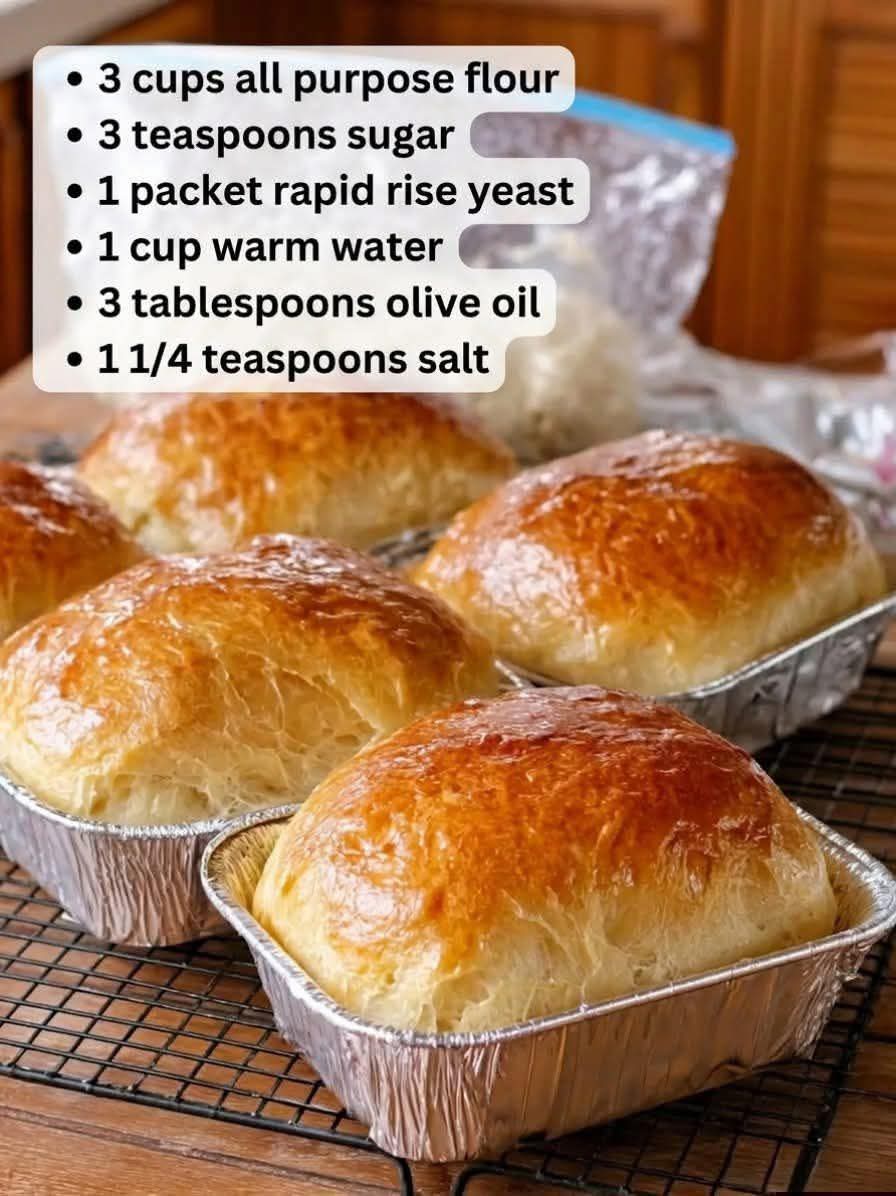
Do you love the smell of fresh bread but dread the cleanup? The flour on the counter, the sticky dough on your hands, the extra bowls and measuring cups? What if you could make soft, golden, homemade bread with almost no mess at all?
That is exactly what this Bread in a Bag recipe delivers. You mix the dough right inside a resealable plastic bag — no bowl, no board, no sticky fingers. Then you let it rise, shape it, bake it, and enjoy the most satisfying loaf of bread you have ever made.
This recipe has become my go‑to for busy weeknights, camping trips, and any time I want homemade bread without turning my kitchen into a flour explosion. With just a few simple ingredients — flour, sugar, yeast, water, olive oil, and salt — you can create a loaf that is soft inside, golden outside, and absolutely irresistible.
In this guide, you will learn the complete bread‑in‑a‑bag recipe, why this method works so well, pro tips for perfect dough, delicious variations, storage advice, and why this has become a family favorite for generations.
Why Bread in a Bag Is a Game‑Changer
Making bread from scratch can feel intimidating. There is kneading, rising, shaping, and the inevitable cloud of flour that settles on every surface. But the bread‑in‑a‑bag method changes everything.
Here is why you will love it:
· No mixing bowl – The bag does all the work.
· No countertop mess – Mix and knead right inside the bag.
· No sticky hands – Your hands stay clean.
· Only 6 simple ingredients – Pantry staples.
· Beginner‑friendly – Perfect for first‑time bakers.
· Kids love it – A fun, hands‑on project.
· Portable – Great for camping or travel.
This method has been around for decades, often used in classrooms and scout troops to teach bread baking. It is foolproof, forgiving, and produces a loaf that tastes like it came from a artisan bakery.
The 6 Simple Ingredients for Homemade Bread in a Bag
This recipe makes one standard loaf (about 1½ pounds). You can easily double it.
Ingredients
· 3 cups all‑purposeark (360g)
· 3 teaspoons granulated sugar (12g)
· 1 packet rapid rise yeast (about 2¼ tsp / 7g)
· 1 cup warm water (110°F / 43°C)
· 3 tablespoons olive oil (45ml)
· 1¼ teaspoons salt (7g)
Equipment
· 1 large (1‑gallon) resealable plastic bag
· Baking sheet or 9×5‑inch loaf pan
· Parchment paper or cooking spray
· Kitchen towel
· Wire cooling rack
Step‑by‑Step Instructions (No Mess, No Stress)
Step 1 – Prepare the Bag
Open a 1‑gallon resealable plastic bag. Set it on the counter with the opening propped open (fold the top edge outward to keep it open).
Step 2 – Add Dry Ingredients
Into the bag, add:
· 3 cups all‑purposeark
· 3 teaspoons sugar
· 1 packet rapid rise yeast
· 1¼ teaspoons salt
Close the bag and shake well to combine the dry ingredients.
Step 3 – Add Wet Ingredients
Open the bag again. Pour in:
· 1 cup warm water (110°F / 43°C – warm but not hot)
· 3 tablespoons olive oil
Step 4 – Mix Inside the Bag
Close the bag securely (remove as much air as possible). Use your hands to squish and knead the bag until the ingredients come together into a sticky dough. This takes about 1–2 minutes. The dough will look shaggy and wet — that is normal.
Step 5 – Knead in the Bag
Continue kneading the dough inside the bag for another 3–5 minutes. The dough will become smoother and more elastic. If the dough feels too sticky, you can add a little more flour (1 tablespoon at a time) and knead again. If too dry, add a teaspoon of warm water.
Pro tip: The plastic bag acts as a barrier, so your hands stay completely clean. This is the magic of the method.
Step 6 – First Rise
Open the bag and shape the dough into a rough ball inside the bag. Close the bag (leave a little air for expansion). Place the bag in a warm, draft‑free spot. Let it rise until doubled in size, about 30–45 minutes.
Step 7 – Shape the Dough
Lightly flour a clean surface (or use a piece of parchment paper). Gently turn the dough out of the bag. Knead it a few times by hand to release air. Shape it into a loaf (round boule or oval batard), or press it into a greased 9×5‑inch loaf pan.
Step 8 – Second Rise
Place the shaped dough on a parchment‑lined baking sheet (or in the loaf pan). Cover loosely with a kitchen towel. Let it rise again until puffy, about 20–30 minutes.
Step 9 – Preheat and Score
Preheat your oven to 375°F (190°C). Just before baking, use a sharp knife to score the top of the loaf (make 3–4 shallow slashes). This allows steam to escape and gives the bread a beautiful artisan look.
Step 10 – Bake
Bake at 375°F for 25–30 minutes. The bread is done when it is golden brown and sounds hollow when tapped on the bottom. If using a loaf pan, bake for 30–35 minutes.
Step 11 – Cool
Remove the bread from the oven and transfer to a wire rack to cool completely. Do not slice while hot — the interior needs time to set.
Pro Tips for the Best Bread in a Bag
Use Warm Water (Not Hot)
Water that is too hot (above 130°F / 54°C) will kill the yeast. Water that is too cold will slow rising. Aim for 110°F (43°C) – warm to the touch but not uncomfortable.
Rapid Rise Yeast Works Best
This recipe uses rapid rise (or instant) yeast. You do not need to proof it separately. Just add it to the dry ingredients. Active dry yeast also works, but you should proof it in warm water with a pinch of sugar for 5 minutes first.
Adjust Dough Consistency
Every brand of flour absorbs a different amount of moisture. If the dough is too sticky, add 1 tablespoon of flour at a time. If it is too dry, add 1 teaspoon of warm water. The final dough should be soft and slightly tacky.
For a Crispier Crust
Place a small oven‑safe pan of water on the bottom rack while baking. The steam creates a crispier, chewier crust.
For a Softer Crust
Brush the baked loaf with melted butter as soon as it comes out of the oven. This gives a soft, shiny crust.
Store Properly
Homemade bread has no preservatives. Store at room temperature in a bread box or paper bag for 2–3 days. Wrap tightly in plastic wrap and freeze for longer storage.
Delicious Variations (Same Bag Method)
Once you master the classic white bread, try these easy twists.
- Whole Wheat Bread in a Bag
Replace 1 cup of all‑purposeark with whole wheat flour. Add an extra 2 tablespoons of water. The dough will be denser but delicious.
- Garlic Herb Bread
Add 1 teaspoon of garlic powder and 1 tablespoon of dried rosemary or thyme to the dry ingredients. Brush the baked loaf with garlic butter.
- Cinnamon Raisin Bread
Add 1 teaspoon of cinnamon to the dry ingredients. After the first rise, knead in ½ cup of raisins before shaping.
- Cheese Bread
Add ½ cup of shredded cheddar or Parmesan cheese to the dry ingredients. Sprinkle extra cheese on top before baking.
- Olive and Rosemary Bread
Knead in ¼ cup of chopped Kalamata olives and 1 tablespoon of fresh rosemary after the first rise.
- Gluten‑Free Bread in a Bag
Use a gluten‑free all‑purposeark blend. Add 1 teaspoon of xanthan gum (if not already in the blend). The dough will be stickier; bake in a loaf pan.
- Vegan Bread
This recipe is already vegan (no milk, no eggs). Use sugar instead of honey. The olive oil adds richness.
Want the full truth and the practical next steps?
Page 2 continues with the real explanation, the key details many readers skip, and the simple takeaways that make this guide more useful.