
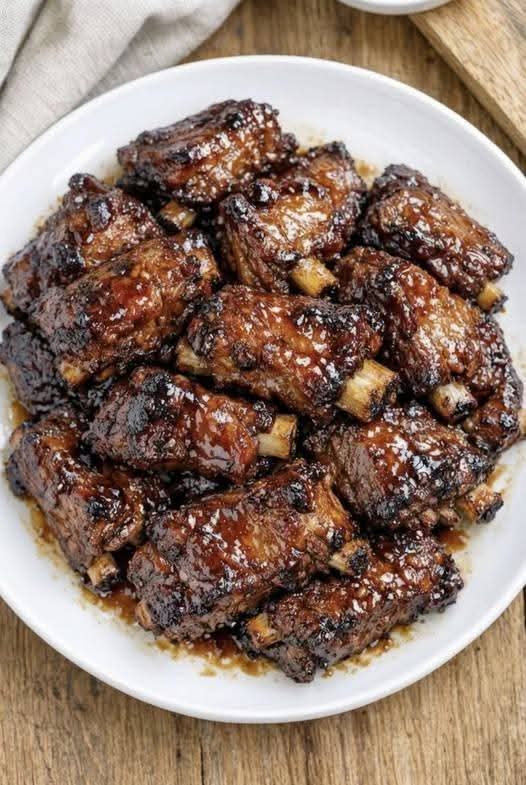
These Crockpot Barbecue Ribs are incredibly tender, juicy, and coated in a thick, smoky barbecue sauce. The ribs cook slowly until the meat becomes soft enough to pull easily away from the bone, then they are finished under the broiler or in a hot oven to create a caramelized, sticky coating.
This easy slow cooker ribs recipe is perfect when you want the flavor of classic barbecue without standing beside an outdoor grill for hours. The crockpot provides gentle, consistent heat, making it one of the easiest ways to prepare pork ribs for a family dinner, game day meal, summer gathering, holiday weekend, or backyard barbecue.
A simple dry rub adds layers of smoky, sweet, and savory flavor before the ribs enter the slow cooker. Barbecue sauce is added during cooking and again before the final oven finish. This method creates tender meat on the inside and a glossy barbecue crust on the outside.
You can use baby back ribs, St. Louis-style ribs, or traditional pork spare ribs. The cooking time changes slightly depending on the type and thickness, but the preparation method remains simple.
Serve these slow cooker barbecue ribs with creamy coleslaw, baked beans, macaroni and cheese, potato salad, cornbread, grilled vegetables, or buttery corn on the cob for a complete American comfort-food dinner.
Why You Will Love These Crockpot Barbecue Ribs
Slow cooker ribs are ideal for home cooks who want tender barbecue without complicated equipment. You do not need a smoker, charcoal grill, or expensive outdoor cooking setup. A standard crockpot and a short oven finish are enough to produce delicious results.
The slow cooking process gives the connective tissue in the ribs enough time to soften. This creates meat that is moist, tender, and easy to serve. Unlike cooking over direct heat, the crockpot also reduces the risk of burning the sauce before the meat becomes tender.
This recipe requires only a short amount of hands-on preparation. After removing the membrane and applying the seasoning, the slow cooker handles most of the work. That makes it useful for busy weekends, family gatherings, and days when the oven is needed for other dishes.
The flavor can be adjusted easily. Use a sweet honey barbecue sauce, a smoky hickory sauce, a spicy chipotle sauce, or a tangy Carolina-style sauce. You can also prepare a homemade barbecue sauce using ketchup, brown sugar, vinegar, Worcestershire sauce, and spices.
These Crockpot Barbecue Ribs are also easy to prepare ahead. The ribs can be seasoned the night before, cooked earlier in the day, and caramelized shortly before serving.
Leftovers can be reheated successfully, and the meat can be removed from the bones for sandwiches, wraps, baked potatoes, nachos, pizzas, and barbecue bowls.
What Kind of Ribs Should You Use?
Several kinds of pork ribs can be prepared in a slow cooker. The best choice depends on the texture, flavor, size, and cooking time you prefer.
Baby Back Ribs
Baby back ribs come from the upper portion of the rib cage near the backbone. They are usually smaller, leaner, and more curved than spare ribs.
They cook relatively quickly and fit easily into many slow cookers after being cut into sections. Baby back ribs are a popular choice for this recipe because they become tender while maintaining a good amount of meat around the bones.
St. Louis-Style Ribs
St. Louis-style ribs are trimmed from spare ribs into a neat rectangular shape. They contain more fat than baby back ribs, which gives them a rich flavor and juicy texture.
These ribs are larger and may need to be divided into several smaller sections before being placed in the crockpot.
Pork Spare Ribs
Traditional spare ribs are larger, flatter, and more heavily marbled. They generally require a longer cooking time than baby back ribs.
They are often less expensive and can be an excellent option when feeding a larger family. Their higher fat content creates rich, flavorful meat.
Country-Style Ribs
Country-style ribs are thick, meaty cuts that may come from the shoulder rather than the rib section. Some pieces contain bones, while others are boneless.
They can be cooked in the slow cooker using the same sauce and seasoning, but the result will resemble tender barbecue pork more than traditional bone-in ribs.
Ingredients for Crockpot Barbecue Ribs
For the Ribs
- 3 to 4 pounds pork baby back ribs or St. Louis-style ribs
- 1 tablespoon yellow mustard or olive oil, optional
- 1 1/2 cups barbecue sauce, divided
- 1 tablespoon apple cider vinegar
- 1 tablespoon Worcestershire sauce
For the Dry Rub
- 2 tablespoons packed brown sugar
- 2 teaspoons smoked paprika
- 1 teaspoon garlic powder
- 1 teaspoon onion powder
- 1 teaspoon kosher salt
- 1/2 teaspoon black pepper
- 1/2 teaspoon chili powder
- 1/2 teaspoon ground cumin, optional
- 1/4 teaspoon cayenne pepper, optional
Optional Garnishes
- Chopped fresh parsley
- Sliced green onions
- Extra warmed barbecue sauce
- Pickled onions
- Jalapeño slices
Ingredient Notes
Barbecue Sauce
Use a barbecue sauce you already enjoy because it provides much of the final flavor. A thick sauce works better than a watery sauce because it clings to the ribs and caramelizes more effectively under the broiler.
Sweet sauces made with brown sugar, honey, or molasses create a sticky glaze. Hickory and mesquite sauces add smoky flavor, while spicy varieties provide heat.
If the sauce is extremely sweet, use apple cider vinegar to balance it. When the sauce is already tangy, reduce or omit the extra vinegar.
Brown Sugar
Brown sugar adds sweetness to the dry rub and encourages caramelization during the final cooking stage.
Light or dark brown sugar can be used. Dark brown sugar has a stronger molasses flavor and creates a deeper barbecue taste.
Smoked Paprika
Smoked paprika provides a gentle smoky flavor that helps slow cooker ribs taste more like traditional outdoor barbecue.
Regular paprika can be substituted, but it will not provide the same smoke note.
Worcestershire Sauce
Worcestershire sauce adds savory depth and a slight tanginess. It blends well with tomato-based barbecue sauce and helps balance sweetness.
Apple Cider Vinegar
Apple cider vinegar cuts through the richness of pork and brightens the sauce. Only a small amount is needed.
Mustard or Olive Oil
A thin coating of mustard or oil helps the dry rub stick to the ribs. Yellow mustard does not make the finished ribs taste strongly of mustard.
This step is optional because the seasoning can also be pressed directly onto the meat.
Kitchen Equipment
You will need a large slow cooker, preferably six quarts or larger, a cutting board, a sharp knife, measuring spoons, a small mixing bowl, and a baking sheet.
Aluminum foil or parchment paper makes the baking sheet easier to clean after the sticky sauce caramelizes.
Kitchen tongs are useful for moving the rib sections carefully. Slow-cooked ribs can become extremely tender, so support them from underneath when transferring them.
A pastry brush or silicone brush helps apply the final layer of barbecue sauce evenly.
An instant-read meat thermometer is useful for confirming temperature, although tenderness is a more important indicator for slow-cooked ribs.
How to Remove the Membrane from Ribs
Most pork ribs have a thin, silvery membrane attached to the bone side. Removing it helps the seasoning penetrate the meat and creates a more pleasant texture.
Place the ribs bone-side up on a cutting board. Look for a thin, shiny layer covering the bones.
Slide the tip of a butter knife under the membrane near one end of the rack. Lift gently until you can grip a small section.
Use a paper towel to hold the slippery membrane and pull it slowly across the rack. It may come away in one piece, or you may need to remove it in sections.
Some ribs are sold with the membrane already removed. If the bone side looks clean and you cannot find a separate layer, no additional work may be necessary.
Removing the membrane is recommended, but the recipe can still be prepared when you are unable to remove every small piece.
How to Make Crockpot Barbecue Ribs
Step 1: Prepare the Ribs
Remove the ribs from their packaging and pat them dry with paper towels.
Remove the membrane from the bone side when it is still attached. Trim away any large, loose pieces of fat, but do not remove all the marbling because fat contributes moisture and flavor.
Cut the rack into sections containing approximately three to five ribs each. The sections should fit comfortably inside the slow cooker without being crushed.
Step 2: Mix the Dry Rub
In a small bowl, combine the brown sugar, smoked paprika, garlic powder, onion powder, salt, black pepper, chili powder, cumin, and cayenne pepper.
Mix thoroughly so the spices are evenly distributed.
Adjust the cayenne according to your preferred heat level. Leave it out completely for mild family-friendly ribs.
Step 3: Season the Ribs
Rub a thin layer of mustard or olive oil over both sides of the ribs when using it.
Sprinkle the dry rub over the ribs and press it gently into the surface. Season both the meat side and bone side.
For deeper flavor, cover the seasoned ribs and refrigerate them for at least one hour or overnight. They can also be cooked immediately when time is limited.
Step 4: Prepare the Barbecue Sauce
In a small bowl, combine one cup of barbecue sauce with the apple cider vinegar and Worcestershire sauce.
Reserve the remaining half cup of barbecue sauce for finishing the ribs after slow cooking.
Do not use all the sauce in the crockpot. Fresh sauce creates a brighter flavor and a thicker glaze during the final oven step.
Step 5: Arrange the Ribs in the Crockpot
Lightly coat the slow cooker insert with nonstick cooking spray when desired.
Arrange the rib sections around the inside edge of the crockpot with the meaty side facing outward. They can stand upright or overlap slightly.
Pour or brush the prepared barbecue sauce mixture over the ribs.
There is no need to add water. The ribs release natural juices as they cook, and excessive liquid can dilute the sauce.
Step 6: Slow Cook Until Tender
Cover the crockpot and cook the ribs on low for six to eight hours.
Baby back ribs may become tender closer to six hours, while larger spare ribs may need seven to eight hours.
You can also cook the ribs on high for approximately three to four hours. The low setting generally produces the most tender and evenly cooked result.
Avoid lifting the lid repeatedly. Each time the lid is opened, heat escapes and the cooking time increases.
Step 7: Check for Tenderness
The ribs are ready when the meat is tender and has pulled back slightly from the ends of the bones.
Insert a fork or small knife between two bones. It should enter easily, and the meat should feel soft.
Do not continue cooking until every bone falls out inside the slow cooker unless you prefer extremely soft ribs. The sections should remain intact enough to transfer to the baking sheet.
Step 8: Transfer to a Baking Sheet
Line a rimmed baking sheet with foil or parchment paper.
Use wide tongs or a large spatula to move the rib sections carefully from the slow cooker to the baking sheet.
Place them meat-side up and leave a little space between each section.
Discard the cooking liquid or strain it and reduce it in a saucepan when you want an additional sauce. Do not use it without heating because it contains pork juices.
Step 9: Add the Final Sauce
Brush the ribs generously with the reserved barbecue sauce.
Add more sauce when you prefer a thicker, stickier coating. Make sure the entire meat surface is covered.
Step 10: Broil or Bake
Preheat the broiler and position the oven rack several inches below the heating element.
Broil the ribs for approximately three to five minutes, watching them constantly. The sauce should bubble, darken slightly, and become sticky.
Barbecue sauce contains sugar and can burn quickly, so do not leave the oven unattended.
Alternatively, bake the sauced ribs at 450°F for approximately eight to ten minutes.
Brush on another thin layer of sauce during the final few minutes for an extra glossy finish.
Step 11: Rest and Serve
Allow the ribs to rest for five to ten minutes before cutting.
Resting gives the juices time to settle and makes the ribs easier to handle.
Cut between the bones and serve with additional warmed barbecue sauce.
How Long to Cook Ribs in a Crockpot
Cooking time depends on the type of ribs, their thickness, the size of the slow cooker, and the heat produced by the appliance.
Baby back ribs generally need six to seven hours on low or three to four hours on high.
St. Louis-style and spare ribs may require seven to eight hours on low or approximately four hours on high.
Country-style ribs often cook in six to eight hours on low, depending on their size.
Begin checking near the lower end of the cooking range. Ribs can become overly soft and difficult to transfer when left in the slow cooker too long.
The meat should be tender but still attached to the bones. For ribs with a firmer bite, reduce the cooking time slightly.
Should You Cook Ribs on Low or High?
The low setting is recommended for the most tender and evenly cooked ribs.
Slow, gentle heat gives the connective tissue time to soften without causing the outer meat to become dry.
The high setting can be used when time is limited. The ribs will still be flavorful and tender, but they may not have exactly the same soft texture.
When using high heat, begin checking early. Different slow cooker models can vary significantly in temperature.
Why Finish Slow Cooker Ribs in the Oven?
Ribs cooked entirely in a crockpot are moist and tender, but the sauce remains soft and wet.
A short oven or broiler finish causes the sugar in the barbecue sauce to caramelize. This creates a sticky surface and a flavor closer to grilled ribs.
The final high heat also darkens the sauce and improves the appearance.
This step is optional, but it makes a major difference in texture and presentation. It usually takes less than ten minutes.
When an oven is unavailable, brush the cooked ribs with warm sauce and serve them directly from the slow cooker.
How to Make Homemade Barbecue Sauce
You can use bottled sauce for convenience or prepare a simple homemade barbecue sauce.
Homemade BBQ Sauce Ingredients
- 1 1/2 cups ketchup
- 1/3 cup packed brown sugar
- 1/4 cup apple cider vinegar
- 2 tablespoons molasses or honey
- 1 tablespoon Worcestershire sauce
- 1 teaspoon smoked paprika
- 1 teaspoon garlic powder
- 1 teaspoon onion powder
- 1/2 teaspoon black pepper
- 1/4 teaspoon cayenne pepper, optional
- Salt to taste
Combine all the ingredients in a saucepan over medium-low heat.
Simmer for approximately 15 to 20 minutes, stirring occasionally, until the sauce thickens.
Taste and adjust the sweetness, acidity, salt, and spice level.
Allow the sauce to cool before storing it in an airtight container in the refrigerator.
Tips for the Best Crockpot Ribs
Remove the membrane whenever possible. This improves texture and allows seasoning to reach the meat more effectively.
Use a dry rub before adding barbecue sauce. The spices season the meat directly instead of flavoring only the surface sauce.
Do not add unnecessary water or broth. The ribs create enough liquid during slow cooking.
Avoid overcrowding the crockpot. Cut the rack into sections and arrange them so heat can circulate.
Cook on low when time allows. The slower setting produces a more tender texture.
Do not lift the lid repeatedly. Slow cookers lose significant heat when opened.
Reserve fresh sauce for the final glaze. Sauce cooked for several hours becomes diluted by meat juices.
Finish under the broiler or in a hot oven. This creates a sticky barbecue coating.
Watch the ribs constantly during broiling because the sauce can burn quickly.
Rest the ribs briefly before cutting so the meat stays juicy.
How to Keep Slow Cooker Ribs from Becoming Mushy
Ribs become mushy when they are cooked beyond the point of tenderness.
Use the recommended cooking range as a guide, but check the ribs early because slow cookers vary.
Baby back ribs usually need less time than large spare ribs.
Do not cut the rack into individual ribs before slow cooking. Larger sections hold together better and are easier to remove.
Transfer the ribs carefully using wide tongs and a spatula for support.
For ribs with a traditional barbecue bite, cook until tender but not completely falling off the bone.
Easy Crockpot Barbecue Rib Variations
Honey Barbecue Ribs
Add two tablespoons of honey to the barbecue sauce mixture.
Honey creates a glossy, sweet coating that caramelizes beautifully under the broiler.
Spicy Crockpot Ribs
Add cayenne pepper, crushed red pepper, chipotle powder, or hot sauce to the dry rub and barbecue sauce.
Serve the ribs with sliced jalapeños for additional heat.
Brown Sugar Barbecue Ribs
Increase the brown sugar in the dry rub to three tablespoons.
Choose a tangy barbecue sauce so the final flavor does not become excessively sweet.
Smoky Hickory Ribs
Use hickory barbecue sauce and add a small amount of liquid smoke.
Only a few drops are needed because liquid smoke has a strong flavor.
Apple Barbecue Ribs
Add one-half cup of apple juice or apple cider to the sauce and use applewood-smoked barbecue sauce.
Reduce other liquid to prevent the sauce from becoming too thin.
Maple Barbecue Ribs
Add two tablespoons of pure maple syrup to the sauce.
Maple pairs especially well with smoked paprika, mustard, and black pepper.
Peach Barbecue Ribs
Mix peach preserves with the barbecue sauce for a fruity summer variation.
Add apple cider vinegar to balance the sweetness.
Carolina-Style Ribs
Use a thinner vinegar-based barbecue sauce and add mustard for a tangy variation.
Serve with vinegar coleslaw and cornbread.
Asian-Inspired Sticky Ribs
Replace traditional barbecue sauce with a mixture of hoisin sauce, soy sauce, honey, rice vinegar, garlic, and ginger.
Garnish with sesame seeds and green onions.
Can You Cook Frozen Ribs in a Slow Cooker?
It is best to thaw ribs completely before placing them in the crockpot.
Frozen meat can remain at an unsafe temperature for too long while the slow cooker gradually heats.
Thaw the ribs in the refrigerator, not on the kitchen counter.
A large rack may require one or two days to thaw fully in the refrigerator.
Once thawed, pat the ribs dry, season them, and cook according to the recipe.
What to Serve with Crockpot Barbecue Ribs
Barbecue ribs pair naturally with classic American side dishes.
Macaroni and Cheese
Creamy baked macaroni and cheese balances the smoky, tangy flavor of the ribs. It is especially popular for family gatherings and holiday meals.
Coleslaw
Cool, crisp coleslaw adds freshness and acidity. Both creamy and vinegar-based versions work well.
Baked Beans
Sweet and smoky baked beans are a traditional barbecue side. Add bacon, onion, or brown sugar for extra flavor.
Potato Salad
Classic potato salad can be prepared ahead and served cold, making it convenient for parties.
Corn on the Cob
Serve corn with butter, salt, smoked paprika, or garlic seasoning.
Cornbread
Warm cornbread absorbs extra barbecue sauce and gives the meal a comforting Southern-style finish.
Roasted Vegetables
Roasted broccoli, carrots, Brussels sprouts, zucchini, or green beans provide a lighter side dish.
French Fries or Potato Wedges
Crispy potatoes make the meal feel like a casual barbecue restaurant dinner.
Green Salad
A simple salad with vinaigrette balances the rich meat and sweet sauce.
How to Serve Ribs for a Party
Cut the cooked racks into individual ribs shortly before serving.
Arrange them on a large platter and brush them with one final layer of warm barbecue sauce.
Place additional sauce in small bowls so guests can add more.
Provide plenty of napkins because sticky ribs are best enjoyed by hand.
Serve the ribs with easy buffet-style sides such as baked beans, coleslaw, potato salad, macaroni and cheese, cornbread, and pickles.
For a large gathering, cook multiple batches in separate slow cookers. Avoid packing too many ribs into one appliance.
Keep finished ribs warm in a covered roasting pan at a low oven temperature. Do not leave them uncovered because they can dry out.
Make-Ahead Instructions
The ribs can be seasoned up to 24 hours before cooking.
Apply the dry rub, cover the ribs tightly, and refrigerate overnight. This gives the seasoning more time to flavor the meat.
You can also slow cook the ribs earlier in the day. Transfer them carefully to a covered baking sheet and refrigerate after they cool.
Shortly before serving, brush them with barbecue sauce and reheat in a 350°F oven until hot.
Finish under the broiler for several minutes to caramelize the fresh sauce.
Homemade barbecue sauce can be prepared several days in advance and refrigerated in a sealed container.
How to Store Leftover Barbecue Ribs
Allow the ribs to cool before placing them in an airtight food storage container.
Refrigerate leftovers within two hours of cooking.
Properly stored ribs can remain in the refrigerator for up to four days.
Keep extra barbecue sauce in a separate container when possible. Fresh sauce helps restore moisture during reheating.
For easier storage, cut the racks into smaller sections or individual ribs.
How to Reheat Crockpot Barbecue Ribs
The oven is the best reheating method because it warms the ribs evenly without drying them excessively.
Preheat the oven to 300°F.
Place the ribs in a baking dish and add a small splash of apple juice, water, or broth.
Brush the meat with barbecue sauce and cover the dish tightly with foil.
Heat for approximately 20 to 30 minutes, depending on the size of the portions.
Remove the foil during the final five minutes and add more sauce when desired.
Individual ribs can also be reheated in an air fryer at a moderate temperature. Check frequently to prevent the sauce from burning.
The microwave works for quick reheating, but use short intervals and cover the ribs to retain moisture.
Can You Freeze Cooked Ribs?
Cooked barbecue ribs freeze well for up to three months.
Allow them to cool completely before freezing.
Wrap the rib sections tightly in plastic wrap or foil, then place them in a freezer-safe container or heavy-duty freezer bag.
Add a small amount of barbecue sauce before sealing to protect the meat from drying.
Thaw frozen ribs overnight in the refrigerator.
Reheat them slowly in a covered baking dish, then add fresh sauce and caramelize under the broiler.
For convenient portions, freeze the ribs in smaller meal-size packages.
Ways to Use Leftover Rib Meat
Remove leftover meat from the bones and chop or shred it.
Use it to make barbecue rib sandwiches with coleslaw and pickles.
Add the meat to baked potatoes with cheddar cheese, green onions, and sour cream.
Spread barbecue sauce over pizza dough and add rib meat, red onion, and mozzarella.
Use it as a topping for nachos with cheese, jalapeños, corn, and beans.
Add the meat to macaroni and cheese for a rich barbecue dinner.
Serve it in tortillas with cabbage slaw and avocado.
Build barbecue bowls with rice, corn, beans, pickles, and extra sauce.
Common Mistakes to Avoid
Do not skip removing the membrane when it is still attached. It can remain tough after cooking.
Avoid adding large amounts of liquid. Slow cookers trap moisture, and the ribs release their own juices.
Do not cook ribs directly from frozen.
Avoid overcrowding the crockpot. The ribs should fit comfortably inside.
Do not use all the barbecue sauce at the beginning. Reserve fresh sauce for the final glaze.
Avoid lifting the lid repeatedly because this releases heat and increases cooking time.
Do not overcook the ribs until they disintegrate unless that is your preferred texture.
Watch closely during broiling. Sugary sauce can burn in only a few minutes.
Allow the ribs to rest before cutting so the juices remain in the meat.
Frequently Asked Questions
Can You Put Raw Ribs in a Slow Cooker?
Yes. Raw thawed ribs can be seasoned and placed directly in the slow cooker. Browning them first is not necessary.
Do I Need to Add Water?
No. The ribs release enough natural liquid during cooking. Adding water can dilute the barbecue flavor.
Should Ribs Be Covered in Sauce?
They do not need to be fully submerged. Brush or pour sauce over the surfaces, and the slow cooker will distribute moisture as the ribs cook.
How Do I Know When Slow Cooker Ribs Are Done?
The meat should be tender, pull back slightly from the bones, and allow a fork to enter easily.
Why Are My Ribs Tough?
Tough ribs usually need more cooking time. Continue cooking on low and check again after 30 to 60 minutes.
Why Did My Ribs Become Mushy?
They were likely cooked too long. Begin checking near the lower end of the recommended time.
Can I Use Beef Ribs?
Beef ribs can be cooked in a slow cooker, but they require different timing and may release more fat. Choose a recipe designed specifically for beef ribs for the most reliable result.
Can I Skip the Dry Rub?
Yes, but the ribs will have less seasoning beneath the sauce. Even a simple mixture of salt, pepper, garlic powder, and paprika improves flavor.
Can I Skip the Broiler?
Yes. The ribs will still be tender and flavorful, but the sauce will not have the same sticky caramelized surface.
Can I Use Boneless Country-Style Ribs?
Yes. Cook until tender and adjust the time according to the thickness of the pieces.
What Size Slow Cooker Do I Need?
A six-quart or larger slow cooker is recommended for a full rack of ribs.
Can I Double the Recipe?
Use two slow cookers rather than packing twice the ribs into one appliance. Overcrowding can lead to uneven cooking.
How Many People Will One Rack Serve?
A three- to four-pound rack generally serves four to six people, depending on the side dishes and appetites.
Food Safety Tips
Keep raw ribs refrigerated until preparation.
Thaw frozen ribs in the refrigerator rather than on the countertop.
Wash your hands thoroughly after handling raw pork.
Use separate plates and utensils for raw and cooked ribs.
Clean cutting boards, knives, countertops, and sinks after raw meat preparation.
Pork is considered safe at a lower internal temperature than the temperature usually reached in slow-cooked ribs, but ribs need extended cooking to become tender.
Refrigerate leftovers within two hours and reheat them until hot throughout.
Do not brush cooked ribs with sauce or utensils that touched raw pork unless the sauce has been boiled and the utensils have been washed.
Why Crockpot Ribs Are Perfect for Family Meals
Crockpot ribs require less active work than many traditional barbecue methods. This makes them practical for families who want a special dinner without spending the entire day cooking.
The recipe can be seasoned mildly for children or made spicy for adults.
It is easy to scale by using additional slow cookers for a large gathering.
The ribs pair with many affordable side dishes, including potatoes, beans, cabbage, corn, and homemade bread.
Leftovers can be transformed into several additional meals, helping reduce food waste.
The slow cooker also keeps the oven available for macaroni and cheese, cornbread, casseroles, or desserts.
Printable Crockpot Barbecue Ribs Recipe
Tender Crockpot Barbecue Ribs
Prep Time: 20 minutes
Cook Time: 6 to 8 hours
Broiling Time: 3 to 5 minutes
Total Time: Approximately 6 hours 30 minutes
Yield: 4 to 6 servings
Category: Dinner
Cooking Method: Slow cooker
Cuisine: American barbecue
Ingredients
Ribs
- 3 to 4 pounds baby back ribs or St. Louis-style ribs
- 1 tablespoon yellow mustard or olive oil, optional
- 1 1/2 cups barbecue sauce, divided
- 1 tablespoon apple cider vinegar
- 1 tablespoon Worcestershire sauce
Dry Rub
- 2 tablespoons packed brown sugar
- 2 teaspoons smoked paprika
- 1 teaspoon garlic powder
- 1 teaspoon onion powder
- 1 teaspoon kosher salt
- 1/2 teaspoon black pepper
- 1/2 teaspoon chili powder
- 1/2 teaspoon ground cumin, optional
- 1/4 teaspoon cayenne pepper, optional
Instructions
- Pat the ribs dry with paper towels.
- Remove the membrane from the bone side of the ribs.
- Cut the rack into sections that fit inside the slow cooker.
- Combine the brown sugar, smoked paprika, garlic powder, onion powder, salt, pepper, chili powder, cumin, and cayenne in a small bowl.
- Coat the ribs lightly with mustard or olive oil if desired.
- Rub the seasoning mixture over both sides of the ribs.
- Combine one cup of barbecue sauce with apple cider vinegar and Worcestershire sauce.
- Arrange the rib sections inside a six-quart or larger slow cooker.
- Pour or brush the prepared sauce mixture over the ribs.
- Cover and cook on low for six to eight hours or on high for three to four hours.
- Check the ribs near the lower end of the cooking range.
- Line a rimmed baking sheet with foil or parchment paper.
- Transfer the tender ribs carefully to the baking sheet with the meat side facing up.
- Brush the ribs with the remaining barbecue sauce.
- Broil for three to five minutes, watching constantly, until the sauce bubbles and caramelizes.
- Alternatively, bake at 450°F for eight to ten minutes.
- Allow the ribs to rest for five to ten minutes.
- Cut between the bones and serve with additional barbecue sauce.
Storage
Store leftover ribs in an airtight container in the refrigerator for up to four days.
Reheating
Reheat the ribs in a covered baking dish at 300°F with a small amount of liquid and additional barbecue sauce.
Freezing
Freeze cooled rib sections in airtight freezer-safe packaging for up to three months.
Final Thoughts
These Crockpot Barbecue Ribs offer an easy way to enjoy tender, sticky, restaurant-style ribs without using an outdoor grill or smoker.
The slow cooker softens the meat over several hours, while the dry rub and barbecue sauce create layers of sweet, smoky, tangy, and savory flavor.
A short broiler or oven finish transforms the sauce into a glossy caramelized coating and gives the ribs a more traditional barbecue appearance.
Use baby back ribs for a leaner and faster-cooking option, or choose St. Louis-style ribs for a richer, meatier result.
Serve the ribs with macaroni and cheese, coleslaw, baked beans, potato salad, cornbread, corn on the cob, or roasted vegetables.
The recipe works well for weeknight dinners, Sunday meals, game day parties, summer celebrations, holiday weekends, potlucks, and family gatherings.
With minimal preparation, flexible seasoning options, and reliable slow cooker results, these Crockpot Barbecue Ribs are an easy comfort-food recipe worth making throughout the year.