
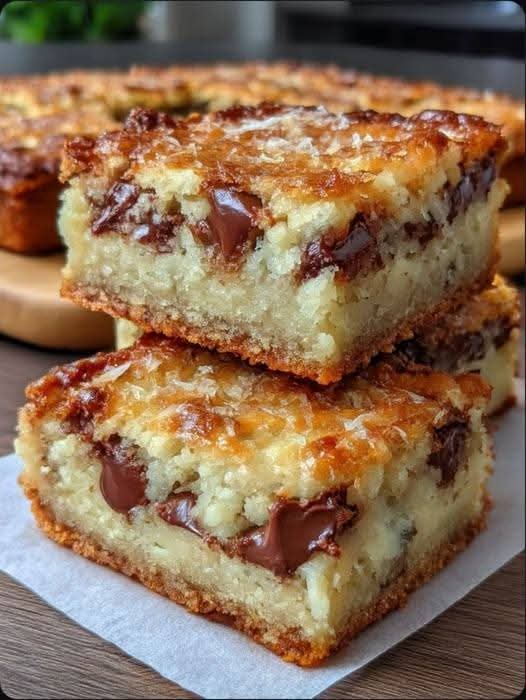
6. Gluten‑Free Congo Bars
Use a 1:1 gluten‑free flour blend (like King Arthur). Add ¼ teaspoon of xanthan gum if your blend does not already contain it. The texture will be slightly more delicate but still delicious.
7. Vegan Congo Bars
Replace butter with vegan butter, eggs with flax eggs (2 tbsp ground flax + 6 tbsp water), and use vegan chocolate chips. The bars will be slightly denser but still wonderful.
8. Salted Caramel Congo Bars
Swirl ½ cup of dulce de leche or caramel sauce into the batter before baking. Sprinkle flaky sea salt on top right after baking. The sweet‑salty combination is divine.
How to Store, Freeze, and Make Ahead
Room Temperature
Store Congo bars in an airtight container at room temperature for up to 1 week. They actually improve after a day – the flavors meld and the texture becomes even more tender.
Refrigerator
Not recommended – refrigeration can dry them out. If your kitchen is very warm, store in the fridge but bring to room temperature before serving.
Freezer (Baked Bars)
Cool completely, wrap the whole slab or individual bars tightly in plastic wrap, then foil. Freeze for up to 3 months. Thaw at room temperature for 1‑2 hours or overnight in the refrigerator.
Make Ahead for a Party
Bake the bars 1‑2 days ahead and store in an airtight container at room temperature. They are perfect for bake sales, potlucks, and holiday cookie trays.
What to Serve with Congo Bars
A tall glass of cold milk – The classic pairing.
Hot coffee or vanilla latte – Balances the sweetness.
Vanilla ice cream – Turn a bar into a sundae.
Fresh berries and whipped cream – For a lighter dessert.
Alone, straight from the pan – No judgment here.
Frequently Asked Questions
What is the difference between Congo bars and blondies?
They are essentially the same thing – a brown sugar‑based bar cookie with chocolate chips. “Congo bars” is an older, regional name often found in church cookbooks, while “blondies” is more common today. Both are delicious.
Why are my Congo bars dry and crumbly?
Dry bars come from overbaking or too much flour. Make sure you measure flour correctly (spoon and level). Bake just until a toothpick comes out with moist crumbs, not clean. Also, check that your butter and eggs are at room temperature.
Can I use margarine instead of butter?
Butter is strongly recommended for flavor and texture. Margarine has a higher water content, which can make the bars less chewy and more cake‑like.
Can I reduce the sugar?
You can reduce the brown sugar to 1 ¼ cups, but the texture will be less chewy and the bars will be less sweet. For best results, stick to the recipe.
How many calories are in a Congo bar?
One bar (1/16 of the recipe) contains approximately 250‑300 calories, 12g fat, 38g carbohydrates, and 4g protein. This is a satisfying, nostalgic treat – perfect for special occasions.
Can I make these in a smaller pan?
Yes. For an 8×8 pan, halve the recipe. For a jelly roll pan (15×10), increase the recipe by 50%. Adjust baking times accordingly – smaller pan may take longer (30‑35 minutes), larger pan less time (15‑18 minutes).
Can I add raisins or dried cranberries?
Absolutely. Swap ½ cup of the chocolate chips for ½ cup of dried fruit. The chewy texture pairs well.
Why are they called Congo bars?
The name is believed to be a shortening of “Congregational” bars, referring to the Congregational churches where these bars were often served at potlucks and socials. Over time, “Congo” stuck.
The History of Congo Bars in American Kitchens
Congo bars first appeared in community cookbooks in the 1940s and 1950s, a time when home bakers were looking for simple, economical desserts using pantry staples. Brown sugar was cheaper than white sugar, and chocolate chips were becoming widely available thanks to Nestlé’s Toll House brand. The bars were often baked for church suppers, school bake sales, and family reunions. The recipe was passed from neighbor to neighbor, handwritten on index cards, and stained with butter and vanilla. Today, Congo bars represent a slice of Americana – humble, delicious, and deeply comforting.
Why You Should Make Congo Bars This Week
You probably have butter, brown sugar, eggs, flour, and chocolate chips in your kitchen right now. In under 30 minutes, you can create a dessert that tastes like a warm hug from your grandmother. They are perfect for:
Church potlucks and bake sales – Always a hit.
School lunchboxes – A special treat.
Holiday cookie trays – A non‑cookie option.
After‑school snacks – Kids love them.
When you need a quick, crowd‑pleasing dessert – No fancy decorating required.
The first time I made Congo bars, I used my grandmother’s stained recipe card. The smell of brown sugar and vanilla filled my kitchen, and I was transported back to my childhood. Now I make them for every family gathering, and they disappear before the main course. Even my grandmother, who is a tough critic, said they were “just right.”
So preheat that oven, melt that butter, and get ready to bake the most delicious Congo bars of your life.
Final Thoughts
Congo Bars are proof that the best recipes are often the simplest. A few pantry ingredients, one bowl, and a hot oven are all you need to create a dessert that is chewy, buttery, chocolatey, and utterly irresistible. Whether you keep the classic recipe or add nuts, coconut, or peanut butter, these bars will earn a permanent spot in your recipe collection. This truly is the best vintage Congo bar recipe for any occasion.
So go ahead – make them today. Cut them into generous squares. Share them with people you love. And enjoy every chewy, chocolatey, nostalgic bite.
Have you made Congo bars? What’s your favorite addition – nuts, coconut, or a swirl of peanut butter? Share your photos and family stories in the comments below. And if this recipe brought back a sweet memory, save it for later or send it to a friend who loves vintage desserts.