
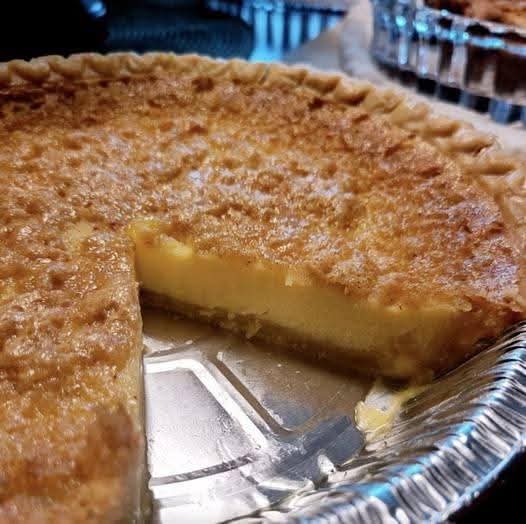
Silky, custard‑like filling with a perfectly sweet and tangy flavour, all nestled in a flaky, buttery pie crust. This timeless Southern dessert is simple to make and impossible to resist.
There’s something deeply comforting about a slice of classic buttermilk pie. With its silky, custard‑like filling and a perfectly balanced sweet‑tangy flavour, it’s a dessert that has stood the test of time. Often referred to as a “desperation pie” or “make‑do pie,” this humble creation was born out of necessity, using simple pantry staples when fresh fruit wasn’t available[reference:0][reference:1]. But today, it’s cherished as a beloved Southern classic that deserves a spot on every holiday table.
What makes buttermilk pie so special is its simplicity and depth of flavour. The buttermilk provides a subtle tanginess that cuts through the sweetness, while the eggs and butter create a rich, creamy custard. A hint of vanilla, a splash of lemon juice, and a touch of nutmeg elevate the filling to something truly memorable[reference:2]. Whether you’re a seasoned baker or a first‑timer, this recipe is forgiving, straightforward, and guaranteed to impress.
✨ Why this buttermilk pie is a Southern icon:
• Silky custard filling – creamy, rich, and perfectly set.
• Sweet and tangy – the buttermilk adds a delightful tang.
• Simple ingredients – everything you need is probably in your pantry.
• No blind‑baking required – the crust bakes perfectly with the filling.
• Versatile – serve it plain, with whipped cream, or fresh berries.
📋 The Recipe – Classic Southern Buttermilk Pie
Prep: 10–15 min · Cook: 45–55 min · Total: ~1 hr 10 min (plus cooling)
Servings: 8 · Diet: Vegetarian
🥣 Ingredients
For the Pie Crust:
- 1 unbaked 9‑inch pie crust (homemade or store‑bought)[reference:3]
For the Buttermilk Custard Filling:
- 1 cup granulated sugar (200 g)[reference:4]
- 2–3 tablespoons all‑purpose flour (16–24 g)[reference:5][reference:6]
- ¼ teaspoon fine salt (1 g)[reference:7]
- ½ cup unsalted butter, melted and cooled (113 g)[reference:8]
- 3 large eggs[reference:9]
- 1 cup buttermilk, well shaken[reference:10]
- 1 tablespoon fresh lemon juice (15 ml)[reference:11]
- 1 teaspoon lemon zest (optional, for extra brightness)[reference:12]
- 2 teaspoons pure vanilla extract (10 ml)[reference:13]
- ¼ teaspoon ground nutmeg (optional, for topping)[reference:14]
👩🍳 Step‑by‑Step Instructions
- Preheat the oven to 350°F (175°C). Place a rack in the lower‑middle position[reference:15].
- Prepare the crust: Place the unbaked pie crust into a 9‑inch pie pan, crimp the edges, and set aside[reference:16].
- Mix the dry ingredients: In a medium bowl, whisk together the sugar, flour, and salt until lump‑free[reference:17].
- Add butter and eggs: Whisk in the cooled melted butter, then add the eggs one at a time, mixing until just combined after each addition[reference:18].
- Finish the custard: Whisk in the buttermilk, vanilla, lemon juice, and lemon zest (if using) until smooth[reference:19]. For an ultra‑silky texture, strain the custard through a fine‑mesh sieve[reference:20].
- Fill the pie shell: Pour the custard into the prepared pie crust. If desired, lightly dust the top with ground nutmeg[reference:21].
- Bake: Bake for 45–55 minutes, until the edges are set and the centre has a slight jiggle[reference:22]. An instant‑read thermometer should read approximately 175–180°F (79–82°C) in the centre[reference:23]. If the crust edges brown too quickly, tent them with foil[reference:24].
- Cool completely: Remove the pie from the oven and let it cool on a wire rack for at least 2 hours. The custard will continue to set as it cools[reference:25].
- Serve: Slice and serve plain, with lightly sweetened whipped cream, or fresh berries[reference:26]. Store leftovers in the refrigerator for up to 3 days[reference:27].
💡 Pro tip: Don’t skip the cooling time – the pie needs to set fully. A slightly jiggly centre when it comes out of the oven is exactly what you want; it will firm up as it cools.
~397Calories
5gProtein
19gFat
50gCarbs
The History of Buttermilk Pie – A True Southern Classic
Buttermilk pie is deeply rooted in Southern American culinary tradition, but its origins actually stretch across the Atlantic. It is believed to have originated in England and was brought to the United States by early settlers[reference:28][reference:29]. In the South, especially in Texas where buttermilk was plentiful and inexpensive, the pie became a staple[reference:30][reference:31]. Resourceful cooks used what they had on hand, and buttermilk – a byproduct of butter‑making – was often abundant[reference:32].
During the Great Depression and World War II, buttermilk pie gained even more prominence as a “desperation pie” – a dessert that could be made with common pantry ingredients when fresh fruit, cream, and other luxuries were scarce[reference:33][reference:34]. These “make‑do” pies were a testament to the ingenuity of home cooks, who turned humble ingredients like vinegar, green tomatoes, and buttermilk into something truly delicious[reference:35]. Buttermilk pie was not only economical but also a reliable treat that could be enjoyed year‑round, regardless of the season[reference:36].
Today, buttermilk pie remains a beloved dessert across the South, often served at Thanksgiving, Christmas, and family gatherings[reference:37]. Its enduring popularity is a testament to its simplicity, flavour, and nostalgic appeal. It’s a pie that connects us to a simpler time, when resourcefulness and creativity in the kitchen were everyday virtues.
Buttermilk Pie vs. Chess Pie – What’s the Difference?
One of the most common questions about buttermilk pie is how it differs from chess pie. While they are similar, there are a few key distinctions:
- Buttermilk: Buttermilk pie uses buttermilk as a key ingredient, which gives it a signature tangy flavour[reference:38][reference:39].
- Chess pie: Chess pie typically does not contain buttermilk; it often uses whole milk or cream instead[reference:40].
- Thickener: Chess pie often includes cornmeal, which adds a slightly different texture[reference:41]. Buttermilk pie is thickened with flour only[reference:42].
- Flavour profile: Both pies are sweet and custard‑like, but buttermilk pie has a more pronounced tang, while chess pie is often richer and more buttery[reference:43].
Both pies are wonderful in their own right, and many families have their own cherished recipes for each. But if you’re looking for that bright, tangy flavour that only buttermilk can provide, this is the pie for you.
Pro Tips for the Perfect Buttermilk Pie
🥛 Use fresh buttermilk – Shake the carton well before measuring. Fresh buttermilk gives the best flavour and texture[reference:44].
🧈 Cool the melted butter – Let the melted butter cool slightly before adding to prevent curdling the eggs[reference:45].
🌡️ Room‑temperature ingredients – Bring eggs and buttermilk to room temperature for a smoother filling[reference:46].
🌰 Fresh nutmeg – Grate fresh nutmeg over the top – it makes a world of difference[reference:47].
🛡️ Protect the crust – Tent the edges with foil or use a pie shield if they brown too quickly[reference:48].
❄️ Let it cool completely – The pie needs at least 2 hours to set properly[reference:49].
Delicious Variations – Make This Pie Your Own
🍋 Lemon Buttermilk Pie
- Add extra lemon juice and zest for a brighter citrus flavour[reference:50].
- Perfect for spring and summer.
🥥 Coconut Buttermilk Pie
- Stir in ½ cup of shredded sweetened coconut before baking[reference:51][reference:52].
- Adds texture and a tropical note.
🍫 Chocolate Buttermilk Pie
- Add 4 oz melted unsweetened chocolate and increase sugar by ¼ cup[reference:53].
- A rich, decadent twist.
🌰 Maple Pecan Buttermilk Pie
- Replace vanilla with maple extract and sprinkle chopped pecans on top[reference:54].
- Adds a nutty, caramelised crunch.
How to Serve Your Buttermilk Pie
Buttermilk pie is delicious on its own, but here are some classic ways to elevate it:
- With whipped cream: A dollop of lightly sweetened whipped cream adds a light, airy contrast[reference:55].
- With fresh berries: Strawberries, raspberries, or blueberries add a pop of colour and a tart counterpoint[reference:56].
- With a dusting of powdered sugar: A simple, elegant finish[reference:57].
- With a cup of coffee: The pie’s sweetness is perfectly balanced by a strong, bold coffee[reference:58].
- With a scoop of vanilla ice cream: For an extra indulgent treat[reference:59].
Storage, Meal Prep, and Make‑Ahead Tips
This pie is best served chilled or at room temperature. Store leftovers in an airtight container in the refrigerator for up to 4 days[reference:60]. Freezing is not recommended, as the custard texture can become grainy when thawed[reference:61]. If you’re making the pie ahead of time, it can be baked a day or two in advance and kept refrigerated until serving.
🧑🍳 A Note from the Baker
This buttermilk pie is the one my grandmother made for every holiday – and it always disappeared in minutes. Its simplicity is its strength, and the tangy custard brings back memories of family gatherings and warm Southern kitchens. I hope it becomes a tradition in your home too.
Frequently Asked Questions
Can I use a store‑bought crust? Yes – a store‑bought unbaked pie crust works perfectly for this recipe[reference:62].
Do I need to blind‑bake the crust? No – the crust bakes fully along with the filling, so no pre‑baking is required[reference:63].
How do I know when the pie is done? The edges should be set and the centre should jiggle slightly when shaken[reference:64]. It will finish setting as it cools.
Can I use milk instead of buttermilk? Buttermilk is essential for the signature tangy flavour[reference:65]. If you don’t have it, make a substitute by adding 1 tablespoon of vinegar or lemon juice to 1 cup of milk and letting it sit for 5 minutes.
Why did my pie crack on top? Slight cracking is normal and doesn’t affect the flavour. Overbaking can cause more cracking, so watch the pie carefully.
Can I freeze buttermilk pie? Freezing is not recommended, as the custard texture can become grainy upon thawing[reference:66].
Should I serve it warm or cold? It’s best served chilled or at room temperature[reference:67]. Many prefer it cold, straight from the fridge.
Final Thoughts – A Slice of Southern Comfort
This Classic Southern Buttermilk Pie is more than just a dessert – it’s a taste of history, a symbol of resourcefulness, and a reminder that the best things in life are often the simplest. The silky custard, the subtle tang of buttermilk, and the buttery, flaky crust come together in a harmony of flavours that’s pure comfort.
Whether you’re making it for a holiday gathering, a family dinner, or just because, this pie is guaranteed to earn you rave reviews. It’s a timeless classic that never goes out of style – and it’s the kind of dessert that will have everyone asking for the recipe. So preheat your oven, gather your ingredients, and get ready to bake a pie that’s as rich in flavour as it is in history.
🥧 Save this recipe · Share with a fellow baker · And enjoy the best buttermilk pie of your life!
📌 Buttermilk Pie · Southern Dessert · Custard Pie · Old‑Fashioned · Holiday Baking · Easy Recipe