
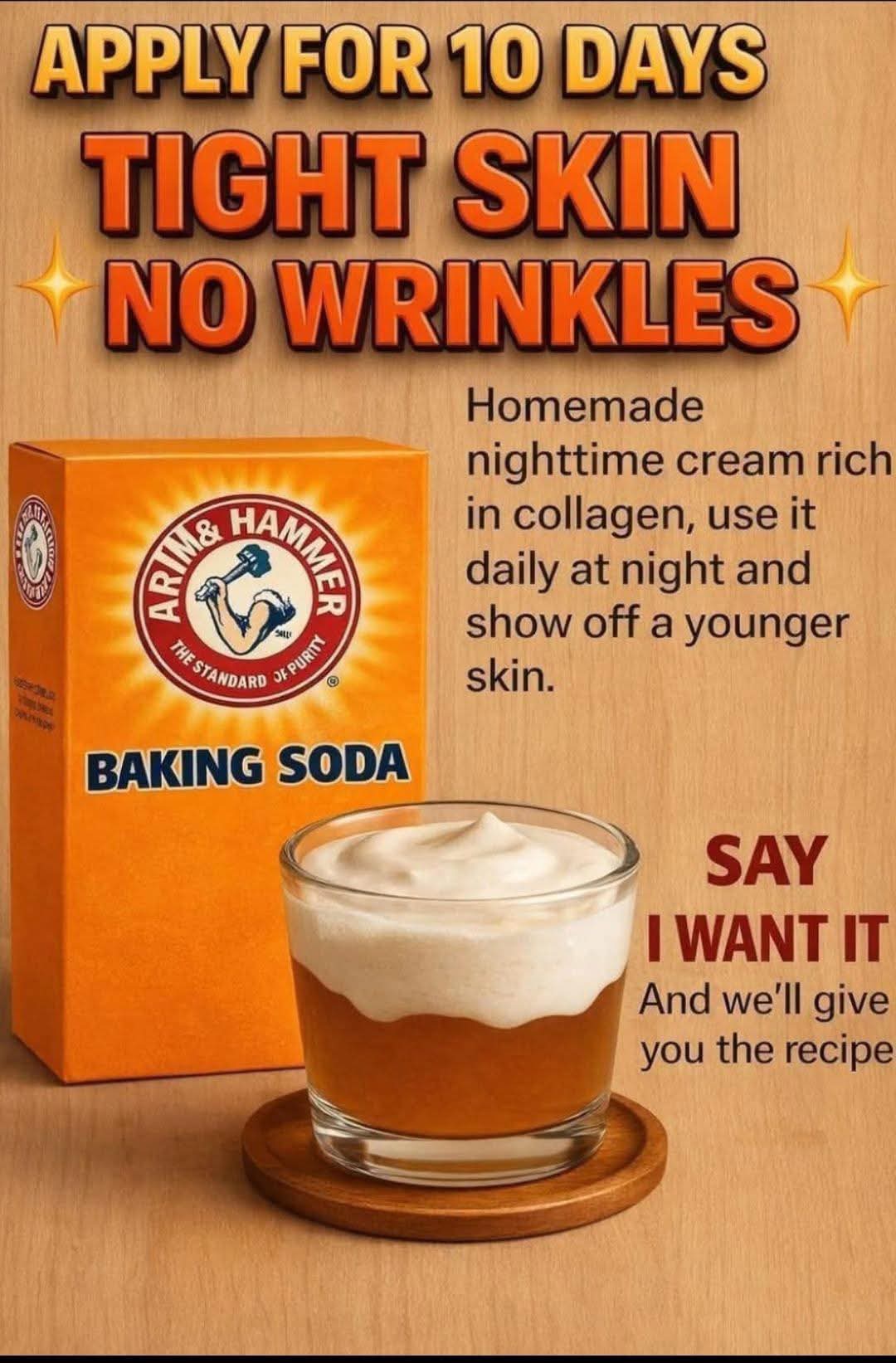
Why Skincare “Hacks” Are So Dangerous
This baking soda trend follows a familiar pattern:
Tactic How It Works
Simple ingredients Baking soda is cheap and available – feels accessible.
Big promises “Tight skin, no wrinkles” – sounds too good to be true (because it is).
Urgency “Apply for 10 days” – creates a false timeline.
Engagement bait “Say I WANT IT” – boosts the post in algorithms.
The poster doesn’t care about your skin health. They care about comments, shares, and viral reach. Real skincare is not a one‑size‑fits‑all “secret” – it’s science, consistency, and products formulated for your skin type.
Signs You’ve Damaged Your Skin with Baking Soda
If you’ve tried this baking soda “night cream,” look for these signs of damage:
Symptom What It Means
Tight, dry feeling Your moisture barrier is compromised.
Redness or stinging Irritation and inflammation.
Flaking or peeling Severe dryness and barrier disruption.
Breakouts Bacteria entering through damaged barrier.
Increased sensitivity Products that were once fine now burn.
What to do: Stop using baking soda immediately. Focus on gentle, barrier‑repairing skincare (see safe alternatives below).
What Actually Works for Firmer, Younger‑Looking Skin (No Baking Soda)
Instead of dangerous kitchen hacks, invest in proven, science‑backed skincare.
- Sunscreen – The #1 Anti‑Aging Product
UV radiation is responsible for up to 80% of visible skin aging. Use broad‑spectrum SPF 30 or higher every single day – even indoors, even on cloudy days.
- Retinoids (Retinol, Tretinoin)
Retinoids are the gold standard for reducing wrinkles, stimulating collagen, and improving skin texture. Start with a low concentration and use at night.
- Vitamin C Serum (Morning)
Vitamin C is a powerful antioxidant that protects against free radicals and supports collagen production. Look for L‑ascorbic acid formulations.
- Gentle Cleanser – Not Baking Soda
Use a pH‑balanced, gentle cleanser (pH 4.5 – 5.5). Never use baking soda or bar soap on your face.
- Moisturizer – For Hydration and Barrier Repair
A good moisturizer locks in hydration and supports your skin’s natural barrier. Look for ceramides, niacinamide, hyaluronic acid, and glycerin.
- Night Creams That Actually Work (Safe Homemade Option)
If you want a simple, safe homemade night cream, skip the baking soda. Try this gentle, moisturizing recipe instead:
Ingredients:
· 1 tbsp shea butter (or cocoa butter)
· 1 tbsp jojoba oil (or almond oil)
· 1–2 drops lavender or frankincense essential oil (optional)
Instructions:
- Melt shea butter in a double boiler.
- Stir in jojoba oil.
- Remove from heat and add essential oil.
- Whip with a fork until creamy.
- Store in a small jar. Apply a thin layer at night.
This cream moisturizes, soothes, and supports your skin barrier – without irritation.
The Truth About “Homemade” vs. Commercial Skincare
There’s a reason dermatologists don’t recommend baking soda masks. Commercial skincare products are formulated with:
· Stable pH levels – to work with your skin, not against it.
· Preservatives – to prevent bacterial growth.
· Proven active ingredients – tested for efficacy and safety.
Homemade skincare can be safe when you use gentle, non‑irritating ingredients (like oils, butters, and aloe). But baking soda, lemon juice, vinegar, and toothpaste have no place on your face.
Common Myths About Baking Soda for Skin – Debunked
Myth Truth
“Baking soda tightens skin” It causes dryness and irritation, which feels tight – but damages your barrier.
“It fades dark spots” No evidence. It can worsen hyperpigmentation by irritating skin.
“It’s natural, so it’s safe” Natural doesn’t mean safe. Poison ivy is natural. Baking soda is too alkaline for skin.
“Collagen cream works” Collagen molecules are too large to absorb. Your body makes collagen internally.
“Apply for 10 days and see results” Skin damage can appear in 10 days – but not improvement.
What to Do If You’ve Already Tried the Baking Soda Cream
- Stop immediately. Do not use it again.
- Cleanse gently with a mild, pH‑balanced cleanser.
- Apply a soothing moisturizer with ceramides or niacinamide.
- Avoid active ingredients (retinol, acids, vitamin C) for a few days until irritation subsides.
- Use a cool compress if you have redness or burning.
- See a dermatologist if you have severe irritation, blistering, or chemical burns.
Frequently Asked Questions (FAQs)
Q: Can baking soda remove wrinkles?
No. It can’t remove wrinkles, and it may make them look worse by drying out your skin.
Q: Is baking soda safe for any skin type?
No. It is too alkaline for all skin types. Even oily or acne‑prone skin can be damaged by baking soda.
Q: What about baking soda for underarms or body?
Baking soda can be too harsh for underarms as well, causing irritation. Use a gentle, pH‑balanced deodorant instead.
Q: Why do people think baking soda helps skin?
Because it’s cheap, natural, and the “tight” feeling is mistaken for firming. It’s a dangerous misconception.
Q: What’s a safe homemade exfoliant instead?
Mix finely ground oats with plain yogurt or honey. Oats are gentle and soothing.
Q: How can I really tighten my skin naturally?
Support collagen with sunscreen, vitamin C, retinoids, hydration, and a healthy diet. There are no instant fixes.
Q: Can I use baking soda on my scalp?
No. It can strip natural oils and cause irritation. Use a gentle, sulfate‑free shampoo.
The Bottom Line – Your Skin Deserves Better
The viral baking soda “nighttime cream” is not a secret – it’s a scam. It won’t tighten your skin, erase wrinkles, or make you look younger. It will damage your skin’s protective barrier, cause dryness and irritation, and potentially lead to long‑term sensitivity.
Real anti‑aging skincare is not a 10‑day “hack.” It’s consistent, gentle care: sunscreen every day, retinoids at night, vitamin C in the morning, and a good moisturizer. If you want firmer, younger‑looking skin, invest in science – not viral engagement bait.
Now it’s your turn! Have you seen this baking soda post? Have you tried it – or been tempted? Drop a comment below – I’d love to hear your experience.
And if you found this guide helpful, share it with a friend who’s been tempted by viral skincare “secrets.” Pin it for later, and subscribe to our newsletter for more evidence‑based beauty advice.
Stay safe, stay skeptical, and love the skin you’re in. ✨