
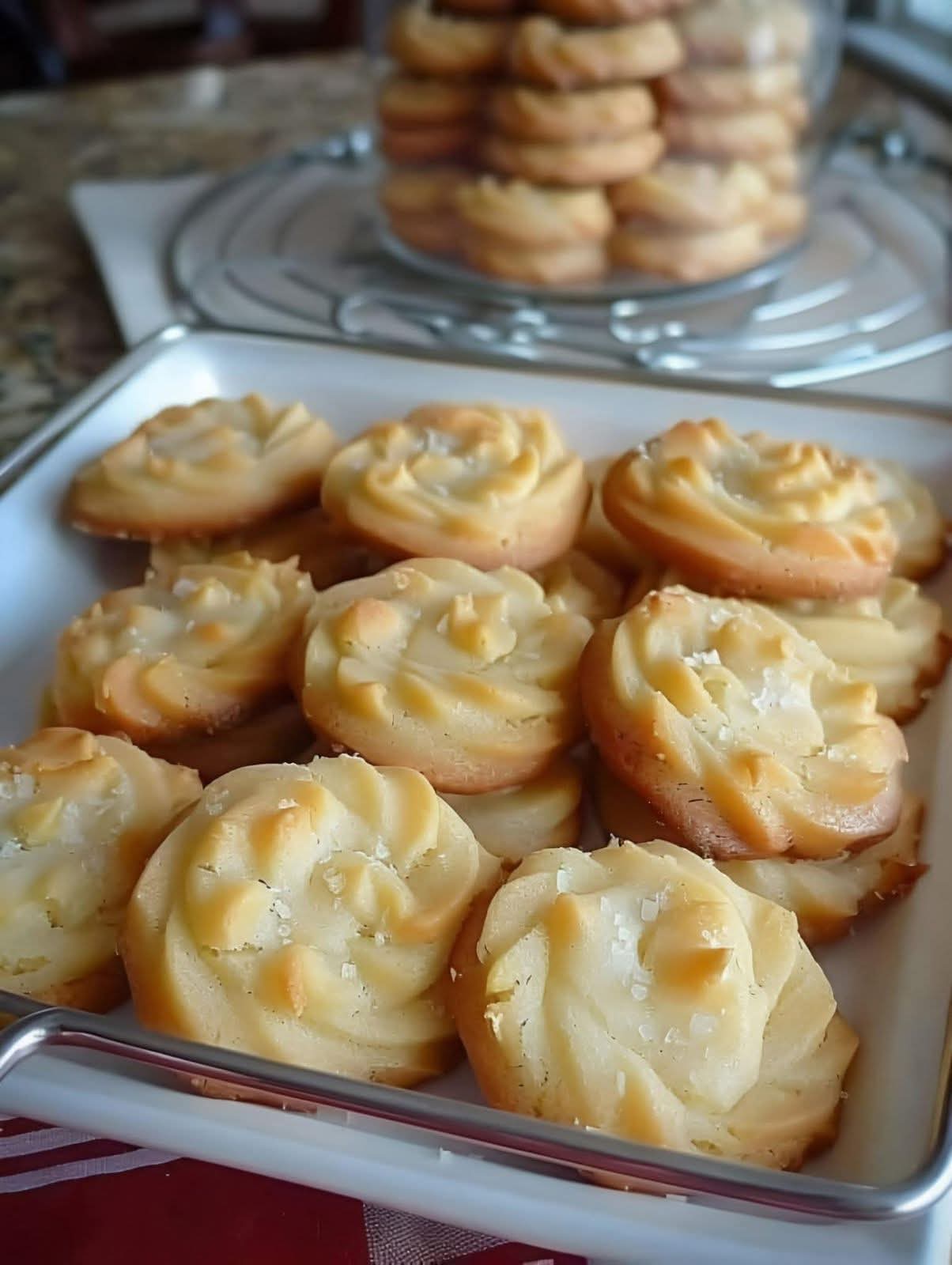
There are cookies that are good, and then there are the World’s Best Butter Cookies – the kind that make you close your eyes and savor every crumb. Imagine a cookie so tender, so buttery, so impossibly delicate that it practically dissolves on your tongue. No fancy mix‑ins, no complicated techniques – just pure, honest butter, sugar, vanilla, and flour, transformed into golden, buttery discs of bliss. This recipe uses exactly six ingredients: unsalted butter, granulated sugar, salt, pure vanilla extract, one egg yolk, and all‑purpose flour. That is it. And yet, these are the cookies that have won bake sales, filled holiday tins, and earned the title “world’s best” from everyone who tries them. If you are searching for a best butter cookie recipe that delivers exceptional flavor and texture, this is the one.
Whether you need a quick everyday cookie, a base for sandwich cookies, a holiday baking project, or simply a taste of nostalgia, these butter cookies deliver. They are crisp on the edges, tender in the center, and impossibly rich. This easy shortbread cookie recipe will become a family heirloom.
In this complete guide, you will learn the master recipe for the world’s best butter cookies, including pro tips for achieving that perfect melt‑in‑your‑mouth texture, delicious variations (add chocolate dip, citrus zest, or nuts), storage and freezing instructions, and why sometimes the simplest recipes are the most extraordinary. Let’s preheat that oven.
Why These Are the World’s Best Butter Cookies
Butter cookies have been beloved for centuries, from Scottish shortbread to Danish butter cookies (the ones that come in the iconic blue tin). This recipe sits at the intersection of both traditions: crisp enough to hold their shape, yet tender enough to shatter delicately with each bite. The secret lies in the ratio: just enough butter to create richness, an egg yolk for tenderness and a beautiful golden color, and vanilla that sings without overpowering. No baking powder or baking soda – these cookies rely solely on butter and sugar for their texture. This is a homemade Danish butter cookie recipe that rivals any store‑bought tin.
Here is why you will love them:
Only 6 ingredients – All pantry staples.
No chilling required – Roll, cut, and bake immediately.
Incredibly buttery and tender – Literally melt in your mouth.
Perfect for decorating – Royal icing, sprinkles, or chocolate dip.
Holiday cookie tray royalty – Elegant and classic.
Freezes beautifully – Bake a double batch and save.
Customizable – Add lemon zest, almond extract, or dip in chocolate.
Once you try these simple butter cookies from scratch, you will never buy a package of store‑bought butter cookies again.
The Complete World’s Best Butter Cookies Recipe
This recipe makes about 36‑48 small cookies (using a 2‑inch cutter) or 24‑30 larger cookies. It can easily be doubled.
Ingredients:
8 oz (226g, 2 sticks) unsalted butter, softened to room temperature
¾ cup (150g) granulated sugar
¼ teaspoon salt
1 ½ teaspoons pure vanilla extract
1 large egg yolk, at room temperature
2 cups (240g) all‑purpose flour
Equipment:
Stand mixer or hand mixer
Large mixing bowl
Rolling pin
Cookie cutters (any shape) or a sharp knife for squares
Baking sheets lined with parchment paper
Wire cooling rack
Step‑by‑Step Instructions
Step 1 – Preheat and Prepare
Preheat your oven to 350°F (175°C). Line two baking sheets with parchment paper or silicone baking mats. Set aside.
Step 2 – Cream Butter and Sugar
In a large mixing bowl (or the bowl of a stand mixer fitted with the paddle attachment), beat the softened butter, granulated sugar, and salt together on medium speed until light, pale, and fluffy – about 3‑4 minutes. Do not skimp on this step; creaming aerates the butter, creating the tender texture that makes these cookies so special. Scrape down the sides and bottom of the bowl with a spatula as needed.
Step 3 – Add Vanilla and Egg Yolk
Add the vanilla extract and the egg yolk. Beat on medium speed until fully incorporated, about 30 seconds. The mixture will look smooth and glossy. The egg yolk adds richness and helps the cookies hold their shape without adding excess moisture.
Step 4 – Add the Flour
Turn the mixer to low speed and gradually add the flour, mixing just until the dough comes together. Stop as soon as the flour disappears. Overmixing develops gluten, which can make the cookies tough or dense. The dough should be soft and pliable, not sticky.
Step 5 – Roll Out the Dough
Lightly flour a clean work surface and a rolling pin. Place the dough on the surface and roll it out to ¼‑inch (0.6 cm) thickness. For even thickness, use rolling pin guides (two wooden dowels or rubber bands on your pin). If the dough feels too soft, refrigerate it for 15 minutes before rolling. If it feels too sticky, sprinkle a tiny amount of flour on the surface – but be careful not to add too much, or the cookies will be dry.
Step 6 – Cut the Cookies
Using cookie cutters of your choice (round, star, heart, or fluted edge), cut out shapes as close together as possible to minimize scraps. Transfer the cut cookies to the prepared baking sheets, spacing them about 1 inch apart. Gather the scraps, gently re‑roll (do not overwork), and cut additional cookies. If the dough becomes too warm, chill it again.
Pro tip for clean edges: Dip cookie cutters in flour before each cut. This prevents sticking.
Step 7 – Bake the Cookies
Bake for 10‑12 minutes, rotating the baking sheet halfway through, until the edges are just barely golden brown. The centers should look set but not dark. These cookies do not brown much – the visual cue is that the edges start to turn very pale gold. Overbaking will make them dry and crumbly.
For a crisper cookie (like traditional shortbread), bake for 12‑14 minutes.
Step 8 – Cool and Serve
Let the cookies cool on the baking sheet for 5 minutes, then transfer them to a wire rack to cool completely. They will firm up as they cool. Once cool, they are ready to eat – plain, dusted with powdered sugar, or decorated as desired.
Pro Tips for the World’s Best Butter Cookies
Follow these expert tips for perfect melt‑in‑your‑mouth butter cookies every time:
Use real, high‑quality butter – Since butter is the star, use a good brand (European‑style like Plugrà or Kerrygold has higher fat content and yields even richer cookies). Unsalted butter lets you control the salt.
Soften butter properly – Leave butter on the counter for 30‑60 minutes before starting. It should be cool but pliable (you can dent it with a finger). Do not microwave – melted butter changes the texture.
Do not overmix the dough – Once you add the flour, mix just until combined. Overmixing creates gluten, leading to tough cookies.
Chill if necessary – While this dough does not require chilling, if your kitchen is warm or the dough becomes too soft to handle, refrigerate for 20 minutes. Chilled dough cuts more cleanly.
Use a light touch with flour – Too much flour when rolling out the dough makes cookies dry. Use only as much as needed to prevent sticking.
Watch the bake time like a hawk – These cookies go from perfect to overdone in less than a minute. Start checking at 9 minutes. The edges should just be turning golden. Pale is better than brown.
Let them cool completely – Warm cookies are too fragile. Cooling sets the structure.
Delicious Variations (Same Butter Cookie Base)
Once you master the classic butter cookie, try these fun twists. These butter cookie variations will take your baking to the next level.
1. Chocolate Dipped Butter Cookies
After the cookies have cooled completely, melt 1 cup of semi‑sweet or dark chocolate chips with 1 teaspoon of coconut oil. Dip half of each cookie into the chocolate, place on parchment paper, and sprinkle with crushed nuts, sprinkles, or sea salt. Let set at room temperature or refrigerate. These are perfect for gift boxes.
2. Lemon Butter Cookies
Add 1 tablespoon of finely grated lemon zest (about 1 large lemon) to the butter‑sugar mixture. Replace vanilla with 1 teaspoon lemon extract (or keep vanilla). The bright, citrusy flavor is wonderful with tea.
3. Almond Butter Cookies
Replace ½ cup of the all‑purpose flour with finely ground almond flour. Add ½ teaspoon of almond extract along with the vanilla. Top each cookie with a sliced almond before baking. These have a delicate, nutty flavor.
4. Cinnamon Spice Butter Cookies
Add 1 teaspoon of ground cinnamon and ¼ teaspoon of nutmeg to the flour. For extra flair, mix 2 tablespoons of granulated sugar with 1 teaspoon of cinnamon and sprinkle over the cookies before baking.
5. Sandwich Cookies (Buttercream or Jam)
Make smaller, thin cookies (roll to ⅛ inch). Once cooled, spread raspberry jam, lemon curd, or buttercream frosting between two cookies. Dust with powdered sugar. This is a homemade butter cookie sandwich that rivals any bakery.
Want the full truth and the practical next steps?
Page 2 continues with the real explanation, the key details many readers skip, and the simple takeaways that make this guide more useful.