
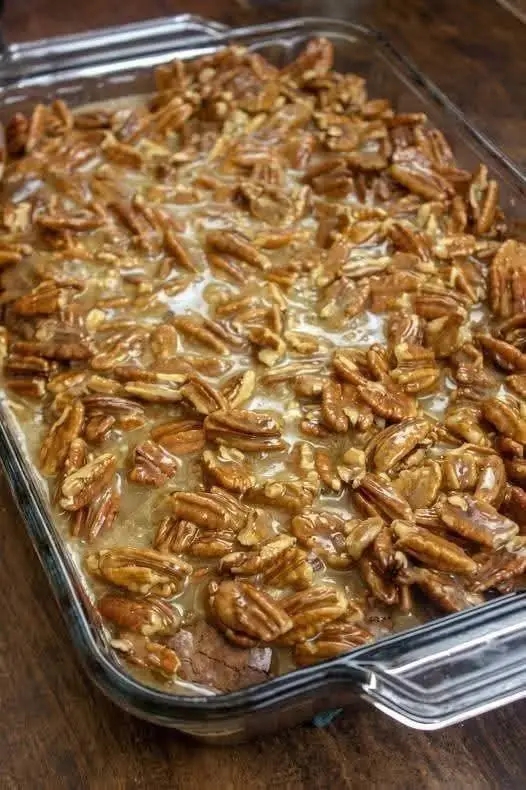
There are cakes that stand proudly under a layer of sculpted frosting, and then there are cakes like this Southern Pecan Praline Cake—unfussy, gloriously sticky, and absolutely impossible to walk past without sneaking a bite. It’s a tender, buttery vanilla cake that’s been poked and soaked in a rich, caramel-like pecan praline sauce, transforming every crumb into a moist, gooey, nutty slice of heaven. The praline topping seeps into every crevice, then sets into a crackly, candy-like crust on top, studded with crunchy toasted pecans. It’s the dessert that defines Southern hospitality: sweet, buttery, nutty, and made to feed a crowd with minimal effort. Whether it’s a church potluck, a holiday buffet, or a quiet Sunday supper, this cake is always the first to vanish. One bite, and you’ll understand why—it’s pure, unadulterated comfort that tastes like a hug from your grandmother, even if you’ve never met her. This is the pecan praline cake that will earn a permanent, splattered spot on your recipe card, and you’ll find yourself making it for every single gathering.
The magic of a pecan praline cake lies in its brilliant simplicity. It’s a poke cake at heart, which means the cake itself is easy to mix up—no finicky layers or complicated techniques. The batter comes together in a single bowl with basic ingredients: flour, sugar, butter, oil, buttermilk, and vanilla. The oil and buttermilk ensure a moist, tender crumb that stands up to the heavy dose of praline sauce without turning mushy. After baking until golden, the cake is poked all over with a fork or the handle of a wooden spoon, creating dozens of little channels. Then comes the magic: a hot, bubbling mixture of butter, brown sugar, heavy cream, and pecans is poured over the warm cake, flooding every hole and drenching the surface. As it cools, the praline sauce thickens into a soft, fudge-like consistency, with a top layer that sets just enough to form a delicate, sugary crust. The contrast between the soft, soaked cake and the crunchy pecan-studded topping is what makes every forkful so addictive. It’s sweet, salty, buttery, and impossible to stop eating. And because it’s made in a 9×13-inch pan, it travels easily and can be cut into generous squares for a crowd. Serve it warm with a scoop of vanilla ice cream, at room temperature with a cup of coffee, or even cold from the fridge for a firmer, fudge-like treat. This cake adapts to any occasion and never, ever disappoints.
In this comprehensive guide, we’ll walk through every detail of creating the ultimate pecan praline cake: the secrets to a perfectly moist crumb, the simple technique for a smooth, non-grainy praline sauce, creative variations that play with different nuts and flavors, and all the tips for storing, transporting, and serving this beloved Southern classic. Whether you’re a seasoned baker or a beginner looking for a show-stopping dessert that’s almost impossible to mess up, this recipe is your new best friend. Let’s preheat the oven and get that praline bubbling.
Why You’ll Love This Pecan Praline Cake
A true Southern classic with a luscious praline topping. The praline sauce is what makes this cake legendary. Made with real butter, brown sugar, and heavy cream, it’s cooked on the stovetop until thick and bubbling, then poured over the warm cake. As it soaks in, it creates a fudgy, caramel-soaked layer that’s utterly irresistible. The chopped pecans add a toasty crunch that contrasts with the soft cake, making every bite a symphony of textures and flavors. It’s sweet, nutty, and exactly what you want when you’re craving old-fashioned comfort.
Incredibly moist and tender. The combination of butter, oil, and buttermilk in the cake batter guarantees a crumb that stays soft and velvety for days. The poke-and-soak method takes the moisture to another level, infusing the cake with the praline sauce from the inside out. Even the edges, which in a lesser cake might be dry, are perfectly tender and saturated with flavor. This cake never dries out, making it an ideal make-ahead dessert for busy holidays and gatherings.
Effortless assembly with no fancy equipment. You don’t need a stand mixer, special pans, or candy thermometers. The cake batter is mixed by hand or with a simple hand mixer, and the praline sauce comes together in a saucepan on the stovetop. The poke cake method means no layering, no frosting, and no stress—just a delicious, rustic cake that looks beautiful in its own gooey, nutty way. It’s the perfect dessert for beginner bakers and anyone who wants to impress without the pressure.
Feeds a crowd and travels beautifully. Baked in a 9×13-inch pan, this cake yields at least 15 generous servings. It’s sturdy enough to transport to a potluck or family reunion, and it can be served directly from the pan. The praline topping sets into a relatively firm layer that doesn’t run, so it’s not messy to carry. And because it’s even better the next day, you can make it ahead and focus on other things when the party starts. It’s the ultimate no-fuss, high-reward dessert for any occasion that calls for something sweet and memorable.
Ingredient Deep Dive: The Cake and Praline Cast
Understanding each ingredient’s role ensures a perfectly moist cake and a smooth, rich praline sauce every time.
For the Cake
All-Purpose Flour: Two cups provide the structure. Measure accurately by spooning the flour into the measuring cup and leveling it off. You can substitute a 1:1 gluten-free flour blend if needed, but the texture will be slightly different. The flour is just enough to create a sturdy yet tender crumb that can absorb the praline sauce without turning to mush.
Baking Soda and Salt: One teaspoon of baking soda provides the leavening, reacting with the acidic buttermilk to give the cake a nice lift. A half teaspoon of salt enhances the sweetness and balances the flavors. If you use salted butter, reduce the added salt slightly. The baking soda should be fresh for the best rise.
Unsalted Butter and Vegetable Oil: Half a cup (1 stick) of softened unsalted butter and half a cup of vegetable oil team up for the perfect texture. Butter provides rich, buttery flavor, while oil keeps the cake exceptionally moist and tender, even after days in the fridge. Using a combination gives you the best of both worlds. You can use all butter if you prefer, but the cake won’t stay as moist. For a deeper flavor, substitute part of the oil with melted butter. The butter should be at room temperature so it creams smoothly with the sugar.
Granulated Sugar: One and a half cups of white sugar sweeten the cake and help create a tender crumb. The sugar also contributes to browning and a slight crust on top of the cake. Do not reduce the sugar significantly, as it also provides structure. You can substitute an equal amount of light brown sugar for a more caramel-like flavor, but the cake will be slightly denser and more moist.
Eggs: Two large eggs, at room temperature, provide structure and richness. They help the cake rise and set properly. If the eggs are cold, place them in a bowl of warm water for 5 minutes before using. The eggs are added one at a time, beating well after each addition to emulsify the batter.
Buttermilk: One cup of full-fat buttermilk is essential for a tender, slightly tangy crumb. The acidity reacts with the baking soda to give the cake its rise and also breaks down gluten, resulting in a softer texture. If you don’t have buttermilk, you can make a quick substitute by adding 1 tablespoon of lemon juice or white vinegar to a liquid measuring cup and filling it with milk to the 1-cup line. Let it sit for 5–10 minutes until it curdles. Plain yogurt thinned with a little milk also works. The buttermilk should be at room temperature for the best results.
Vanilla Extract: Two teaspoons of pure vanilla extract add a warm, aromatic note that enhances the butter and brown sugar flavors. Use pure vanilla extract, not imitation, for the best taste. You can also add a teaspoon of butter extract for an even richer flavor reminiscent of a butter pecan cake.
For the Praline Topping
Unsalted Butter: Half a cup (1 stick) of butter forms the rich base of the praline sauce. The butter is melted with brown sugar and heavy cream to create a smooth, caramel-like mixture. Using unsalted butter allows you to control the salt level, and a tiny pinch of salt in the sauce enhances all the flavors. The butter should be real; margarine won’t produce the same texture or taste.
Brown Sugar: One cup of packed light or dark brown sugar provides the deep, molasses-kissed sweetness that defines praline. Dark brown sugar has a more intense molasses flavor and will give the sauce a slightly richer, darker color. Light brown sugar is classic and yields a slightly milder caramel. Pack the sugar firmly into the measuring cup for an accurate measurement. The sugar is what caramelizes and creates that candy-like praline crust on top of the cake. It’s important not to boil the mixture for too long, or it can become overly hard. A gentle boil for 2–3 minutes is sufficient.
Heavy Cream: A quarter cup of heavy cream adds richness and helps create a smooth, pourable sauce. You can substitute with half-and-half or evaporated milk, though the sauce will be slightly thinner. For an even more decadent praline, use a splash of heavy cream and a splash of whole milk. The cream is added to the butter-sugar mixture and boiled briefly, then removed from the heat. This step ensures the sauce is thick enough to coat the cake but still fluid enough to seep into the holes.
Chopped Pecans: One cup of chopped pecans, toasted if desired, are the signature nut of this Southern cake. Toasting the pecans in a dry skillet for a few minutes until fragrant intensifies their flavor and adds a crunch that holds up even after the sauce soaks in. You can use halves or pieces, roughly chopped. Walnuts can be substituted, but pecans are the traditional choice. Stir the pecans into the hot praline sauce right before pouring it over the cake. Reserve a few pecan halves to place on top for a decorative touch.
Step-by-Step: From Batter to Praline Soak
Follow these detailed steps for a pecan praline cake that’s moist, gooey, and utterly irresistible.
Step 1: Preheat and Prepare the Pan
Preheat your oven to 350°F (175°C). Grease a 9×13-inch baking dish with butter or nonstick spray. You can also line it with parchment paper for easy lifting, though the cake is typically served directly from the pan. Set aside.
Step 2: Mix the Cake Batter
In a large mixing bowl, whisk together the flour, baking soda, and salt. Set aside. In another large bowl, using a hand mixer or a whisk, beat the softened butter, vegetable oil, and granulated sugar together until light and fluffy, about 2–3 minutes. Beat in the eggs, one at a time, followed by the vanilla extract. Mix until smooth. Add the dry ingredients in three parts, alternating with the buttermilk, beginning and ending with the dry ingredients. Mix just until combined after each addition—do not overmix, or the cake will be tough. The batter will be thick and smooth. Scrape it into the prepared baking dish and spread it evenly. Bake for 28–32 minutes, or until a toothpick inserted in the center comes out clean and the cake is a light golden brown. Do not overbake; the cake will continue to cook from residual heat and will be soaked in praline sauce, so you want it perfectly moist, not dry.
Step 3: Make the Praline Sauce
While the cake bakes, prepare the praline topping. In a medium saucepan over medium heat, melt the butter. Stir in the brown sugar and heavy cream. Bring the mixture to a gentle boil, stirring occasionally. Once boiling, let it cook for 2–3 minutes, stirring frequently, until the sugar is dissolved and the mixture has thickened slightly. Remove the saucepan from the heat and stir in the vanilla extract and a tiny pinch of salt. Fold in the chopped pecans. The sauce should be thick but pourable. If it’s too thick, add a splash of cream; if too thin, let it boil for another minute. Keep the sauce warm while the cake finishes baking, but do not let it boil further or it may harden too much upon cooling.
Step 4: Poke and Soak the Warm Cake
As soon as the cake comes out of the oven, place it on a heatproof surface. Using a fork, a wooden spoon handle, or a skewer, poke holes all over the top of the cake, about every ½ inch, going nearly to the bottom of the pan. The holes should be plentiful enough to allow the sauce to penetrate the entire cake. While the cake is still hot, slowly pour the warm praline sauce evenly over the entire surface. Use a spatula to gently spread the pecans and sauce, ensuring it seeps into all the holes. The sauce will pool on top and then sink in. Let the cake cool in the pan on a wire rack. As it cools, the praline sauce will thicken and form a soft, fudge-like crust on top. This will take about 1–2 hours at room temperature, or you can speed it up in the refrigerator once it has cooled slightly. The cake can be served warm, at room temperature, or chilled—each offers a slightly different texture, all delicious.
Step 5: Slice and Serve
Cut the cake into squares directly in the pan. Use a spatula to lift out each piece, making sure to get some of the praline topping and the moist cake underneath. Serve on its own, or with a scoop of vanilla ice cream, a dollop of whipped cream, or a drizzle of caramel sauce. Watch it disappear.
Pro Tips for a Perfect Poke Cake and Smooth Praline
- Poke the cake while it’s piping hot. The holes will stay open and the sauce will flow in most easily when the cake is fresh from the oven. Don’t wait, or the cake will start to set and the holes may close up slightly. Use a fork or the handle of a wooden spoon to create deep, wide channels. The more holes, the more praline goodness in every bite.
- Don’t overboil the praline sauce. The sauce needs only 2–3 minutes of boiling to dissolve the sugar and thicken slightly. If boiled too long, it can become too hard and brittle as it cools, like a hard candy rather than a soft, fudge-like layer. Remove it from the heat as soon as it looks glossy and has thickened a bit. It will continue to thicken as it cools. If your sauce hardens too much, you can reheat it gently with a splash of cream to soften it.
- Toast the pecans for deeper flavor. Spread the pecans on a dry baking sheet and toast in the oven at 350°F for 5–7 minutes, or in a skillet over medium heat, until fragrant and slightly darker. Let them cool before adding to the sauce. Toasting brings out the natural oils and adds a nutty depth that complements the sweet praline perfectly.
- Serve at different temperatures for different textures. Warm, the praline sauce is gooey and soft, and the cake feels like a warm pudding. At room temperature, the topping is set but soft, and the cake is tender. Chilled, the praline becomes firmer and almost fudge-like, making it easy to cut clean squares. All are wonderful, so try it different ways and see which you prefer.
- Make it a day ahead for the best flavor. Like many poke cakes, this one improves overnight. The praline sauce fully soaks into the cake, and the flavors meld into something even more cohesive and delicious. Just cover the pan tightly and refrigerate. Bring to room temperature or reheat gently before serving if you prefer a softer texture.
Flavor Twists & Add-Ins
This pecan praline cake is a fantastic base for creativity. Here are a few inspired variations.
- Chocolate Praline Cake: Add ½ cup of unsweetened cocoa powder to the dry ingredients for the cake, and reduce the flour by ¼ cup. Use dark brown sugar in the praline sauce for extra depth. The combination of chocolate cake and buttery pecan praline is reminiscent of a turtle candy and is absolutely divine. Top with a handful of mini chocolate chips along with the pecans.
- Coconut Pecan Praline Cake: Stir ½ cup of sweetened shredded coconut into the praline sauce along with the pecans. The coconut adds a chewy, tropical note that pairs beautifully with the caramel and nuts. You can also toast the coconut for a deeper flavor. This variation tastes like a German chocolate cake met a praline and fell in love.
- Bourbon Praline Cake: Add 1–2 tablespoons of bourbon to the praline sauce along with the vanilla. The bourbon adds a warm, smoky note that’s incredibly sophisticated. You can also brush the warm cake with a little bourbon before pouring the sauce over. This is a fantastic holiday version that pairs wonderfully with a cup of coffee or a glass of milk punch.
- Salted Caramel Praline Cake: Sprinkle a generous amount of flaky sea salt over the praline topping right after pouring it over the cake. The salt cuts through the sweetness and enhances all the flavors. Use a high-quality sea salt like Maldon for the best texture and taste. This simple addition takes the cake from great to unforgettable.
- Apple Pecan Praline Cake: Fold 1 cup of finely chopped peeled apples into the cake batter before baking. The apples add moisture and a subtle fruity sweetness that complements the praline topping. A pinch of cinnamon in the cake batter enhances the apple flavor. This is a gorgeous fall dessert that fills the house with the scent of apples and caramel.
Serving, Transporting & Presentation Ideas
This cake is stunning in its simplicity. For a beautiful presentation, serve it directly from the 9×13-inch pan, cut into generous squares. If you want to elevate it, you can transfer individual slices to dessert plates and top with a scoop of vanilla bean ice cream, a drizzle of warm caramel sauce, and a sprinkle of toasted pecans. A dusting of powdered sugar over the top adds a snowy finish. For a potluck, the pan itself is the perfect vessel—just cover it with a lid or foil and bring it along. The praline topping is relatively stable and won’t run off. If you’re gifting slices, place them in parchment-lined boxes or on a decorative platter. This cake is wonderful alongside a hot cup of coffee, a glass of cold milk, or a scoop of cinnamon ice cream. For a more casual dessert, serve it with bowls of whipped cream and extra praline sauce on the side for drizzling. It’s the kind of cake that sparks conversations and recipe requests, so be prepared to share the love.
Storage, Make-Ahead & Reheating
Make-Ahead: This cake is a dream for planning ahead. You can bake it a full day in advance and store it covered in the refrigerator. The praline sauce will set into a fudgy layer, and the cake will become even more moist as it sits. Simply bring it to room temperature or reheat before serving. You can also prepare the cake and the praline sauce separately up to 2 days ahead; store the cake at room temperature tightly wrapped, and the praline sauce in the refrigerator. Reheat the sauce gently on the stovetop until pourable, then pour it over the cake when you’re ready to serve. This method gives you the freshest praline experience.
Storing Leftovers: Cover the pan tightly with plastic wrap or transfer slices to an airtight container. The cake will keep at room temperature for up to 2 days or in the refrigerator for up to 5 days. The praline topping will soften slightly at room temperature and firm up in the fridge. Both are delicious. If refrigerated, you can enjoy it cold or let it sit out for 15–20 minutes to take the chill off.
Reheating: For a warm, gooey praline experience, reheat individual slices in the microwave for 20–30 seconds. The praline sauce will soften and become molten again. For larger portions, cover the pan with foil and warm in a 325°F oven for 10–15 minutes. Be careful not to overheat, as the sauce can become too runny. A scoop of ice cream on top of a warm piece is pure heaven.
Freezing: This cake freezes beautifully. For best results, cut the cooled cake into individual slices and wrap each tightly in plastic wrap, then place in a freezer-safe bag. Freeze for up to 3 months. Thaw slices overnight in the refrigerator or at room temperature for a couple of hours. The praline topping will survive the freezer well and taste just as delicious. Reheat after thawing if you prefer a warm, gooey texture.
Want the full truth and the practical next steps?
Page 2 continues with the real explanation, the key details many readers skip, and the simple takeaways that make this guide more useful.