
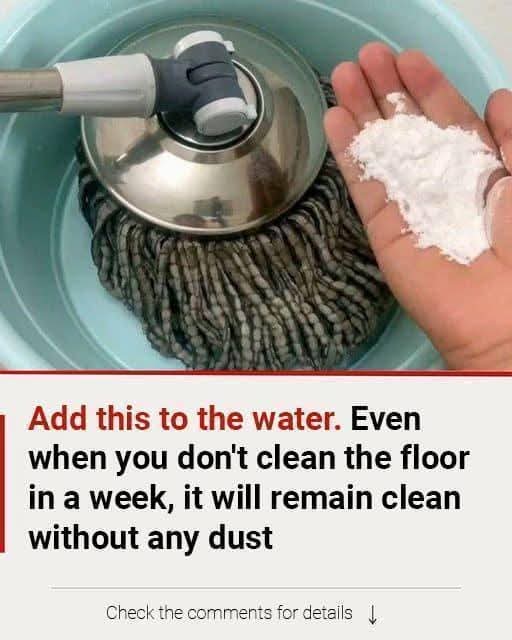
There are cleaning routines that take hours, and then there is this one simple trick – a homemade floor cleaner that keeps your floors dust‑free and sparkling for an entire week, even if you do not mop again. Imagine walking barefoot on clean floors every single day, without having to pull out the mop and bucket constantly. No dust bunnies gathering in corners, no sticky residue, no constant sweeping. Just clean, fresh floors that stay that way. The secret is a few common household ingredients added to your mop water. This is the cleaning hack that professional housekeepers and busy moms swear by. If you are searching for a DIY floor cleaner that repels dust and keeps floors clean for days, this is the recipe you need.
Whether you have tile, hardwood, laminate, or vinyl floors, this simple solution works wonders. It not only cleans but also creates a protective barrier that prevents dust from settling quickly. You will save time, energy, and money on expensive floor cleaners. This homemade dust‑repellent floor solution will revolutionize your cleaning routine.
In this complete guide, you will learn exactly what to add to your mop water, why each ingredient works, step‑by‑step instructions for different floor types, pro tips for the best results, and answers to common questions. Let’s get your floors sparkling – and keep them that way.
Why Do Floors Get Dusty Again So Quickly?
After a thorough mopping, floors often look clean for only a day or two before dust, pet hair, and footprints reappear. Why? Most commercial floor cleaners leave behind a slightly sticky residue that actually attracts more dirt. They also lack any static‑reducing or dust‑repelling properties. The homemade solution described here uses ingredients that create a smooth, anti‑static surface that repels dust rather than attracting it. Additionally, it leaves a barely detectable protective layer that makes dirt slide off instead of sticking. This is a long lasting floor cleaner that works differently than store‑bought products.
The Secret Ingredients – What to Add to Your Mop Water
The magic formula combines four common household items. Here is what you need and why each one works:
Warm water – The base. Warm water helps dissolve dirt and activates the other ingredients.
White vinegar (½ cup) – Cuts through grease, removes residue, and naturally disinfects. It also neutralizes odors and leaves no sticky film.
Fabric softener (2 tablespoons) – This is the secret weapon. Fabric softener contains anti‑static agents that reduce static electricity, which is what attracts dust to floors. It also leaves a light, pleasant scent. Use any brand – unscented works too.
Dish soap (1 tablespoon) – Cuts through grease and grime. Use a mild, grease‑cutting formula like blue Dawn. Do not use too much, or it will leave suds.
Optional: essential oils (10‑15 drops) – For a fresh, natural scent and added antibacterial properties. Lemon, tea tree, lavender, or peppermint are excellent choices.
That is it. No expensive store‑bought floor cleaners, no harsh chemicals. This natural floor cleaning solution is safe for most floor types and incredibly effective.
Complete Recipe for Dust‑Repellent Floor Cleaner
This recipe makes enough for one standard bucket (about 1 gallon / 4 liters of water). Adjust quantities based on your bucket size.
Ingredients:
1 gallon (4 liters) warm water
½ cup (120ml) white vinegar
2 tablespoons liquid fabric softener (any brand)
1 tablespoon mild dish soap (preferably blue Dawn or similar grease‑cutting formula)
Optional: 10‑15 drops of essential oil (lemon, tea tree, lavender, or peppermint)
Equipment:
- Mop bucket
- Mop (spray mop, string mop, or flat mop – any type works)
- Squeeze mop or spin mop (optional, for wringing)
- Microfiber cloth for touch‑ups
Step‑by‑Step Instructions for Mopping
Step 1 – Sweep or Vacuum First
Before mopping, remove loose dirt, dust, and hair by sweeping or vacuuming. This prevents you from spreading dirt around with the mop. Pay special attention to corners and baseboards.
Step 2 – Prepare the Cleaning Solution
Fill your bucket with warm water. Add the white vinegar, fabric softener, dish soap, and optional essential oils. Stir gently with your mop handle to combine. Do not shake vigorously – you want to avoid creating excess suds.
Step 3 – Mop as Usual
Dip your mop into the solution, wring out excess liquid (your mop should be damp, not dripping), and mop the floor in sections. Start from the farthest corner of the room and work your way toward the door. Use overlapping strokes. Do not leave puddles – the floor should dry quickly.
Step 4 – Let Air Dry
Allow the floor to air dry completely. Do not walk on it until dry. The fabric softener will leave a very thin, invisible anti‑static layer that repels dust. You will notice that dust does not settle as quickly, and the floor stays cleaner for days.
Step 5 – Enjoy Clean Floors for a Full Week
After mopping with this solution, you may find that you only need to sweep or vacuum once during the week, and the floors will still look freshly mopped. For high‑traffic areas, a quick dry dusting with a microfiber cloth will remove any surface dust without needing to mop again.
Pro Tips for the Best Results
Follow these expert tips for floors that stay clean longer every time:
Do not use too much fabric softener – 2 tablespoons per gallon is plenty. Too much can leave a greasy film or make floors slippery.
Use warm water, not hot – Hot water can damage some floor finishes. Warm water is effective and safe.
Wring your mop well – A dripping mop leaves excess water that takes longer to dry and can leave streaks.
Change the solution if it becomes dirty – If the water looks murky, dump it and make a fresh batch. Mopping with dirty water just spreads grime.
Test on a small area first – While this solution is safe for most floors, always test on a hidden spot (inside a closet or under a rug) before using on the entire floor.
Use a microfiber mop for best results – Microfiber mops pick up more dirt and distribute the solution evenly. They also dry faster.
For hardwood floors – Use a slightly stronger vinegar ratio (¾ cup) and reduce water slightly. Do not allow standing water on hardwood – wring the mop very well.
Want the full truth and the practical next steps?
Page 2 continues with the real explanation, the key details many readers skip, and the simple takeaways that make this guide more useful.