
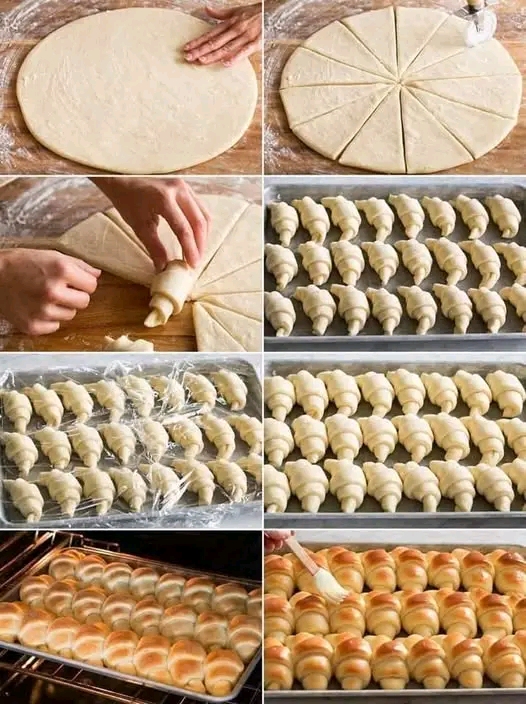
Pro Tips for Super Soft Croissants
· Use fresh yeast – It gives a more aromatic, softer crumb than dry yeast.
· Keep everything cold – Between folds, always chill the dough. Warm butter will leak out and ruin the layers.
· Don’t rush proofing – A long, slow final proof at room temperature (not too warm) ensures those airy honeycomb pockets.
· Steam in the oven – Place a small pan of hot water on the bottom rack during baking for an extra crispy crust and soft interior.
Delicious Variations
· Chocolate Croissants (Pain au Chocolat) – Place a few sticks of dark chocolate on each triangle before rolling.
· Almond Croissants – After baking, fill with almond cream and sprinkle with sliced almonds.
· Savory Croissants – Add grated cheese and ham before rolling.
Storage & Reheating
· Room temperature – Store in an airtight container for up to 2 days.
· Freezer – Freeze baked croissants for up to 1 month. Reheat at 350°F for 5‑7 minutes.
· Reheating tip – Warm in a toaster oven or regular oven, never microwave (it makes them chewy).
Frequently Asked Questions
Why are my croissants dense?
Likely under‑proofed or the butter was too warm during lamination. Let them proof longer next time.
Can I make the dough without a stand mixer?
Yes, knead by hand for 10‑12 minutes until smooth.
What if I don’t have fresh yeast?
Use 3g (1 tsp) active dry yeast or 2g (¾ tsp) instant yeast. Activate in warm milk with a pinch of sugar.
Final Thoughts – Please Keep Posting!
Your recipe starter was just the beginning. Now you have a complete guide to bakery‑quality croissants at home. I hope this post gets all the reactions it deserves – because sharing recipes like this is what makes the baking community so special.
Please don’t stop posting! Leave a comment below if you try these croissants, tag your photos, and let me know how they turn out. One reaction can spark a hundred more bakers to try.
Now go preheat your oven. Those super soft croissants are waiting.