
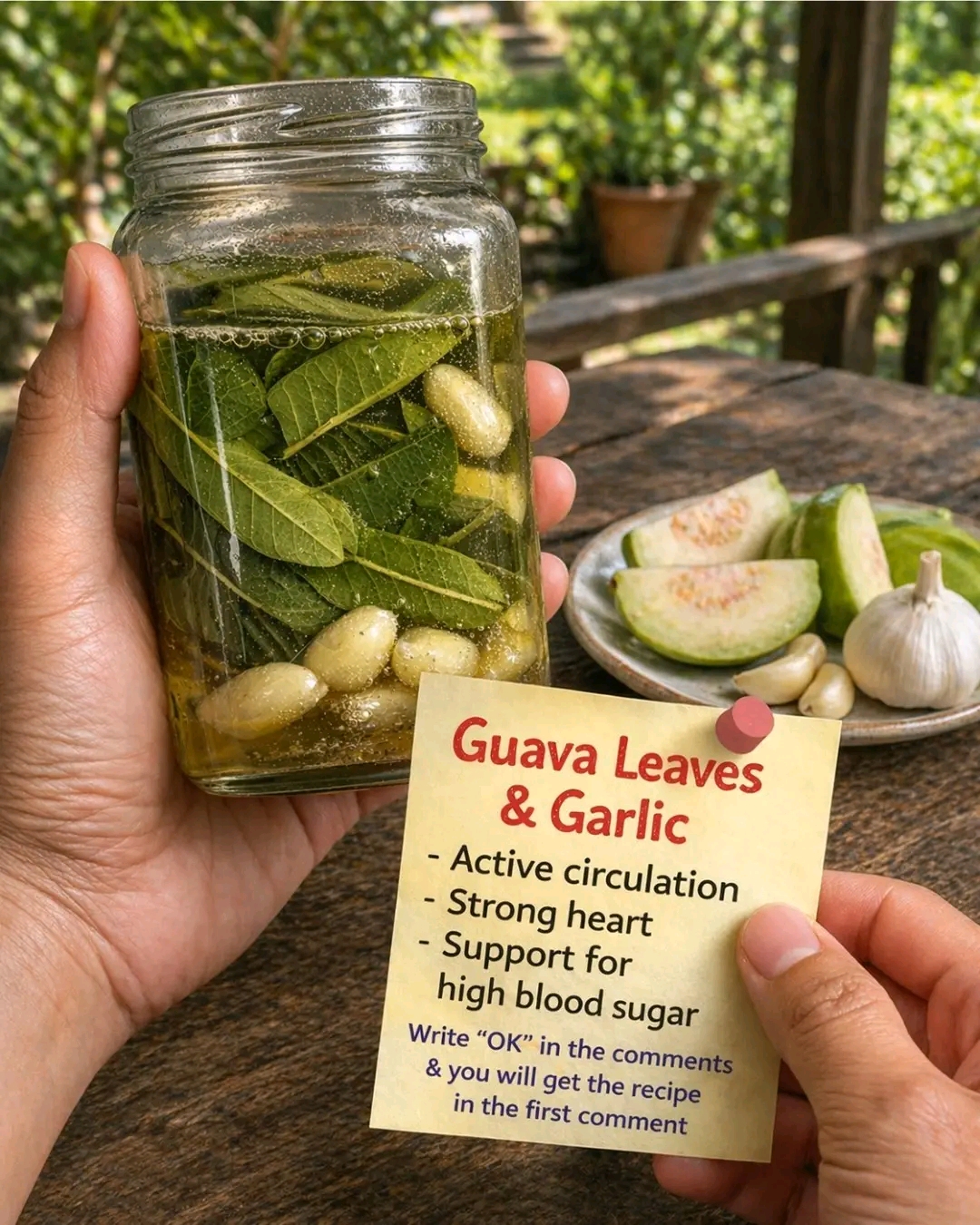
For generations, traditional healers have turned to common kitchen ingredients to support wellness. Two of the most powerful — yet often overlooked — are guava leaves and garlic. Together, they may offer natural support for active circulation, a strong heart, and healthy blood sugar levels.
But here is the truth: while these ingredients have promising properties, they are not a replacement for medical care. The claim “you will never need to go to the hospital again” is dangerously misleading. However, as a complementary addition to a healthy lifestyle, this simple remedy has gained attention for good reason.
In this guide, you will learn the science behind guava leaves and garlic, how to make a simple tea or infusion, who should be cautious, and how to use it safely alongside your regular health routine.
Why Guava Leaves and Garlic?
Both guava leaves and garlic have been studied for their potential health benefits. They are rich in bioactive compounds that may support cardiovascular and metabolic health.
Guava Leaves (Psidium guajava)
Guava leaves contain high levels of antioxidants, including flavonoids, tannins, and polyphenols. Traditional medicine has used them for:
· Lowering blood sugar – Several studies suggest guava leaf extract can reduce post‑meal glucose spikes.
· Improving cholesterol – May help lower LDL (“bad”) cholesterol and triglycerides.
· Anti‑inflammatory effects – Reduces systemic inflammation that can damage blood vessels.
· Antioxidant protection – Fights oxidative stress linked to heart disease.
Garlic (Allium sativum)
Garlic is one of the most researched natural remedies. Its active compound, allicin, is responsible for many of its benefits:
· Blood pressure regulation – Garlic supplements have been shown to modestly lower blood pressure.
· Improved circulation – Helps relax blood vessels and reduce arterial stiffness.
· Cholesterol management – May lower total and LDL cholesterol.
· Antiplatelet effects – Reduces blood clotting (caution needed with blood thinners).
Together, guava leaves and garlic may offer synergistic support for heart health and circulation.
Potential Benefits for Circulation, Heart, and Blood Sugar
Let us look at each claim and what evidence supports it.
- Active Circulation
Poor circulation can lead to cold hands and feet, numbness, and fatigue. Garlic is known to improve blood flow by relaxing blood vessels (vasodilation). Guava leaves add antioxidant protection, reducing damage to vessel walls. The combination may help maintain healthy circulation, especially when combined with exercise and a balanced diet.
- Strong Heart
Heart disease is often driven by high blood pressure, high cholesterol, and inflammation. Garlic has been shown to lower systolic and diastolic blood pressure by 5–10 mmHg in some studies. Guava leaves may help reduce LDL cholesterol and triglycerides. Together, they support multiple heart health markers.
- Support for High Blood Sugar
Several human studies have examined guava leaf tea’s effect on post‑meal blood sugar. One study found that drinking guava leaf tea after a meal significantly reduced blood glucose spikes. Garlic has also been shown to improve insulin sensitivity. While not a replacement for diabetes medication, this combination may be a helpful addition for blood sugar management.
The Simple Guava Leaf and Garlic Recipe
This recipe makes a mild, drinkable infusion. It is not a concentrated extract — think of it as a supportive herbal tea.
Ingredients
· 5–7 fresh guava leaves (or 10–12 dried leaves)
· 2–3 cloves fresh garlic (peeled and lightly crushed)
· 4 cups (1 liter) water
· Optional: 1 tablespoon honey or lemon (for taste)
Instructions
- Wash the guava leaves thoroughly under cool water. If using fresh leaves, choose young, healthy leaves.
- Crush the garlic cloves slightly with the flat side of a knife. This releases allicin.
- Bring water to a boil in a stainless steel or glass pot.
- Add guava leaves and crushed garlic to the boiling water.
- Reduce heat and simmer for 10–15 minutes.
- Remove from heat and let steep for another 5–10 minutes.
- Strain the liquid through a fine mesh strainer or cheesecloth. Discard solids.
- Optional: Add honey or lemon to improve taste.
- Drink warm or let cool to room temperature.
How to Use
· Start with ½ cup (120 ml) once daily to assess tolerance.
· Gradually increase to 1 cup per day.
· Best consumed in the morning or before meals.
· Do not exceed 2 cups per day.
Important Notes
· Do not consume raw garlic cloves on an empty stomach — they can cause nausea and heartburn. This recipe simmers the garlic, making it gentler.
· Start with a small amount to see how your body reacts.
What the Research Says (Realistic View)
Let us be clear: no single tea or remedy replaces a healthy lifestyle or prescribed medication. However, the individual ingredients have credible research.
Guava Leaf Studies
· A 2010 study in Nutrition & Metabolism found that guava leaf tea reduced post‑meal blood sugar in healthy adults.
· A 2016 meta‑analysis noted that guava leaf extract improved blood sugar control in type 2 diabetes patients.
· Animal studies show guava leaf extract lowers LDL cholesterol and triglycerides.
Garlic Studies
· A 2020 meta‑analysis of 12 trials found that garlic supplements reduced blood pressure by an average of 5–8 mmHg.
· A 2016 review concluded that garlic reduces total cholesterol by about 10–15 mg/dL.
· Garlic’s antiplatelet effects are well documented but require caution with blood thinners.
The bottom line: The evidence is promising but not conclusive. This remedy is best used as a supportive measure, not a cure.
Want the full truth and the practical next steps?
Page 2 continues with the real explanation, the key details many readers skip, and the simple takeaways that make this guide more useful.