
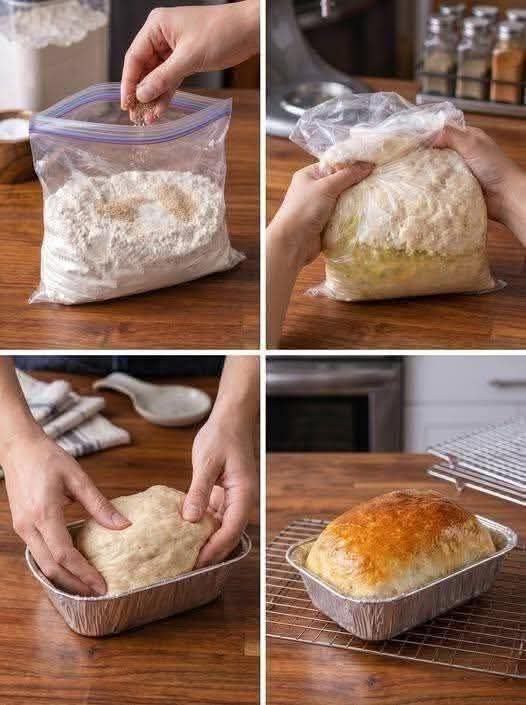
There are bread recipes that require stand mixers, messy counters, and advanced skills, and then there is Bread in a Bag – the kind of soft, fluffy, golden homemade loaf that comes together inside a zip‑top bag with almost zero cleanup. No mixer, no kneading board, no dusty flour cloud over your kitchen. Just a bag, a few simple ingredients, and your hands. This method is genius for beginners, kids, or anyone who has always wanted to bake bread but felt intimidated. The result is a tender, yeasty, perfectly sliceable loaf that will fill your home with the most comforting aroma. If you are searching for a easy homemade bread recipe for beginners that is practically foolproof, this is the one.
This bread in a bag recipe uses simple pantry staples – flour, sugar, yeast, salt, olive oil, and warm water – and comes together in minutes. The dough rises right in the bag, then you shape it, let it rise again, and bake. The crust is golden and crisp, the inside is soft and pillowy. It is perfect for sandwiches, toast, or simply slathered with butter. This no‑mixer bread recipe will become a family favorite.
In this complete guide, you will learn how to make the perfect bread in a bag, including pro tips for the best rise and texture, delicious variations (add herbs, cheese, or garlic), storage and freezing instructions, and why this mess‑free method is a total game‑changer for home bakers. Let’s zip that bag.
Why Bread in a Bag Is a Beginner’s Dream
This bread is incredibly soft and fluffy, made with simple pantry ingredients, no mixer, no kneading board, minimal cleanup (everything mixes inside a bag), and perfect for kids and beginner bakers. The bag method eliminates the intimidation of traditional bread baking – no sticky dough on your hands, no floured counter to scrub. You simply add ingredients to a large zip‑top bag, squish and knead through the bag, then let it rise. The dough comes together beautifully, and the result is a bakery‑worthy loaf. This is a mess‑free bread recipe that will give you confidence in the kitchen.
Here is why you will love it:
Only 15 minutes of active prep – Then rise and bake.
No mixer, no kneading board – Everything happens inside a bag.
Incredibly soft and fluffy – Perfect for sandwiches and toast.
Made with basic ingredients – Flour, sugar, yeast, salt, oil, water.
Perfect for beginners, kids, and anyone who fears yeast – Foolproof.
Customizable – Add herbs, cheese, or garlic.
Great for meal prep and freezing – Stays fresh for days.
Once you try this bag method bread, you will never be afraid of homemade bread again.
The Complete Bread in a Bag Recipe
This recipe makes one 9×5 inch loaf (about 12‑16 slices). It can easily be doubled for two loaves.
Ingredients:
3 cups (360g) all‑purpose flour (plus extra for dusting)
3 teaspoons granulated sugar
1 packet (2 ¼ teaspoons) instant (rapid‑rise) yeast
1 ¼ teaspoons salt
3 tablespoons olive oil (or melted butter, or vegetable oil)
1 cup (240ml) warm water (about 110°F / 45°C – not hot)
Equipment:
1 large (gallon‑size) zip‑top freezer bag
9×5 inch loaf pan
Parchment paper or non‑stick spray
Clean kitchen towel
Cooling rack
Step‑by‑Step Instructions
Step 1 – Combine Dry Ingredients in the Bag
Open a large (gallon‑size) zip‑top freezer bag. Add the flour, sugar, instant yeast, and salt. Close the bag, leaving a little air inside, and shake vigorously to combine the dry ingredients.
Step 2 – Add Wet Ingredients
Open the bag and add the olive oil and warm water. Do not use hot water – it can kill the yeast. Warm water should feel like a warm bath (about 110°F).
Step 3 – Seal and Mix
Squeeze most of the air out of the bag and seal it tightly. Use your hands to squish, massage, and knead the dough through the bag. Mix until all the flour is incorporated and the dough forms a shaggy ball, about 2‑3 minutes. The dough will be sticky – that is fine.
Step 4 – First Rise (In the Bag)
Let the dough rest in the bag for 10 minutes. Then, knead the dough again through the bag for 1‑2 minutes to develop the gluten. Seal the bag and place it in a warm, draft‑free spot (like near a warm oven or on top of the fridge). Let it rise until doubled in size, about 30‑45 minutes. The bag will puff up – that is the yeast doing its job.
Step 5 – Shape the Dough
Lightly flour a clean surface. Open the bag and turn the dough out onto the floured surface. The dough will be soft and slightly sticky. Gently shape it into a rectangle, then roll it into a tight log (like a cinnamon roll). Pinch the seam to seal. Place the log seam‑side down into a greased 9×5 inch loaf pan.
Step 6 – Second Rise
Cover the loaf pan with a clean kitchen towel. Let it rise in a warm place until the dough has risen about 1 inch above the rim of the pan, about 30‑45 minutes.
Step 7 – Bake
Preheat your oven to 375°F (190°C). Bake the bread for 25‑30 minutes, until the top is golden brown and the loaf sounds hollow when tapped. If the top is browning too quickly, tent with foil for the last 10 minutes. The internal temperature should reach 190‑200°F (88‑93°C).
Step 8 – Cool
Remove the bread from the pan immediately and transfer to a wire rack to cool completely before slicing. Cooling allows the crumb to set.
Pro Tips for the Best Bread in a Bag
Follow these expert tips for perfect bag bread every time:
Use warm, not hot, water – Water that is too hot will kill the yeast. Aim for 110°F (warm to the touch, like bathwater).
Use instant (rapid‑rise) yeast – This type of yeast does not need to be proofed in water first; you can mix it directly with the dry ingredients. Active dry yeast also works, but you will need to proof it in warm water with a pinch of sugar for 5‑10 minutes before adding to the bag.
Do not skip the second knead – Kneading after the initial rest helps develop gluten, which gives the bread structure and fluffiness.
Let the dough rise in a warm place – If your kitchen is cool, turn your oven to the lowest setting (170°F) for 1 minute, then turn it off. Place the dough inside (with the door closed) to rise.
Do not over‑flour when shaping – Too much flour can make the bread dense. Use just enough to prevent sticking.
Cool completely before slicing – Warm bread is gummy and will tear. Patience yields clean slices.
Experiment with add‑ins – Add dried herbs, grated cheese, or minced garlic to the dry ingredients for flavored bread.
Delicious Variations (Same Bag Method)
Once you master the classic white bread, try these fun twists. These homemade bread variations will keep your baking exciting.
1. Garlic Herb Bread
Add 1 teaspoon of dried rosemary, 1 teaspoon of dried thyme, and 2 cloves of minced garlic (or 1 teaspoon garlic powder) to the dry ingredients. Brush the baked loaf with garlic butter. This is a garlic herb bread perfect with pasta.
2. Cheddar Cheese Bread
Add ½ cup of shredded sharp cheddar cheese to the dry ingredients. Sprinkle extra cheese on top before baking. This is a cheese bread recipe that is irresistible.
3. Everything Bagel Bread
Add 2 tablespoons of everything bagel seasoning to the dry ingredients. Sprinkle extra seasoning on top before baking. The garlic, onion, poppy, and sesame flavors are wonderful.
Replace 1 cup of the all‑purpose flour with whole wheat flour. Increase the water by 2 tablespoons and add an extra tablespoon of olive oil. The bread will be denser but still delicious.
Want the full truth and the practical next steps?
Page 2 continues with the real explanation, the key details many readers skip, and the simple takeaways that make this guide more useful.