
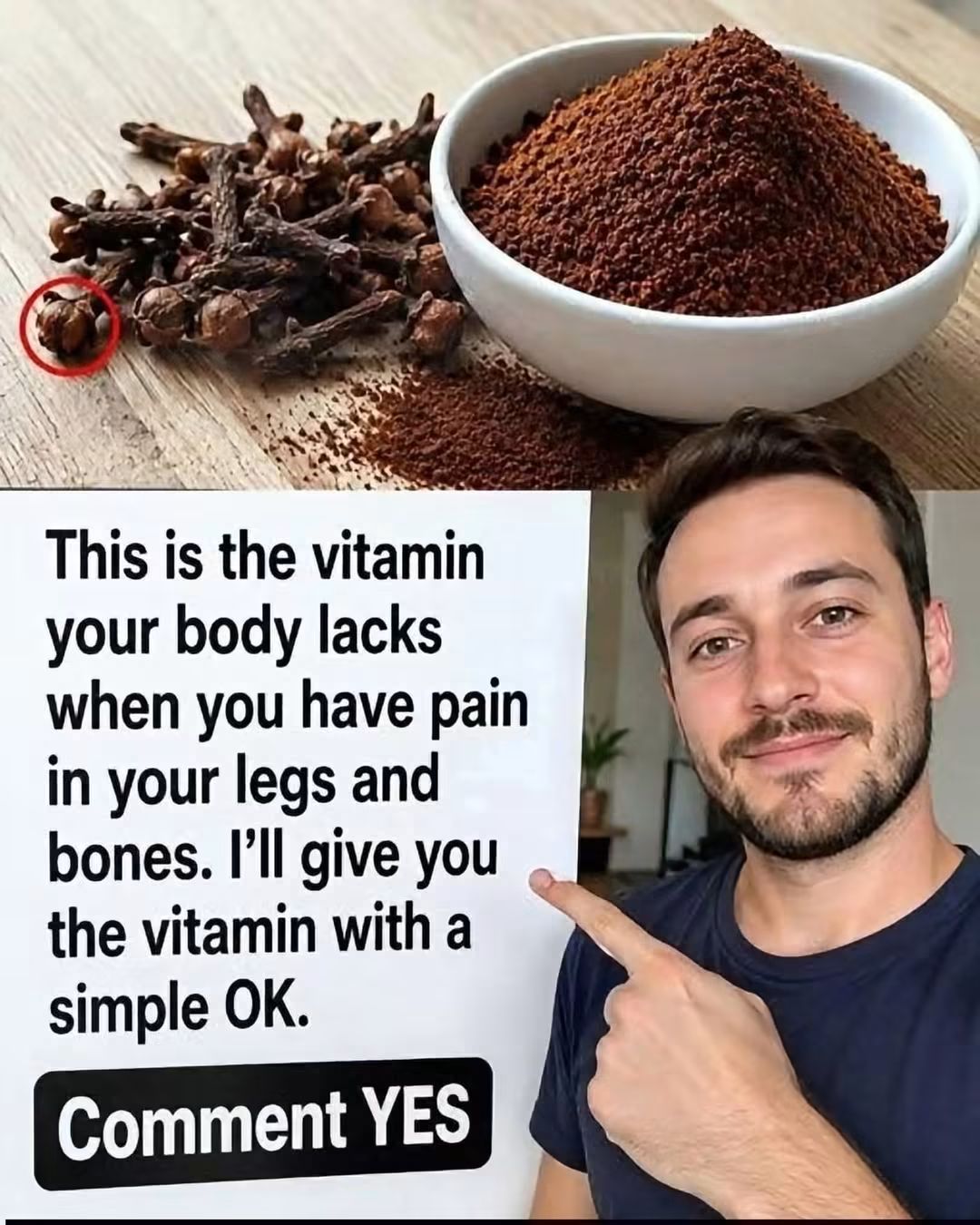
If you’ve been scrolling through social media, you might have seen a post claiming that a specific vitamin found in cloves is the hidden cause of your leg and bone pain. The image often shows a pile of cloves, a bowl of ground spice, and a caption promising that this is “the vitamin your body lacks” when you have pain. It’s a tempting claim—a simple, natural spice could be the answer to your aches and pains.
But is there any truth to it? Let’s separate the facts from the fiction.
The Truth About Cloves and Pain
First, let’s look at what cloves actually contain. According to the U.S. Department of Agriculture, one teaspoon of ground cloves contains about 13 milligrams of calcium, 1.2 milligrams of manganese, 5.4 milligrams of magnesium, and 3 micrograms of vitamin K. While cloves do contain some nutrients, they are not a significant source of the vitamins most commonly linked to bone and leg pain. More importantly, cloves are not a cure for vitamin deficiencies. You would need to consume unrealistic amounts of cloves to address a serious deficiency, and doing so could be harmful.
So, what is the vitamin that your body might actually be lacking when you experience leg and bone pain? Let’s explore the real culprits.
The Real Vitamin Deficiencies Linked to Bone and Leg Pain
- Vitamin D Deficiency: The Most Common Cause
Vitamin D is crucial for calcium absorption and bone health. When your body lacks vitamin D, it can lead to a condition called osteomalacia, or “soft bones,” which causes bone pain and weakness. A 2012 study found that vitamin D deficiency was frequently the sole cause of polyarthralgia, myalgia, bone pain, and chronic widespread pain in patients referred to a rheumatology clinic.
A 2010 study specifically examined the link between nonspecific skeletal pain and vitamin D deficiency, finding a strong association, particularly with leg pain. The study reported an odds ratio of 7.4 for leg pain, meaning people with vitamin D deficiency were over seven times more likely to experience leg pain.
Vitamin D deficiency can be easily overlooked because its symptoms are often vague and can be attributed to other causes. If you have persistent bone or leg pain, it’s worth asking your doctor to check your vitamin D levels.
- Vitamin C Deficiency: The Forgotten Cause
While rare in developed countries, severe vitamin C deficiency can lead to scurvy, a condition that causes bone pain, joint pain, and bleeding gums. In 80% of scurvy cases, musculoskeletal symptoms such as arthralgia, myalgia, and hemarthrosis are present. Vitamin C is essential for collagen synthesis, and its depletion leads to structural collagen alterations, defective osteoid matrix formation, and increased bone resorption.
Children with scurvy often present with musculoskeletal complaints such as bone or joint pain, gait disturbance, and refusal to bear weight. While scurvy is uncommon, it can occur in individuals with restrictive diets, malabsorption issues, or those who don’t consume enough fruits and vegetables.
- Other Potential Deficiencies
Other vitamin deficiencies can also contribute to bone and muscle pain, including vitamin B12 and folate deficiencies, which can cause megaloblastic anemia and associated bone pain.
What Should You Do If You Have Leg and Bone Pain?
If you are experiencing persistent leg or bone pain, don’t rely on social media hacks. Here are the steps you should take:
- See Your Doctor: Persistent pain is a signal that something might be wrong. A doctor can evaluate your symptoms, order blood tests to check for deficiencies, and rule out other conditions.
- Get Your Vitamin D Levels Tested: Given the strong link between vitamin D deficiency and bone pain, this should be one of the first things you check.
- Consider Your Diet: Ensure you are eating a balanced diet rich in calcium, vitamin D, vitamin C, and other essential nutrients. Foods like fatty fish, fortified dairy products, leafy greens, and citrus fruits are all important.
- Don’t Self-Prescribe: Taking large doses of any vitamin without medical supervision can be dangerous. For example, too much vitamin D can lead to calcium buildup in the blood.
Recipes to Support Bone Health and Reduce Pain
While food alone cannot cure a severe deficiency, incorporating nutrient-dense recipes into your diet can help support your bones and muscles. Here are some delicious, easy recipes rich in Vitamin D, Calcium, and Vitamin C. (Note: These recipes are not a substitute for medical treatment. Always consult your doctor first.)
- Creamy Salmon & Spinach Bake (Vitamin D, Calcium, Omega-3s)
Salmon is one of the best dietary sources of Vitamin D, and spinach provides calcium and magnesium. This comforting bake is easy to prepare and packed with bone-supporting nutrients.
Ingredients:
· 4 salmon fillets (about 6 oz each)
· 4 cups fresh spinach
· 1 cup heavy cream
· ½ cup grated Parmesan cheese
· 2 cloves garlic, minced
· 1 tbsp olive oil
· Salt and pepper to taste
· Fresh dill for garnish
Instructions:
- Preheat oven to 375°F (190°C). Grease a baking dish.
- In a skillet, sauté spinach with olive oil and garlic until wilted. Spread in the baking dish.
- Place salmon fillets on top. Season with salt and pepper.
- Pour cream over the salmon and sprinkle with Parmesan.
- Bake for 20–25 minutes until salmon is cooked through.
- Garnish with dill and serve.
- Citrus Kale Salad with Almonds (Vitamin C, Calcium, Magnesium)
Kale is a calcium powerhouse, and citrus fruits provide a hefty dose of Vitamin C, which is essential for collagen and bone health.
Ingredients:
· 4 cups chopped kale, stems removed
· 2 oranges, peeled and segmented
· 1 grapefruit, peeled and segmented
· ½ cup sliced almonds
· ¼ cup olive oil
· 2 tbsp fresh lemon juice
· 1 tbsp honey
· Salt and pepper to taste
Instructions:
- In a large bowl, massage kale with a pinch of salt for 1 minute to soften.
- Add orange and grapefruit segments.
- In a small bowl, whisk olive oil, lemon juice, honey, salt, and pepper.
- Pour dressing over salad and toss. Top with almonds.
- Fortified Berry Smoothie (Vitamin D, Calcium, Vitamin C)
This smoothie is a quick way to get Vitamin D, calcium, and antioxidants. Use fortified plant or dairy milk for an extra boost.
Ingredients:
· 1 cup fortified milk (dairy or plant-based)
· ½ cup plain Greek yogurt
· 1 cup mixed berries (strawberries, blueberries, raspberries)
· 1 tbsp almond butter
· 1 tsp honey (optional)
· Ice cubes
Instructions:
- Combine all ingredients in a blender.
- Blend until smooth. Add more milk if needed for consistency.
- Serve immediately.
- Garlic Herb Chicken with Broccoli (Vitamin D, Calcium, Vitamin K)
Chicken and broccoli are both great sources of bone-friendly nutrients. This one-pan meal is simple and satisfying.
Ingredients:
· 4 chicken thighs (bone-in, skin-on)
· 4 cups broccoli florets
· 3 tbsp olive oil
· 4 cloves garlic, minced
· 1 tsp dried thyme
· ½ tsp salt
· ½ tsp black pepper
· ¼ cup grated Parmesan
Instructions:
- Preheat oven to 400°F (200°C).
- Toss broccoli with 1 tbsp olive oil, salt, and pepper. Spread on a baking sheet.
- Rub chicken with remaining olive oil, garlic, thyme, salt, and pepper. Place on top of broccoli.
- Bake for 30–35 minutes until chicken is cooked through.
- Sprinkle Parmesan over broccoli and chicken during the last 5 minutes.
- Serve hot.
Frequently Asked Questions
Can cloves really cure bone pain?
No. While cloves have some anti-inflammatory properties, they cannot cure a vitamin deficiency or treat the underlying causes of bone pain. Using them as a remedy could delay you from seeking proper medical care.
What vitamin is most commonly linked to bone pain?
Vitamin D deficiency is the most well-established cause of nonspecific bone pain. Osteomalacia, or soft bones, is a direct result of severe vitamin D deficiency.
Can vitamin C deficiency cause leg pain?
Yes. Severe vitamin C deficiency can lead to scurvy, which commonly presents with lower extremity pain.
How much cloves would I need to eat to get enough vitamins?
You would need to consume impractically large amounts of cloves to address a deficiency, and doing so could be toxic. Cloves are a spice, not a treatment.
Should I take supplements for bone pain?
Only if your doctor recommends them after testing. Self-prescribing high doses of vitamins can be dangerous. Food sources are generally safer and better absorbed.
Final Thoughts
The next time you see a social media post promising a miracle cure for your aches and pains, remember that real health solutions rarely come in the form of a single spice or vitamin. If you’re experiencing persistent leg or bone pain, the most important thing you can do is consult a healthcare professional. They can help you identify the real cause and develop a safe, effective treatment plan. In the meantime, nourishing your body with recipes rich in Vitamin D, Calcium, and Vitamin C can support your overall bone health and help you feel your best.
Disclaimer: This information is for educational purposes only and is not a substitute for professional medical advice. Always consult your healthcare provider regarding your specific health concerns.