
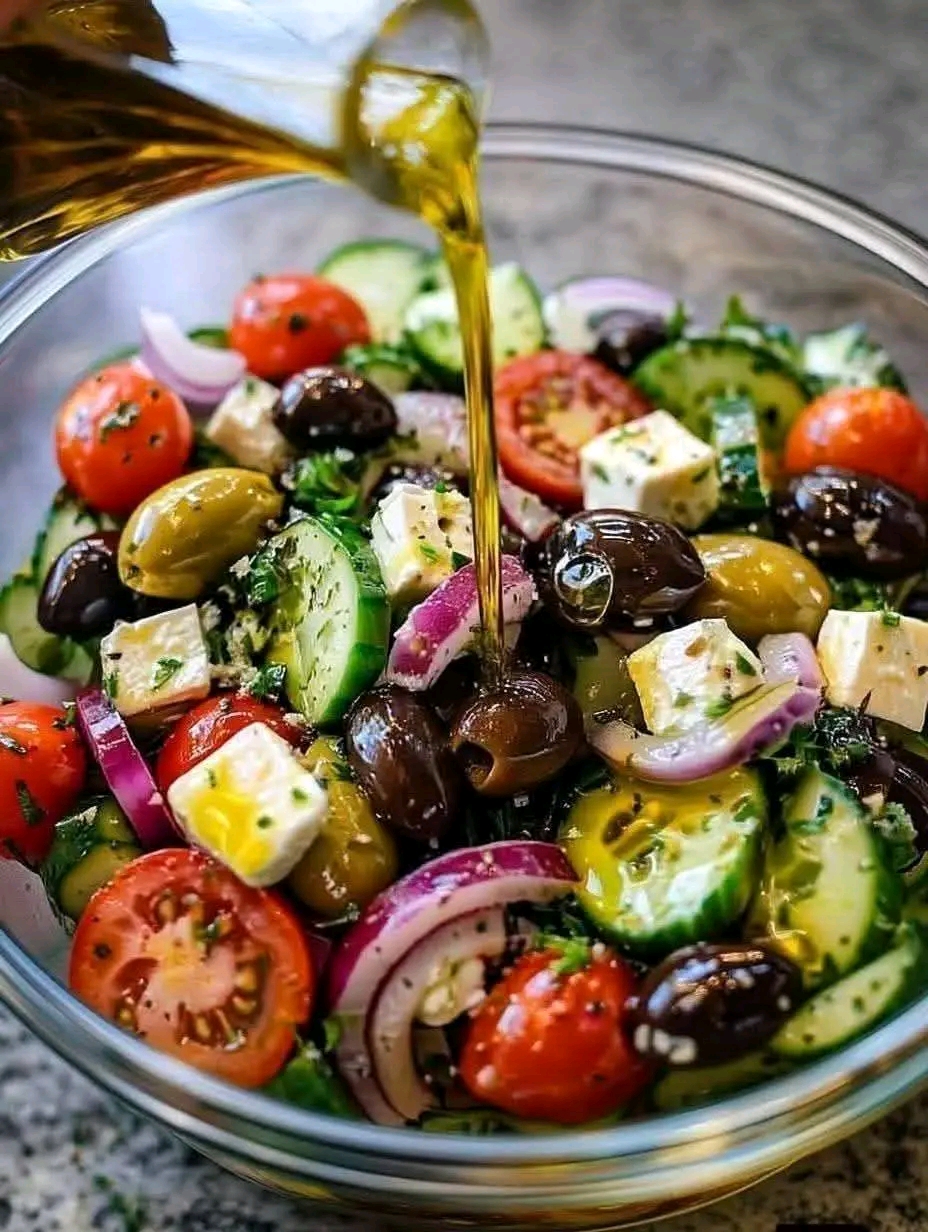
This Traditional Horiatiki Greek Salad is a rustic Mediterranean salad made with ripe tomatoes, thick cucumber slices, red onion, olives, block feta cheese, extra-virgin olive oil, red wine vinegar, and plenty of dried oregano.
Unlike many restaurant-style Greek salads served outside Greece, traditional horiatiki does not rely on lettuce, creamy dressing, finely diced vegetables, or a large collection of unnecessary ingredients. Its appeal comes from ripe produce, salty cheese, briny olives, fragrant oregano, and excellent olive oil.
The vegetables are kept large and substantial so they maintain their texture and release their juices slowly. Thick pieces of feta are placed over or among the vegetables rather than crumbled into tiny dry pieces.
The salad rests briefly before serving, allowing salt to draw flavorful juices from the tomatoes and cucumber. Those natural juices mix with the olive oil, vinegar, feta, and oregano to create the dressing directly in the bowl.
Serve this fresh Greek village salad with warm crusty bread, grilled chicken, lamb, fish, roasted potatoes, rice, pita, hummus, or a larger Mediterranean meal. It also makes an excellent warm-weather lunch when tomatoes are ripe and full of flavor.
What Is Horiatiki?
Horiatiki is commonly known as Greek village salad. It is a simple salad built around tomatoes, cucumber, onion, olives, feta, olive oil, and dried oregano.
The word is associated with a rustic village-style preparation. The ingredients are generally cut into substantial pieces rather than finely chopped.
Because the recipe is so simple, ingredient quality matters. Ripe tomatoes, flavorful cucumbers, authentic feta, briny olives, and good extra-virgin olive oil determine the character of the finished dish.
There is no need for a bottled dressing. The vegetables, salt, olive oil, vinegar, feta, and herbs create their own flavorful liquid as they sit together.
The Essential Rules of Traditional Horiatiki
No Lettuce
A traditional village-style Greek salad is centered on tomatoes and cucumber rather than lettuce.
Lettuce can dilute the tomato juices and becomes soft quickly after contact with salt and olive oil.
Keep the Vegetables Chunky
The tomatoes and cucumber should remain in large, substantial pieces.
This helps the vegetables maintain texture and gives the salad its rustic presentation.
Use Block Feta
Choose feta sold in a block, preferably packed in brine.
Serve it in thick slabs or large cubes so diners can break it apart while eating.
Pre-crumbled feta is convenient but is often drier and does not create the same creamy texture.
Let Olive Oil Lead the Dressing
High-quality extra-virgin olive oil is the primary dressing ingredient.
Red wine vinegar provides acidity, while dried oregano, salt, pepper, and vegetable juices complete the mixture.
Allow the Salad to Rest
A brief rest gives the salt time to draw juice from the tomatoes and cucumber.
These juices combine with the olive oil and vinegar at the bottom of the bowl, creating one of the best parts of the salad.
Ingredients for Traditional Horiatiki Greek Salad
- 1 pint cherry or grape tomatoes, halved, or 4 large ripe tomatoes cut into wedges
- 1 large English cucumber, halved and sliced thickly
- 1/2 red onion, sliced into thin rings
- 1/2 cup Kalamata olives
- 1/2 cup large green olives, optional
- 1 block feta cheese, approximately 8 ounces, cut into thick cubes or slabs
- 1/2 cup high-quality extra-virgin olive oil
- 2 tablespoons red wine vinegar
- 1 tablespoon dried oregano
- Salt, to taste
- Freshly cracked black pepper, to taste
Optional Traditional-Style Additions
- Green bell pepper rings
- Capers
- Extra dried oregano
- Warm crusty bread for serving
Ingredient Notes
Tomatoes
Tomatoes are the heart of this salad, so use the ripest and most flavorful ones available.
Large tomatoes can be cut into wedges or irregular chunks. Cherry and grape tomatoes are convenient and usually hold their shape well.
Room-temperature tomatoes generally have better flavor than tomatoes served directly from the refrigerator.
Cucumber
English cucumber has thin skin, small seeds, and a crisp texture.
It can be left unpeeled, partially peeled in stripes, or peeled completely.
When using a standard garden cucumber, remove thick skin and large watery seeds when necessary.
Red Onion
Red onion adds sharpness and color.
Slice it into thin rings or half-moons so it distributes evenly without overpowering every bite.
For a milder flavor, soak the slices in cold water for approximately 10 minutes, then drain and dry them.
Kalamata Olives
Kalamata olives have a dark color, wrinkled appearance, and deep briny flavor.
Pitted olives are easier to eat, while olives with pits may retain a firmer texture and stronger flavor.
Warn guests when the olives still contain pits.
Green Olives
Large green olives add color, saltiness, and a firmer bite.
They are optional and can be omitted when you prefer a simpler combination.
Feta Cheese
Use a high-quality block feta rather than dry pre-crumbled cheese.
Feta packed in brine usually has a creamier texture and fresher flavor.
Cut it into thick cubes or place one large slab over the salad.
Extra-Virgin Olive Oil
Olive oil is one of the dominant flavors in the recipe.
Choose an extra-virgin olive oil with a fresh, fruity, grassy, or lightly peppery taste.
The oil will mix with tomato juice, vinegar, and feta at the bottom of the bowl, so quality matters.
Red Wine Vinegar
Red wine vinegar adds brightness and balances the richness of the olive oil and feta.
Add it gradually when you prefer a milder salad.
Dried Oregano
Dried oregano provides the familiar herbal aroma associated with this salad.
Crush it lightly between your fingers before sprinkling to release more fragrance.
Salt and Black Pepper
Salt draws juice from the vegetables and helps create the natural dressing.
Use it carefully because feta and olives are already salty.
Freshly cracked black pepper adds mild warmth and aroma.
Kitchen Equipment
You will need a large glass or ceramic serving bowl, sharp knife, cutting board, measuring cups, measuring spoons, and salad servers.
A wide bowl allows the vegetables to remain in visible layers and makes gentle tossing easier.
How to Make Traditional Horiatiki Greek Salad
Step 1: Prepare the Tomatoes
Wash and dry the tomatoes.
Halve cherry or grape tomatoes, or cut large tomatoes into thick wedges.
Place them in a large serving bowl along with any juices released during cutting.
Step 2: Prepare the Cucumber
Wash the cucumber.
Peel it fully, partially, or leave the thin skin attached.
Cut it in half lengthwise and slice it into thick half-moons, or cut it into large chunks.
Add the cucumber to the bowl.
Step 3: Slice the Onion
Cut the red onion into thin rings or half-rings.
Add them to the tomatoes and cucumber.
Step 4: Add the Olives
Add the Kalamata olives and optional green olives.
Keep them whole or halve especially large olives.
Step 5: Add the Feta
Cut the block feta into large cubes or thick slabs.
Nestle the cheese into the center or arrange it across the top of the vegetables.
Do not crumble it finely.
Step 6: Season Generously
Sprinkle the salad with dried oregano, a small amount of salt, and freshly cracked black pepper.
Remember that the feta and olives already contain salt.
Step 7: Add the Olive Oil and Vinegar
Pour the extra-virgin olive oil directly over the vegetables and feta.
Add the red wine vinegar evenly across the bowl.
Step 8: Let the Salad Rest
Do not toss the salad immediately.
Allow it to rest at cool room temperature for approximately 10 minutes.
During this time, the salt draws juice from the tomatoes and cucumber. Those juices mix with the olive oil, vinegar, oregano, and feta.
Step 9: Toss Gently
Give the salad one or two gentle turns shortly before serving.
Avoid aggressive mixing, which can crush the tomatoes and break all the feta into small pieces.
Step 10: Serve Immediately
Serve the salad with warm crusty bread, pita, or another food that can soak up the tomato-infused olive oil at the bottom of the bowl.
Why the 10-Minute Rest Matters
The salad does not use a thick emulsified dressing. Its flavor develops directly in the serving bowl.
Salt draws a small amount of liquid from the tomatoes and cucumber.
The vegetable juices mix with the olive oil and vinegar, carrying oregano, pepper, feta, and olive flavor throughout the dish.
Serving immediately after assembly can leave the ingredients tasting separate.
Resting too long, however, can make the vegetables softer. Approximately 10 minutes provides a useful balance.
How to Prevent Watery Greek Salad
Use ripe but firm tomatoes.
Cut the vegetables into thick pieces rather than tiny dice.
Dry the vegetables after washing.
Do not salt the salad hours before serving.
Use the recommended short resting time rather than allowing it to sit all afternoon.
Serve promptly after the gentle final toss.
A small pool of tomato-infused oil at the bottom is traditional and flavorful. The salad should be juicy, but the vegetables should not become mushy.
How to Choose Good Feta
Look for feta sold in a block and packed in brine.
The cheese should smell fresh, milky, tangy, and pleasantly salty.
A good feta should be firm enough to hold its shape but creamy enough to break with a fork.
Avoid packages with dry, hard, or heavily crumbled cheese when you want the traditional presentation.
Keep feta refrigerated and return unused cheese to its brine or a tightly covered container.
How to Choose Olive Oil for Horiatiki
Because olive oil is a major ingredient rather than a minor coating, choose one you enjoy tasting directly.
Fresh extra-virgin olive oil may have fruity, grassy, herbal, buttery, or peppery notes.
Avoid oil with stale, waxy, or rancid aromas.
Store olive oil away from heat, light, and air.
Use a dark bottle or opaque container and close it tightly after pouring.
Tips for the Best Traditional Greek Salad
Use ripe room-temperature tomatoes.
Keep all vegetables chunky.
Use block feta packed in brine.
Choose flavorful extra-virgin olive oil.
Use dried oregano generously.
Add salt carefully.
Let the salad rest briefly before tossing.
Toss gently to preserve the feta and tomato pieces.
Serve immediately with bread.
Common Additions and Regional Variations
Green Bell Pepper
Thin green bell pepper rings add crunch and a slightly bitter fresh flavor.
Capers
Capers add extra briny intensity and are especially good with ripe tomatoes.
Different Olives
Use only Kalamata olives or combine them with large green olives.
Whole Feta Slab
Instead of cubes, place one thick slab of feta over the vegetables and season it with oregano and olive oil.
More Vinegar
Add another splash of red wine vinegar when you prefer a sharper salad.
Less Vinegar
Use only one tablespoon when the tomatoes are naturally acidic.
Ingredients That Are Usually Left Out of Traditional Horiatiki
Lettuce
Lettuce is common in many Greek-inspired salads but is not central to the traditional village-style version.
Sweet Balsamic Glaze
Balsamic glaze changes the flavor substantially by adding concentrated sweetness.
Creamy Dressing
The natural dressing comes from olive oil, vinegar, vegetable juices, feta, and oregano.
Finely Crumbled Feta
Large pieces provide a creamier texture and allow diners to break the cheese apart themselves.
Finely Diced Vegetables
Large pieces help the tomatoes and cucumber maintain their identity and texture.
Can You Use Cherry Tomatoes?
Yes. Cherry or grape tomatoes are convenient and often flavorful throughout more of the year.
Halve them so their juices can combine with the olive oil.
During peak tomato season, large ripe tomatoes cut into wedges create a more rustic salad.
Can You Use Another Cucumber?
Yes. Persian cucumbers have thin skins and crisp texture.
Standard garden cucumbers can also be used, but peel thick or waxed skin and remove large watery seeds when needed.
Can You Use Pre-Crumbled Feta?
You can use it when that is the only option available, but block feta produces a creamier texture and more traditional presentation.
Pre-crumbled cheese may be drier and can disappear into the salad rather than remaining as a distinct ingredient.
Can You Make It without Olives?
Yes. The salad will lose some of its briny flavor, but the tomatoes, feta, onion, oregano, vinegar, and olive oil still create a delicious dish.
Capers can add some of the missing saltiness.
Can You Make Horiatiki Vegan?
Omit the feta or use a suitable plant-based feta alternative.
Add extra olives, capers, or marinated white beans for more savory flavor.
Check plant-based cheese for allergens and storage requirements.
Is Horiatiki Gluten-Free?
The basic salad is naturally gluten-free when all packaged ingredients and seasonings are suitable.
Serve it with gluten-free bread or crackers when needed.
Review cheese, olives, vinegar, and dried seasonings for cross-contact warnings if preparing the dish for someone with celiac disease or a serious allergy.
Can You Make Greek Salad Ahead?
The vegetables can be washed and cut several hours ahead.
Store the tomatoes, cucumber, onion, olives, and feta in separate covered containers in the refrigerator.
Bring the tomatoes closer to room temperature before serving for better flavor.
Assemble, season, dress, and rest the salad shortly before eating.
Do not add salt and olive oil hours ahead because the vegetables will release too much liquid and soften.
What to Serve with Traditional Greek Salad
Crusty Bread
Bread is perfect for soaking up the tomato juices and olive oil left in the bowl.
Pita Bread
Warm pita turns the salad into a more substantial lunch.
Grilled Chicken
Simple grilled chicken adds protein without overpowering the fresh vegetables.
Grilled Lamb
Lamb pairs naturally with oregano, feta, onion, and olives.
Fish and Seafood
Serve the salad with grilled fish, shrimp, or calamari.
Roasted Potatoes
Lemon and herb roasted potatoes make a satisfying Mediterranean-style side.
Rice or Orzo
Rice, lemon rice, or orzo can turn the salad into a complete meal.
Hummus
Hummus, pita, and Greek salad make an easy vegetarian lunch.
Grilled Vegetables
Eggplant, zucchini, peppers, and mushrooms complement the salad.
How to Build a Complete Mediterranean Lunch
Serve a generous portion of horiatiki with warm pita or crusty bread.
Add hummus, grilled chicken, fish, falafel, or white beans for protein.
Include roasted potatoes, rice, or grilled vegetables.
Finish the meal with watermelon, grapes, peaches, yogurt, or another simple fresh dessert.
How to Store Leftover Greek Salad
Transfer leftovers to an airtight food storage container.
Refrigerate within two hours.
Store for up to one to two days for the best texture.
The tomatoes and cucumber continue releasing liquid, so the salad becomes softer during storage.
Use a slotted spoon when serving leftovers if excessive liquid has collected.
Can You Freeze Horiatiki?
Freezing is not recommended.
Tomatoes and cucumber become very soft and watery after thawing.
Feta can also change texture in the freezer.
Prepare only the amount likely to be eaten within one or two days.
Ways to Use Leftover Greek Salad
Spoon it over toasted bread.
Add it to a pita with grilled chicken.
Mix it with cooked orzo or pasta.
Serve it over rice or quinoa.
Add it to scrambled eggs or an omelet.
Use it as a topping for baked potatoes.
Combine it with chickpeas or white beans for a quick lunch.
Common Mistakes to Avoid
Do not use underripe, flavorless tomatoes.
Avoid cutting the vegetables into tiny pieces.
Do not use too much salt before tasting the feta and olives.
Avoid using dry feta when a brined block is available.
Do not drown the salad in a sweet bottled dressing.
Avoid tossing aggressively.
Do not assemble the salad many hours ahead.
Avoid serving it ice-cold when you want the fullest tomato and olive-oil flavor.
Frequently Asked Questions
Does Traditional Greek Salad Contain Lettuce?
Traditional village-style horiatiki is generally built around tomatoes and cucumber rather than lettuce.
Why Are the Vegetables Cut into Large Pieces?
Large pieces maintain texture and prevent the salad from becoming mushy quickly.
Should Feta Be Crumbled?
A thick slab or large cubes provide a more traditional appearance and creamier texture.
What Is the Dressing?
The dressing is primarily extra-virgin olive oil with red wine vinegar, dried oregano, salt, pepper, and natural vegetable juices.
Why Let the Salad Rest?
The brief rest allows salt to draw juice from the tomatoes and cucumber, creating a natural dressing in the bowl.
Can I Use Only Kalamata Olives?
Yes. Green olives are optional.
Can I Add Bell Pepper?
Yes. Thin green bell pepper rings are a common and flavorful addition.
Can I Use Fresh Oregano?
You can, but dried oregano creates the familiar concentrated flavor associated with this preparation.
Can I Use Lemon Juice Instead of Vinegar?
Lemon juice can work, but red wine vinegar provides the classic tang in this recipe.
Can I Prepare It Ahead?
Prepare the individual ingredients ahead, but assemble and season the salad shortly before serving.
How Long Do Leftovers Keep?
Refrigerate leftovers for one to two days for the best texture.
Can It Be Frozen?
No. Freezing damages the texture of the tomatoes and cucumber.
How Many People Does It Serve?
The recipe serves approximately four people as a main lunch or six people as a side dish.
Food Safety and Allergy Notes
Wash tomatoes, cucumber, onion, peppers, and fresh garnishes thoroughly before preparation.
Use a clean cutting board, knife, serving bowl, and utensils.
Keep feta refrigerated until needed.
When using olives with pits, warn diners clearly.
Refrigerate leftovers within two hours.
This recipe contains dairy when prepared with feta.
Review feta, olives, vinegar, dried seasonings, and plant-based alternatives for allergen and cross-contact warnings.
Why This Salad Is Perfect for Summer
Horiatiki celebrates ripe tomatoes, crisp cucumber, fragrant oregano, and flavorful olive oil.
It requires no oven and very little active preparation.
The salad can be served as a cooling lunch or alongside grilled food.
Its bold flavor comes from seasonal ingredients rather than a complicated dressing.
Warm bread and feta make it satisfying enough to enjoy as a simple meal.
Printable Traditional Horiatiki Greek Salad Recipe
Traditional Greek Village Salad
Prep Time: 15 minutes
Resting Time: 10 minutes
Total Time: 25 minutes
Yield: 4 main-dish or 6 side-dish servings
Category: Salad, lunch, or side dish
Cooking Method: No-cook
Cuisine: Greek
Ingredients
- 1 pint cherry or grape tomatoes, halved, or 4 large ripe tomatoes cut into wedges
- 1 large English cucumber, halved and sliced thickly
- 1/2 red onion, sliced into thin rings
- 1/2 cup Kalamata olives
- 1/2 cup large green olives, optional
- 1 block feta cheese, approximately 8 ounces, cut into thick cubes or slabs
- 1/2 cup high-quality extra-virgin olive oil
- 2 tablespoons red wine vinegar
- 1 tablespoon dried oregano
- Salt, to taste
- Freshly cracked black pepper, to taste
- Green bell pepper rings or capers, optional
Instructions
- Wash and dry all the vegetables.
- Halve the cherry tomatoes or cut large tomatoes into thick wedges.
- Place the tomatoes and their juices in a large serving bowl.
- Halve the cucumber and cut it into thick slices or large chunks.
- Add the cucumber to the bowl.
- Slice the red onion into thin rings and add it to the vegetables.
- Add the Kalamata olives and optional green olives.
- Add optional green bell pepper rings or capers.
- Cut the feta into thick cubes or leave it in one large slab.
- Nestle the feta into the center or place it over the vegetables.
- Sprinkle generously with dried oregano.
- Add salt carefully and season with freshly cracked black pepper.
- Pour the extra-virgin olive oil directly over the salad.
- Add the red wine vinegar.
- Do not toss immediately.
- Allow the salad to rest for approximately 10 minutes.
- Give it one or two gentle turns shortly before serving.
- Serve immediately with warm crusty bread or pita.
Storage
Store leftovers in an airtight container in the refrigerator for one to two days.
Make-Ahead Tip
Wash and cut the vegetables ahead, but store the ingredients separately. Assemble, season, dress, and rest the salad shortly before serving.
Important Tip
Keep the vegetables chunky, use block feta, and allow the salad to rest for 10 minutes before the gentle final toss. The tomato and cucumber juices will mix with the olive oil to create the natural dressing.
Final Thoughts
This Traditional Horiatiki Greek Salad proves that exceptional summer food does not require a complicated recipe.
Ripe tomatoes, crisp cucumber, red onion, briny olives, thick block feta, dried oregano, red wine vinegar, and excellent extra-virgin olive oil create a salad with bold flavor and satisfying texture.
For the best result, keep the vegetables in large pieces, use feta packed in brine, choose olive oil you genuinely enjoy, and season carefully because the olives and cheese are already salty.
Allow the salad to rest briefly before tossing so the tomato and cucumber juices can combine with the oil and vinegar.
Serve it promptly with crusty bread to capture the flavorful juices left at the bottom of the bowl.
Enjoy it as a simple summer lunch or pair it with grilled chicken, lamb, fish, potatoes, rice, pita, hummus, or roasted vegetables.
With no lettuce, no heavy bottled dressing, and no unnecessary preparation, this rustic Greek village salad lets fresh produce, feta, olives, oregano, and olive oil remain the true stars of the meal.