
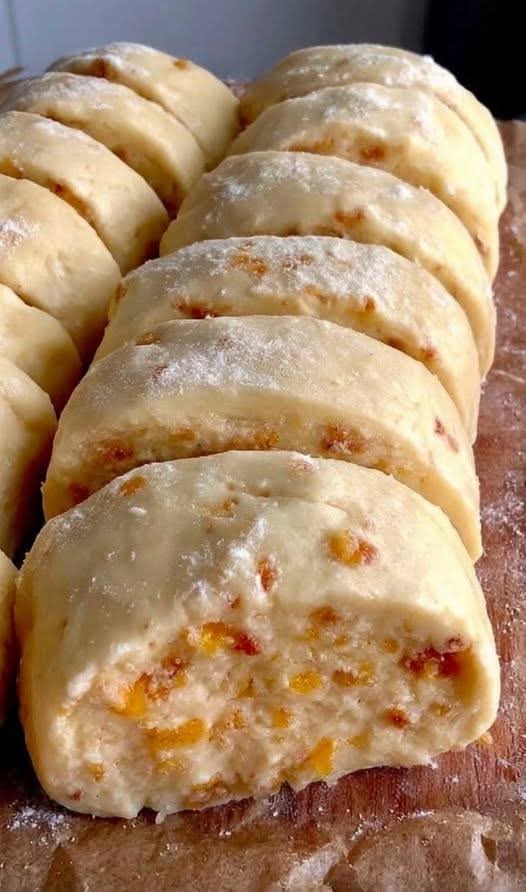
These Butterscotch Shortbread Cookies are rich, buttery, crisp around the edges, and filled with sweet caramel-like butterscotch flavor. Each cookie has the delicate, crumbly texture of classic shortbread combined with small pockets of melted butterscotch chips, making this an easy homemade cookie recipe that feels both nostalgic and special.
The dough is made with simple baking ingredients, including butter, powdered sugar, flour, vanilla, and butterscotch chips. There are no eggs, no complicated decorating steps, and no advanced baking techniques. The cookies can be shaped into a log for easy slice-and-bake preparation or rolled and cut into decorative shapes for holidays and special occasions.
These buttery shortbread cookies are perfect for Christmas cookie trays, holiday gift boxes, afternoon coffee breaks, bake sales, family gatherings, bridal showers, tea parties, and homemade dessert platters. They store well, freeze beautifully, and can be prepared in advance, making them especially useful during a busy holiday baking season.
Butterscotch has a warm flavor created from brown sugar and butter, so it pairs naturally with traditional shortbread. The sweetness of the chips balances the lightly salted, buttery dough, while vanilla adds a smooth bakery-style finish.
Whether you are searching for an easy Christmas cookie recipe, a make-ahead dessert, or a simple cookie to serve with coffee and tea, these Butterscotch Shortbread Cookies are dependable, delicious, and easy to customize.
Why You Will Love These Butterscotch Shortbread Cookies
This recipe combines two classic flavors in one simple dessert. Traditional shortbread is known for its buttery richness and delicate crumb, while butterscotch adds notes of caramel, brown sugar, and vanilla. Together, they create a cookie that tastes comforting and familiar without requiring a long ingredient list.
The preparation is also straightforward. The butter and sugar are mixed until smooth, the flour is added gradually, and the butterscotch chips are folded in at the end. The dough is then chilled, sliced, and baked until the edges are lightly golden.
Because the recipe contains no eggs, the finished cookies have a true shortbread texture. They are firm enough to hold their shape but tender enough to crumble easily with each bite.
These cookies are also excellent for planning ahead. The dough can be refrigerated for several days or frozen for longer storage. You can keep a roll of dough in the freezer and slice off a few cookies whenever you need a quick homemade dessert.
The finished cookies travel well because they do not contain soft frosting or delicate fillings. This makes them suitable for mailing, holiday gifts, school events, office parties, and cookie exchanges.
Another advantage is versatility. You can add toasted pecans, walnuts, chocolate chips, sea salt, cinnamon, orange zest, or a chocolate drizzle. The basic shortbread dough works as a reliable starting point for many flavor variations.
What Is Shortbread?
Shortbread is a traditional Scottish cookie made primarily from butter, sugar, and flour. Unlike many cookie recipes, classic shortbread does not usually contain eggs, baking powder, or baking soda.
The name is connected to the cookie’s short, crumbly texture. In baking, shortening refers to the way fat coats flour particles and limits gluten development. This creates a tender texture rather than a chewy or bread-like structure.
Traditional shortbread is often made using a simple ratio of one part sugar, two parts butter, and three parts flour by weight. Modern recipes may include powdered sugar, cornstarch, vanilla, salt, nuts, chocolate, or other flavorings.
Shortbread can be baked in a round pan and cut into wedges, pressed into decorative molds, shaped into fingers, or prepared as slice-and-bake cookies.
This recipe keeps the familiar buttery texture while adding butterscotch chips for extra sweetness and flavor.
What Does Butterscotch Taste Like?
Butterscotch has a rich, warm flavor commonly associated with brown sugar, butter, vanilla, and caramel. It is similar to caramel but is traditionally made with brown sugar rather than granulated sugar.
Butterscotch chips are convenient baking ingredients that melt slightly during baking while maintaining small pockets of flavor inside the cookies.
The sweetness of butterscotch works especially well with shortbread because the cookie dough itself is not overly sweet. Butter and salt balance the chips, preventing the finished cookies from tasting one-dimensional.
For a deeper butterscotch flavor, you can add a small amount of brown sugar, butterscotch extract, toffee pieces, or a pinch of flaky sea salt.
Ingredients for Butterscotch Shortbread Cookies
- 1 cup unsalted butter, softened
- 2/3 cup powdered sugar
- 1 teaspoon vanilla extract
- 1/2 teaspoon salt
- 2 cups all-purpose flour
- 2 tablespoons cornstarch
- 1 cup butterscotch baking chips
Optional Additions
- 1/2 cup finely chopped toasted pecans
- 1/2 cup finely chopped walnuts
- 1/2 teaspoon butterscotch extract
- 1/2 teaspoon ground cinnamon
- 1 teaspoon finely grated orange zest
- Flaky sea salt for topping
- Melted dark or white chocolate for drizzling
Ingredient Notes
Butter
Butter is the most important ingredient in shortbread, so use a good-quality butter with a clean, fresh flavor.
Unsalted butter allows you to control the amount of salt in the recipe. Salted butter can be used, but reduce or omit the additional salt.
The butter should be softened but not melted. Properly softened butter should yield slightly when pressed while still holding its shape.
Butter that is too cold will not blend smoothly with the sugar. Butter that is too warm can make the dough greasy and cause the cookies to spread.
Powdered Sugar
Powdered sugar creates a delicate, melt-in-your-mouth texture. Its fine particles blend easily with butter and help produce a smooth dough.
Granulated sugar can be used in some shortbread recipes, but it creates a slightly firmer and more textured cookie.
All-Purpose Flour
All-purpose flour provides structure. Measure it carefully because too much flour can make shortbread dry and difficult to shape.
For the most accurate result, use a digital kitchen scale. When measuring with cups, spoon the flour into the cup and level it without packing.
Cornstarch
Cornstarch reduces gluten development and helps create an especially tender, crumbly cookie.
If cornstarch is unavailable, replace it with an equal amount of all-purpose flour. The cookies may be slightly firmer but will still taste delicious.
Butterscotch Chips
Butterscotch chips provide the main flavor variation. Standard-size chips can be used, but chopping them slightly makes the dough easier to slice.
Mini butterscotch chips distribute more evenly when available.
Vanilla
Pure vanilla extract enhances the butter and butterscotch flavors.
Butterscotch extract can be added for a stronger flavor, but use it sparingly because concentrated extracts can become overpowering.
Kitchen Equipment
You will need a large mixing bowl, an electric hand mixer or stand mixer, measuring cups, measuring spoons, a silicone spatula, parchment paper, a sharp knife, and baking sheets.
A digital kitchen scale can improve measurement accuracy. A cookie scoop is not necessary for the slice-and-bake method but is useful when shaping individual balls.
A ruler can help create evenly sized dough logs and consistent cookie slices.
Wire cooling racks allow air to circulate around the cookies after baking, helping them remain crisp.
A food processor can be used to chop butterscotch chips or nuts into smaller pieces, but pulse carefully to avoid creating fine powder.
How to Make Butterscotch Shortbread Cookies
Step 1: Soften the Butter
Remove the butter from the refrigerator approximately 30 to 60 minutes before baking.
The exact time depends on the room temperature. The butter should feel soft enough to mix but should not appear shiny, greasy, or partially melted.
When the butter is too warm, return it to the refrigerator for several minutes before continuing.
Step 2: Cream the Butter and Sugar
Place the softened butter and powdered sugar in a large mixing bowl.
Beat with an electric mixer on medium-low speed until smooth and creamy, approximately two minutes.
Scrape the bottom and sides of the bowl with a silicone spatula.
Do not beat excessively. Shortbread does not need the large amount of air often incorporated into cakes or soft cookies.
Step 3: Add Vanilla and Salt
Add the vanilla extract and salt.
Mix briefly until evenly combined.
When using butterscotch extract, orange zest, or cinnamon, add it during this step.
Step 4: Combine the Flour and Cornstarch
In a separate bowl, whisk together the all-purpose flour and cornstarch.
This ensures the cornstarch is distributed evenly before being added to the butter mixture.
Step 5: Add the Dry Ingredients
Add the flour mixture to the butter mixture in two or three additions.
Mix on low speed after each addition. Stop when the dough begins forming large crumbs and no loose flour remains.
The dough may appear slightly dry at first. Press a small amount between your fingers. It should hold together.
Do not continue beating after the dough is combined. Overmixing can make the cookies tougher.
Step 6: Add Butterscotch Chips
Fold the butterscotch chips into the dough with a silicone spatula.
When using standard-size chips, chop them roughly before adding them. Smaller pieces make slicing easier and create a more even distribution.
Add chopped nuts at the same time when using them.
Step 7: Shape the Dough
Divide the dough into two equal portions.
Place each portion on a sheet of parchment paper or plastic wrap. Shape it into a log approximately two inches in diameter.
Roll and press gently to remove air gaps and create an even cylinder.
Square the sides slightly when you prefer rectangular shortbread cookies.
Step 8: Chill the Dough
Wrap the dough logs tightly and refrigerate for at least two hours.
Chilling firms the butter, allows the flour to hydrate, and makes the dough easier to slice.
The dough can be refrigerated overnight or for up to three days.
Step 9: Preheat the Oven
Preheat the oven to 325°F.
Line two baking sheets with parchment paper or silicone baking mats.
A moderate oven temperature allows the cookies to bake evenly without becoming dark before the centers are set.
Step 10: Slice the Cookies
Remove one dough log from the refrigerator.
Use a sharp knife to cut slices approximately one-quarter to one-third inch thick.
Rotate the log slightly after every few cuts to help maintain a round shape.
When the dough cracks, allow it to sit at room temperature for several minutes, then press any cracks together gently.
Step 11: Arrange on Baking Sheets
Place the slices on the prepared baking sheets, leaving approximately one inch of space between them.
Shortbread does not spread significantly when the dough is properly chilled, but a little space allows heat to circulate.
Sprinkle a small amount of flaky sea salt over the cookies when desired.
Step 12: Bake
Bake for approximately 14 to 18 minutes.
The cookies are ready when the edges look set and are just beginning to turn pale golden.
The centers may still look slightly soft but should not appear wet.
Avoid baking until the entire cookie becomes dark brown. Shortbread should remain fairly pale.
Step 13: Cool
Allow the cookies to cool on the baking sheet for five minutes.
They are delicate while hot and may break if moved immediately.
Transfer them carefully to a wire rack and allow them to cool completely.
Step 14: Decorate if Desired
Melt dark chocolate, milk chocolate, or white chocolate in a microwave-safe bowl.
Drizzle the chocolate over the cooled cookies or dip one side of each cookie.
Allow the chocolate to set completely before storing.
How to Make Shortbread without a Mixer
These cookies can be made without an electric mixer.
Place the softened butter and powdered sugar in a large bowl. Use a wooden spoon or sturdy silicone spatula to press and stir until smooth.
Add the vanilla and salt, then mix again.
Work in the flour and cornstarch gradually. The dough will become thick, so use your hands near the end when necessary.
Fold in the butterscotch chips, shape the logs, and chill as directed.
Make sure the butter is properly softened. Cold butter is difficult to mix by hand, while melted butter changes the texture.
Why Shortbread Dough Looks Crumbly
Shortbread dough contains less liquid than many other cookie doughs, so it can look crumbly before being pressed together.
Take a small amount in your hand and squeeze it gently. If it holds its shape, the dough has enough moisture.
If the mixture remains completely dry and will not hold together, the flour may have been overmeasured.
Add one teaspoon of milk or cream at a time only when necessary. Too much liquid can make the cookies spread and lose their delicate texture.
The warmth from your hands can also help the dough come together during shaping.
Tips for Perfect Butterscotch Shortbread Cookies
Use room-temperature butter that is soft but not greasy. Proper butter temperature is essential for good texture and controlled spreading.
Measure the flour accurately. Too much flour makes the dough dry, while too little can cause spreading.
Use powdered sugar for a delicate crumb. Its fine texture blends smoothly into the butter.
Chop large butterscotch chips. Smaller pieces make it easier to cut neat cookie slices.
Chill the dough thoroughly before slicing. Cold dough maintains its shape in the oven.
Use a sharp knife and a gentle sawing motion. Pressing down aggressively can crack the slices.
Rotate the dough log as you slice to prevent one side from becoming flat.
Do not overbake. Remove the cookies when the edges are barely golden.
Allow the cookies to cool before moving them. Warm shortbread is fragile.
Store only after the cookies are completely cool. Trapped warmth can create condensation and soften them.
How to Keep Shortbread from Spreading
Shortbread should maintain its shape when prepared correctly.
Use butter that is softened rather than melted. Melted butter creates a greasy dough and encourages spreading.
Chill the shaped dough for at least two hours.
Place sliced cookies on cool baking sheets. Dough placed on a hot pan begins melting before entering the oven.
Measure the flour carefully and include the cornstarch.
Do not grease the baking sheets heavily. Parchment paper provides a stable surface without extra fat.
When the kitchen is very warm, place the sliced cookies in the refrigerator for 15 minutes before baking.
How to Keep Shortbread Tender
A tender shortbread texture depends on limiting gluten development.
Mix the flour only until combined. Excessive beating after adding flour can make the cookies firm.
Use cornstarch to soften the texture.
Avoid adding too much liquid. Traditional shortbread contains very little moisture.
Do not overbake. Long baking removes moisture and makes the cookies harder.
Store the cookies in an airtight container to prevent them from becoming stale.
Easy Butterscotch Shortbread Variations
Butterscotch Pecan Shortbread
Add one-half cup of finely chopped toasted pecans to the dough.
Pecans add a buttery, nutty flavor that pairs naturally with butterscotch.
Salted Butterscotch Shortbread
Sprinkle each cookie with a small amount of flaky sea salt before baking.
The salt balances the sweetness and creates a bakery-style finish.
Chocolate-Dipped Butterscotch Shortbread
Dip one half of each cooled cookie into melted dark chocolate.
Place the dipped cookies on parchment paper until the chocolate sets.
Brown Butter Butterscotch Shortbread
Brown the butter in a saucepan until it smells nutty and contains golden milk solids.
Cool the butter until it becomes solid but soft before using it in the recipe.
Brown butter adds a deeper toasted flavor, but the dough texture may be slightly different.
Toffee Butterscotch Shortbread
Replace part of the butterscotch chips with chopped toffee pieces.
Use small pieces so the cookies remain easy to slice.
Orange Butterscotch Shortbread
Add one teaspoon of finely grated orange zest to the butter mixture.
The citrus brightens the rich caramel flavor.
Cinnamon Butterscotch Shortbread
Add one-half teaspoon of ground cinnamon to the flour mixture.
This variation works especially well for fall and Christmas baking.
Espresso Butterscotch Shortbread
Add one teaspoon of instant espresso powder to the dough.
Coffee balances the sweetness and makes the cookies excellent with hot drinks.
White Chocolate Butterscotch Shortbread
Drizzle the cooled cookies with white chocolate and add a small amount of crushed toasted pecans.
Maple Butterscotch Shortbread
Add one-half teaspoon of maple extract to the butter mixture.
Use extract instead of maple syrup because extra liquid can change the dough consistency.
How to Make Cut-Out Butterscotch Shortbread
Instead of shaping the dough into logs, flatten it into two disks and refrigerate for at least one hour.
Roll the chilled dough between sheets of parchment paper to approximately one-quarter inch thick.
Use cookie cutters to create circles, stars, hearts, trees, or other shapes.
Transfer the shapes to lined baking sheets and chill them for 15 to 20 minutes before baking.
Bake at 325°F until the edges are lightly golden.
Cut-out dough containing large butterscotch chips can be difficult to shape. Use mini chips or finely chop standard chips for the best result.
How to Make Shortbread Bars
Press the prepared dough evenly into a parchment-lined 9-inch square baking pan.
Use the bottom of a measuring cup to create a smooth, compact layer.
Prick the surface lightly with a fork.
Bake at 325°F for approximately 28 to 35 minutes, or until the edges are pale golden.
Allow the shortbread to cool for about ten minutes, then cut it into squares or rectangles while still slightly warm.
Cool completely before removing the bars from the pan.
Can You Make Butterscotch Shortbread Ahead of Time?
This is an excellent make-ahead cookie recipe.
The dough logs can be refrigerated for up to three days. Keep them wrapped tightly so they do not absorb refrigerator odors or dry out.
The shaped dough can also be frozen for up to three months.
Baked cookies remain fresh for several days, allowing you to prepare them before a party, cookie exchange, or holiday dinner.
When decorating with chocolate, wait until the cookies are completely cool. Store them after the chocolate has fully set.
How to Store Butterscotch Shortbread Cookies
Allow the cookies to cool completely before storing them.
Place them in an airtight container at room temperature for up to one week.
Separate layers with parchment or wax paper, especially when the cookies are chocolate-dipped or decorated.
Keep the container in a cool, dry location away from direct sunlight and heat.
Shortbread can absorb odors, so avoid storing it near strongly scented foods.
A metal cookie tin works especially well because it protects the delicate cookies and maintains their crisp texture.
Can You Freeze Butterscotch Shortbread Cookies?
Both the dough and baked cookies freeze well.
Freezing the Dough
Shape the dough into logs and wrap each one tightly in plastic wrap.
Place the wrapped logs in a freezer-safe bag or container.
Freeze for up to three months.
Thaw the dough overnight in the refrigerator before slicing, or allow it to soften only enough to cut safely.
Freezing Sliced Dough
Slice the chilled dough and arrange the pieces in a single layer on a baking sheet.
Freeze until firm, then transfer the slices to a freezer-safe container.
Bake from frozen, adding one or two minutes to the baking time.
Freezing Baked Cookies
Cool the baked cookies completely.
Arrange them in a freezer-safe container with parchment between layers.
Freeze for up to three months.
Thaw at room temperature while still covered to prevent condensation from forming directly on the cookies.
How to Package Shortbread Cookies for Gifts
Butterscotch Shortbread Cookies are well suited for holiday gifts because they remain firm and do not require refrigeration.
Arrange them in a decorative cookie tin lined with parchment paper.
Use paper cupcake liners to separate different cookie flavors and prevent them from moving.
For individual gifts, place several cookies in a clear food-safe bag and tie it with ribbon.
Small bakery boxes with transparent windows create a polished presentation.
Add a label identifying the cookie flavor and any major allergens, including wheat, milk, and nuts when applicable.
Do not package the cookies while they are warm. Trapped steam can soften them and create condensation.
What to Serve with Butterscotch Shortbread Cookies
These cookies pair beautifully with coffee, espresso, cappuccino, black tea, chai tea, hot chocolate, and cold milk.
Serve them beside fresh fruit, chocolate truffles, vanilla ice cream, pudding, or custard for a larger dessert spread.
They are also a good addition to a holiday cookie tray with sugar cookies, gingerbread, chocolate crinkle cookies, peanut butter blossoms, and snowball cookies.
For an afternoon tea, arrange the cookies with small sandwiches, scones, lemon bars, and fresh berries.
A warm apple or pear compote can be served beside the cookies for a fall-inspired dessert.
Crumbled shortbread can also be used as a topping for ice cream, yogurt parfaits, cheesecakes, or pudding cups.
How to Serve These Cookies for Holidays
For Christmas, drizzle the cookies with white chocolate and add gold, white, or red sprinkles.
For Thanksgiving, add cinnamon and chopped pecans, then serve them beside pumpkin and apple desserts.
For Valentine’s Day, cut the dough into heart shapes and dip one side in pink-tinted white chocolate.
For Easter, use pastel sprinkles or a white chocolate drizzle.
For a bridal shower or tea party, prepare small round cookies and arrange them on tiered serving stands.
For a cookie exchange, package the cookies in stacks separated by parchment paper so they remain neat during transportation.
Common Shortbread Mistakes to Avoid
Do not use melted butter. It can make the dough greasy and cause the cookies to spread.
Avoid overmeasuring flour. Too much flour creates dry, crumbly dough that will not hold together.
Do not overmix after adding flour. This can make the cookies firm rather than tender.
Avoid skipping the chilling time. Warm dough spreads and becomes difficult to slice neatly.
Do not cut the dough with a dull knife. A sharp blade creates cleaner slices and reduces cracking.
Avoid baking until the cookies are dark brown. Properly baked shortbread remains pale with lightly golden edges.
Do not move the cookies immediately after baking. They need several minutes to firm on the pan.
Avoid storing warm cookies in a sealed container. Steam can soften their crisp texture.
Frequently Asked Questions
Why Is My Shortbread Dough Falling Apart?
The dough may contain too much flour, the butter may be too cold, or the ingredients may not have been mixed enough to form a cohesive dough.
Press a portion in your hand. When it holds together, continue shaping. Add a very small amount of milk only when the dough remains completely dry.
Why Did My Cookies Spread?
The butter may have been too warm, the dough may not have chilled long enough, or the flour may have been undermeasured.
Can I Use Salted Butter?
Yes. Omit or reduce the added salt.
Can I Use Granulated Sugar Instead of Powdered Sugar?
Yes, but the texture will be slightly firmer and more traditional. Powdered sugar creates a finer, more delicate crumb.
Can I Leave Out the Cornstarch?
Yes. Replace it with two additional tablespoons of flour. The cookies may be slightly less tender.
Can I Use Margarine?
Butter is strongly recommended because it provides the classic shortbread flavor and texture. Margarine contains different amounts of water and fat and may cause spreading.
Can I Use Toffee Bits Instead of Butterscotch Chips?
Yes. Use finely chopped toffee bits or a combination of toffee and butterscotch chips.
Why Are My Cookies Too Hard?
They may have been overmixed, overbaked, or prepared with too much flour.
How Thick Should I Slice the Dough?
Slice it approximately one-quarter to one-third inch thick. Thicker cookies require a little more baking time.
Can I Make the Dough in a Food Processor?
Yes. Pulse the flour, sugar, cornstarch, and salt, then add cold butter and process just until the dough begins clumping. Fold in the butterscotch chips by hand.
Can I Double the Recipe?
Yes. Prepare two separate dough logs or divide the dough into smaller portions for easier mixing and shaping.
How Many Cookies Does This Recipe Make?
The recipe makes approximately 30 to 36 cookies, depending on the diameter of the logs and thickness of the slices.
Do Shortbread Cookies Need Refrigeration?
No. Store them in an airtight container at room temperature unless they contain a perishable filling or topping.
Can I Mail These Cookies?
Yes. Shortbread is sturdy enough for shipping when packed carefully in an airtight container with padding between layers.
Food Safety and Allergy Notes
This recipe contains wheat and dairy products.
Butterscotch chips may contain milk, soy, or other allergens, so review the package carefully.
When adding pecans, walnuts, or other nuts, clearly identify them for anyone receiving or eating the cookies.
Do not eat raw dough because uncooked flour may contain harmful bacteria.
Use clean utensils, bowls, and work surfaces during preparation.
Store the finished cookies in a clean, dry container and discard any cookies that show signs of moisture damage or spoilage.
Why These Cookies Are Great for Holiday Baking
Holiday baking often requires recipes that can be made in advance, stored easily, and transported without damage. Butterscotch Shortbread Cookies meet all of these needs.
The dough can be frozen weeks before a celebration and baked when needed.
The finished cookies do not require refrigeration and hold their shape well in tins and gift boxes.
The recipe can be doubled for parties, cookie exchanges, school events, office gatherings, and family celebrations.
Because the base dough is simple, you can create several variations from one batch. Add pecans to one portion, chocolate to another, and orange zest to a third.
The warm butterscotch flavor fits naturally with fall and winter desserts while remaining suitable throughout the year.
Printable Butterscotch Shortbread Cookies Recipe
Butterscotch Shortbread Cookies
Prep Time: 20 minutes
Chilling Time: 2 hours
Baking Time: 14 to 18 minutes per batch
Total Time: Approximately 2 hours 45 minutes
Yield: 30 to 36 cookies
Category: Dessert
Cooking Method: Oven baked
Cuisine: American-inspired
Ingredients
- 1 cup unsalted butter, softened
- 2/3 cup powdered sugar
- 1 teaspoon vanilla extract
- 1/2 teaspoon salt
- 2 cups all-purpose flour
- 2 tablespoons cornstarch
- 1 cup butterscotch baking chips
Instructions
- Place the softened butter and powdered sugar in a large mixing bowl.
- Beat on medium-low speed for approximately two minutes, until smooth and creamy.
- Add the vanilla extract and salt and mix briefly.
- Whisk the flour and cornstarch together in a separate bowl.
- Add the dry ingredients gradually to the butter mixture.
- Mix on low speed only until no loose flour remains.
- Fold in the butterscotch chips.
- Divide the dough into two equal portions.
- Shape each portion into a log approximately two inches in diameter.
- Wrap the logs tightly and refrigerate for at least two hours.
- Preheat the oven to 325°F.
- Line baking sheets with parchment paper.
- Slice the chilled dough into cookies approximately one-quarter to one-third inch thick.
- Arrange the slices on the prepared baking sheets about one inch apart.
- Bake for 14 to 18 minutes, until the edges are barely golden.
- Cool on the baking sheet for five minutes.
- Transfer the cookies to a wire rack and cool completely.
- Decorate with melted chocolate or flaky sea salt when desired.
Storage
Store cooled cookies in an airtight container at room temperature for up to one week.
Freezing
Freeze the dough or baked cookies in airtight freezer-safe packaging for up to three months.
Make-Ahead Tip
Refrigerate the wrapped dough logs for up to three days before slicing and baking.
Final Thoughts
These Butterscotch Shortbread Cookies combine the rich flavor of butter with sweet caramel-like butterscotch in a simple slice-and-bake dessert.
The cookies have crisp edges, tender centers, and a delicate crumb that pairs beautifully with coffee, tea, hot chocolate, or cold milk.
The dough is easy to prepare, can be made in advance, and freezes well, making this a practical recipe for holiday baking and busy family schedules.
Serve the cookies plain, sprinkle them with flaky sea salt, add toasted pecans, or decorate them with melted chocolate for an extra-special finish.
They are perfect for Christmas cookie trays, edible gifts, bake sales, tea parties, family gatherings, office celebrations, and everyday desserts.
With simple ingredients, reliable results, and a warm nostalgic flavor, Butterscotch Shortbread Cookies are an easy homemade cookie recipe worth keeping for every season.