
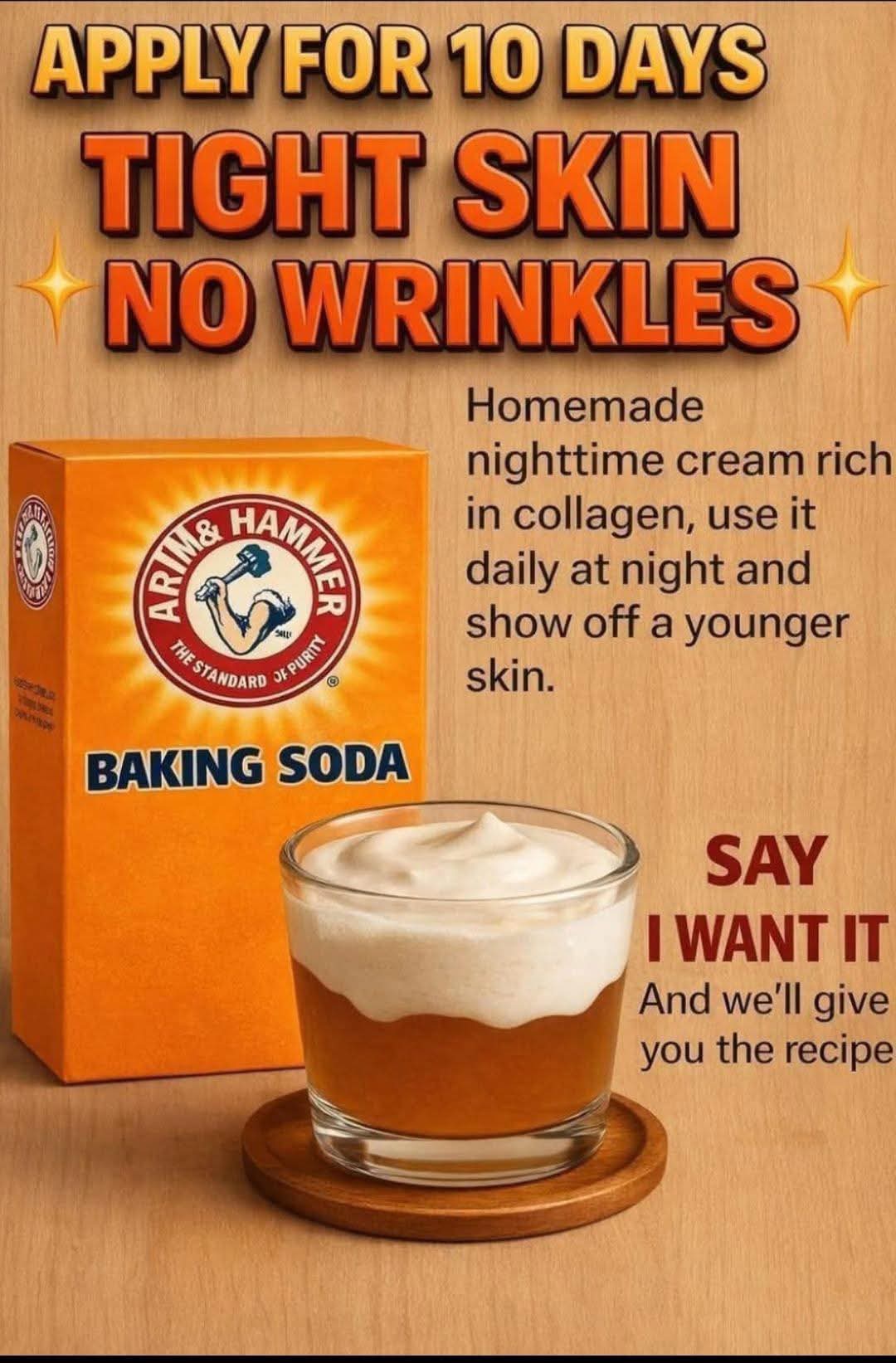
baking soda cream tightens skin and removes wrinkles. We separate fact from fiction – and share safe, effective nighttime skincare alternatives.
Let’s be honest: you’ve seen the post. A jar of white powder, a caption promising “tight skin, no wrinkles,” and a demand to comment “I WANT IT” for the secret recipe. It looks simple, natural, and affordable. The claim is bold: apply this homemade baking soda cream before bed, and wake up with younger, firmer skin.
But here’s the truth: baking soda is not safe for your skin. What sounds like a natural, harmless kitchen ingredient can actually damage your skin’s protective barrier, cause irritation, and make wrinkles look worse over time.
In this guide, I’ll give you an honest, science‑backed look at what baking soda can and cannot do for your skin. You’ll learn why this viral trend is dangerous, what actually works for wrinkles and firmness, and a safe, effective nighttime routine you can trust. No hype, just real skincare science.
Let’s separate the viral nonsense from the skin‑saving reality.
What Baking Soda Actually Does to Your Skin (The Science)
Baking soda (sodium bicarbonate) has a pH of about 8.3 – 9. Your skin’s natural pH is around 4.5 – 5.5 (slightly acidic). That’s a huge difference.
Your Skin’s Acid Mantle – Why It Matters
Your skin has a protective barrier called the acid mantle. This thin, slightly acidic film keeps moisture in and bacteria, pollutants, and irritants out. When you disrupt this barrier, your skin becomes vulnerable to:
· Dryness and flaking – moisture escapes.
· Redness and irritation – inflammation.
· Breakouts – bacteria can enter more easily.
· Increased sensitivity – products that never bothered you before may suddenly sting.
· Premature aging – a damaged barrier accelerates wrinkle formation.
What Happens When You Put Baking Soda on Your Face
Effect Explanation
pH disruption Baking soda raises skin pH, destroying the acid mantle.
Moisture loss Skin becomes dry, tight, and flaky – the opposite of “plump and firm.”
Irritation and redness Burning, stinging, and inflammation are common.
Increased wrinkle appearance Dry skin emphasizes fine lines.
Potential chemical burns With repeated use, baking soda can cause contact dermatitis and burns.
The bottom line: Baking soda does not tighten skin. It damages it. Any temporary “tightness” you feel is actually irritation and dryness – not firmness.
What About the “Collagen” Claim?
The viral post claims the cream is “rich in collagen.” This is scientifically impossible. Collagen molecules are too large to be absorbed through the skin. No matter how much collagen you put in a cream, it won’t penetrate to where it’s needed – the deeper layers of your skin (dermis). Your body produces collagen internally; you can’t “apply” it from a jar and expect it to work.
If you want to support collagen production, focus on:
· Sunscreen – UV rays break down collagen faster than anything else.
· Vitamin C serums – topical vitamin C can stimulate collagen production when formulated correctly.
· Retinoids – proven to boost collagen and reduce wrinkles.
· A healthy diet – protein, vitamin C, and amino acids are building blocks for collagen.
Baking soda has no role in collagen production.
Want the full truth and the practical next steps?
Page 2 continues with the real explanation, the key details many readers skip, and the simple takeaways that make this guide more useful.