
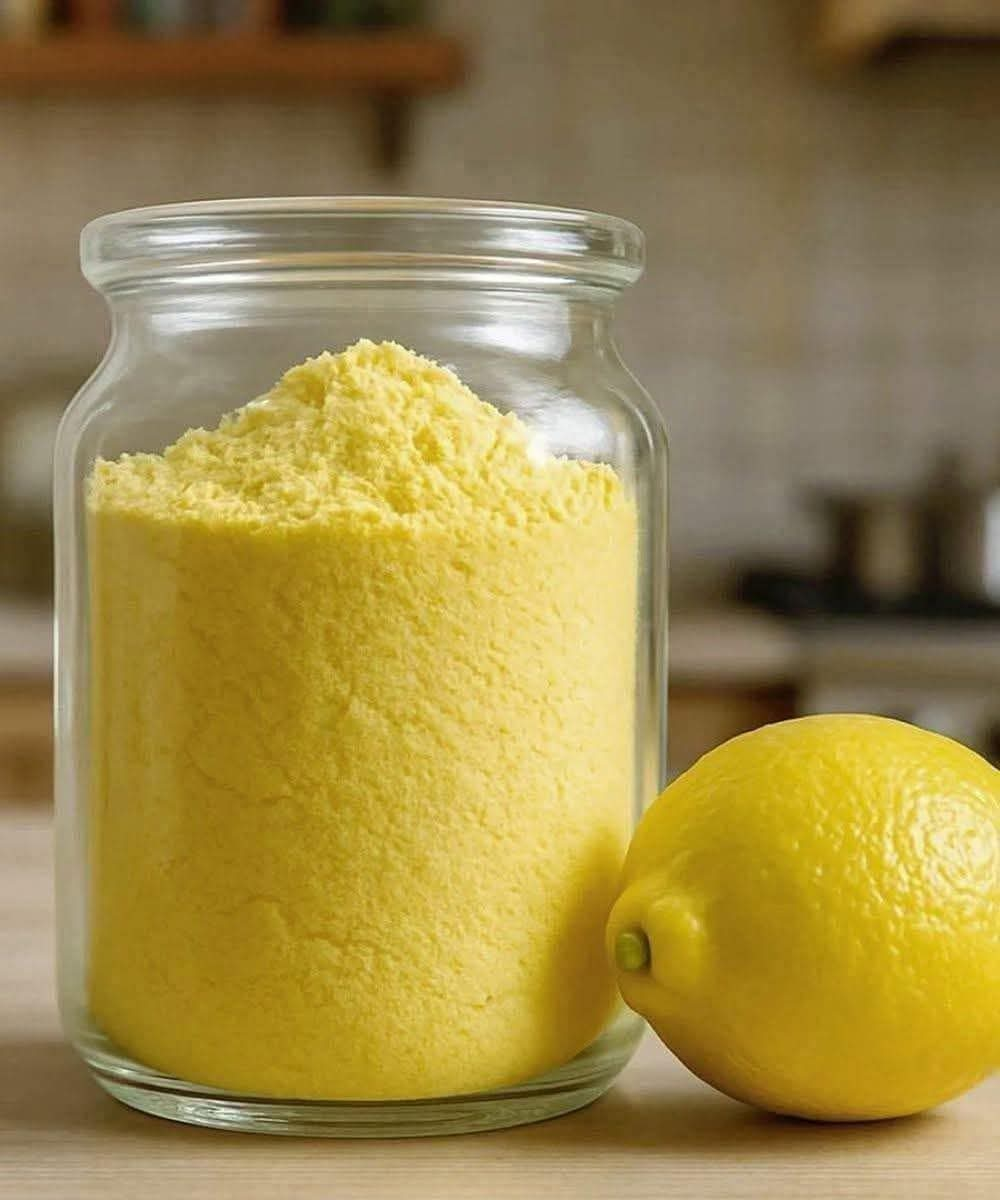
There are some ingredients that quietly change everything. They don’t announce themselves with bold flavors or dramatic colors. They simply make everything they touch better—brighter, more vibrant, more alive.
Lemon powder is one of those ingredients.
I discovered lemon powder a few years ago when a friend returned from Italy with a tiny jar of this magical substance. “Try this,” she said, handing me a small spoonful. I tasted it, and my eyes widened. It was lemon—intensely, purely, unmistakably lemon—but concentrated into a form I’d never experienced. No water, no sugar, just the pure essence of lemon, captured in powder.
Since then, I’ve become obsessed with making my own. And here’s the beautiful truth: it’s incredibly easy. With nothing more than lemons, an oven or dehydrator, and a little patience, you can create this transformative ingredient in your own kitchen.
A tiny pinch is all it takes. Sprinkle it over finished dishes, bake it into cookies, stir it into marinades, rim your cocktail glasses. However you use it, lemon powder delivers bright, concentrated citrus flavor without the liquid that can throw off recipes.
Today, I’m sharing everything you need to know about making and using homemade lemon powder.
Why You’ll Love Homemade Lemon Powder
Intense, concentrated flavor. Lemon powder captures the pure essence of lemon in a shelf-stable form. A tiny pinch delivers more lemon impact than a squeeze of fresh juice.
No waste. Ever buy a bag of lemons for one recipe and watch the rest slowly shrivel? Lemon powder lets you preserve every last lemon at peak freshness.
Year-round lemon flavor. Make it when lemons are in season and abundant, then enjoy bright citrus flavor all year long.
Versatile beyond belief. Use it in sweet and savory dishes, in baked goods, in beverages, in spice rubs—anywhere you want lemon flavor.
No liquid, no problem. Add lemon flavor to recipes where liquid would ruin the texture—dry rubs, cookie doughs, chocolate work.
Clean ingredient. Homemade lemon powder contains exactly one thing: lemon. No preservatives, no additives, nothing else.
Incredibly easy. If you can slice lemons and wait, you can make lemon powder.
Beautiful gift. Packaged in a tiny jar with a pretty label, homemade lemon powder makes a unique and thoughtful gift for food-loving friends.
The Complete Guide to Making Lemon Powder
What You’ll Need
Fresh lemons: As many as you like. Organic is strongly recommended since you’re using the peel. Conventionally grown lemons often have wax and pesticide residues on the skin.
Equipment:
· Sharp knife or mandoline for slicing
· Baking sheet or dehydrator trays
· Parchment paper (if using oven)
· Spice grinder, coffee grinder, or high-powered blender
· Fine-mesh strainer (optional)
· Airtight container for storage
Oven Method
Step 1: Preheat and Prep
Preheat your oven to its lowest setting—ideally 170-200°F (75-95°C). If your oven doesn’t go that low, prop the door open slightly with a wooden spoon to let heat escape.
Line a baking sheet with parchment paper.
Step 2: Slice the Lemons
Wash and dry your lemons thoroughly. Slice them as thinly as possible—aim for ⅛-inch thickness or less. A mandoline makes this easy and ensures uniform slices. Remove any seeds as you go.
The thinner the slices, the faster and more evenly they’ll dry.
Step 3: Arrange on Baking Sheet
Place the lemon slices in a single layer on your prepared baking sheet. They shouldn’t touch or overlap—air needs to circulate around each slice.
Step 4: Dry in Oven
Place the baking sheet in the oven and let it dry for 2-4 hours, depending on thickness and oven temperature. Check periodically and flip the slices halfway through.
You’ll know they’re done when the slices are completely dry, brittle, and snap when bent. They should have no flexibility or moisture remaining. This can take anywhere from 2-6 hours total.
Step 5: Cool Completely
Remove from oven and let the dried lemon slices cool completely on the baking sheet. They’ll continue to crisp as they cool.
Step 6: Grind into Powder
Working in batches, place the dried lemon slices in your spice grinder or blender. Pulse until you achieve a fine powder. Be patient—this can take a minute or two.
If you want an ultra-fine powder, sift through a fine-mesh strainer and re-grind any larger pieces.
Step 7: Store
Transfer your lemon powder to an airtight container. Store in a cool, dark place.
Dehydrator Method
If you have a food dehydrator, this is the easiest method.
Step 1: Slice lemons thinly as described above.
Step 2: Arrange in a single layer on dehydrator trays, ensuring slices don’t touch.
Step 3: Set dehydrator to 125-135°F (52-57°C) and dry for 8-12 hours, until completely brittle.
Step 4: Cool, grind, and store as described above.
Sun Drying Method
In very hot, dry climates, you can sun-dry lemon slices. This takes several days and requires protection from insects and dust. Cover with cheesecloth and bring indoors at night to prevent moisture absorption.
The Science Behind Lemon Powder
Why it works: Lemons contain about 90% water. Removing that water concentrates the remaining solids—including the flavorful oils in the peel, the citric acid, and the natural sugars—into a potent, shelf-stable powder.
The peel is key: The yellow part of the lemon peel contains essential oils that carry intense lemon aroma and flavor. This is why lemon powder is so much more flavorful than just dehydrated lemon juice.
Citric acid: Lemons are naturally high in citric acid, which acts as a preservative and gives lemon powder its characteristic tartness.
Storage stability: Properly dried lemon powder, stored in an airtight container away from light and heat, will keep for 6-12 months.
Troubleshooting Common Issues
My Lemon Powder Is Brown Instead of Yellow
This can happen if the lemons were dried at too high a temperature. The natural sugars can caramelize, darkening the powder. Next time, use a lower temperature. The flavor is still good—it just won’t be as pretty.
My Powder Is Clumping
Lemon powder can absorb moisture from the air. Make sure your container is truly airtight. You can add a food-safe silica gel packet to the container to absorb any moisture. If it clumps, spread it on a baking sheet and dry in a low oven for 15-20 minutes, then re-grind.
The Slices Aren’t Drying Evenly
Uniform thickness is key. Use a mandoline for consistent slices. If some pieces are thicker, they’ll take longer. You can remove the thinner ones as they finish and let the thicker ones continue.
My Grinder Won’t Powder the Slices
Some grinders struggle with the fibrous lemon peel. A high-powered spice grinder or coffee grinder works best. You can also use a mortar and pestle, though it takes more effort.
The Powder Tastes Bitter
If you included too much white pith, your powder may be bitter. The pith is the white part between the yellow peel and the fruit. When slicing, try to minimize how much pith is included. A mandoline helps create thin slices that include less pith.
25 Brilliant Ways to Use Lemon Powder
Now for the fun part—putting your homemade lemon powder to work.
In Baking
Lemon cookies: Add 1-2 teaspoons to your favorite sugar cookie dough for intense lemon flavor.
Lemon cakes and cupcakes: Replace some of the liquid lemon with powder for more concentrated flavor.
Lemon bars: Sprinkle over the top of lemon bars for an extra lemony punch.
Muffins and scones: Add to dry ingredients for lemon-blueberry muffins or lemon poppy seed scones.
Pie crust: Add a teaspoon to your pie dough for a subtle lemony note in any pie.
Shortbread: Lemon shortbread is divine with a teaspoon of powder.
Whipped cream: Whip a pinch into heavy cream for lemon whipped cream.
In Desserts
Dust over chocolate desserts: A tiny pinch over chocolate mousse, brownies, or truffles brightens the chocolate beautifully.
Lemon sugar: Mix with granulated sugar for lemon sugar—use it anywhere you’d use regular sugar.
Ice cream: Stir into vanilla ice cream base or sprinkle over finished ice cream.
Panna cotta: Add to cream mixture for lemon panna cotta.
Fruit salads: Toss with fresh fruit for a bright, tangy boost.
Yogurt: Stir into plain Greek yogurt with a little honey.
In Savory Cooking
Spice rubs: Add to dry rubs for chicken, fish, or vegetables.
Marinades: Mix with olive oil, garlic, and herbs for a quick marinade.
Roasted vegetables: Toss vegetables with olive oil and lemon powder before roasting.
Grilled fish: Sprinkle over fish before or after grilling.
Rice and grains: Stir into rice, quinoa, or couscous while cooking.
Pasta: Add to pasta water or toss with finished pasta and olive oil.
Salad dressings: Whisk into vinaigrettes for extra lemony punch.
Hummus: Stir into homemade or store-bought hummus.
Compound butter: Mix with softened butter, garlic, and herbs.
In Beverages
Lemonade: Mix with sugar and water for instant lemonade.
Tea: Add a pinch to hot or iced tea.
Cocktail rims: Mix with salt for rimming margarita or cocktail glasses.
Hot chocolate: A tiny pinch in hot chocolate is surprisingly wonderful.
As a Finishing Touch
Popcorn: Sprinkle over buttered popcorn.
Roasted nuts: Toss warm roasted nuts with lemon powder and salt.
Avocado toast: Dust over avocado toast.
Eggs: Sprinkle over scrambled eggs or omelets.
Lemon Powder Variations
Once you’ve mastered basic lemon powder, try these variations.
Meyer Lemon Powder
Meyer lemons are sweeter and less acidic than regular lemons. Their powder is more floral and delicate—wonderful for desserts.
Lime Powder
Same method, using limes instead of lemons. Lime powder is fantastic in Mexican and Thai dishes, and in margaritas.
Orange Powder
Orange powder is sweeter and less tart. Wonderful in baked goods, sprinkled over chocolate, or mixed into yogurt.
Grapefruit Powder
Grapefruit powder has a pleasant bitterness that’s wonderful in savory applications and cocktails.
Lemon-Zest Only Powder
For an even more concentrated product, use a vegetable peeler to remove only the yellow zest (no white pith). Dry and grind just the zest. This produces an incredibly potent, aromatic powder.
Lemon-Salt Blend
Mix lemon powder with flaky sea salt for lemon salt—perfect for finishing dishes.
Lemon-Sugar Blend
Mix with granulated sugar for lemon sugar—use it anywhere you’d use regular sugar.
How to Store Lemon Powder
Airtight container: A small glass jar with a tight-fitting lid is ideal. Avoid plastic, which can absorb flavors and may not seal as well.
Cool, dark place: A pantry or cupboard away from heat and light. Light degrades the color and flavor over time.
Avoid moisture: Every time you open the jar, moisture from the air can enter. If you live in a humid climate, consider storing a food-safe silica gel packet in the container.
Shelf life: Properly stored, lemon powder will keep for 6-12 months. Over time, the color may fade slightly and the flavor may diminish, but it will still be usable.
Testing freshness: If you’re unsure whether your powder is still good, smell it. It should smell intensely of lemon. If it smells flat or musty, it’s time to make a fresh batch.
The Magic of a Pinch
Here’s the thing about lemon powder: a little goes a very long way.
Start with a tiny pinch—literally between your thumb and finger—and taste before adding more. You can always add more, but you can’t take it away.
In baking, 1 teaspoon of lemon powder replaces about 1 tablespoon of lemon zest or 2 tablespoons of lemon juice. But because it’s so concentrated, you may find you need less than you think.
The beauty of lemon powder is its versatility. Keep a jar on your counter, and you’ll find yourself reaching for it constantly. A pinch here, a sprinkle there, and suddenly everything you make has a little more brightness, a little more life.
Why Homemade Is Better
You can buy lemon powder online or in specialty stores. But homemade is genuinely better.
Fresher: Commercial lemon powder may sit in warehouses for months or years. Homemade is as fresh as your last batch.
No additives: Some commercial powders contain sugar, citric acid from non-lemon sources, or anti-caking agents. Yours is 100% lemon.
Customizable: You control the thickness of slices, the drying temperature, the fineness of the grind. You can make exactly what you want.
Cost-effective: A jar of commercial lemon powder can be surprisingly expensive. Homemade costs pennies, especially if you buy lemons in season.
The satisfaction: There’s something deeply satisfying about making your own ingredients. It connects you to your food in a way that buying something off a shelf never can.
The Story Behind My Lemon Powder Obsession
My love affair with lemon powder began, as I mentioned, with a tiny jar from Italy. But it deepened during a winter when lemons were abundant and cheap. I bought a case, made batch after batch, and soon had a collection of little jars filled with sunny yellow powder.
That winter, everything I cooked got a pinch of lemon. Roasted chicken. Sauteed greens. Cookies. Cakes. Popcorn. Even my morning yogurt. The brightness carried me through the gray months, a reminder of sunshine waiting just around the corner.
Now I make lemon powder whenever lemons are abundant. I give jars to friends, who inevitably text me later asking what to do with it. I use it constantly, finding new applications all the time.
It’s become one of those ingredients I can’t imagine living without. Not because it’s essential in the way that salt or olive oil is essential. But because it makes everything better, brighter, more alive. It’s joy in powdered form.
Why This Recipe Deserves a Place in Your Kitchen
This lemon powder recipe represents everything I love about DIY ingredients. It’s simple enough for anyone to make. It transforms something ordinary into something special. It reduces waste and maximizes flavor. And it opens up endless possibilities in your cooking.
Once you have a jar of homemade lemon powder, you’ll find yourself using it constantly. It will become your secret weapon, the thing that makes your dishes taste a little more vibrant, a little more special, a little more alive.
And the best part? You made it yourself. With your own hands, a few lemons, and a little patience. That’s the kind of cooking that feeds not just your body, but your soul.
So grab some lemons. Slice them thin. Let them dry. Grind them up. And get ready to discover the most versatile, transformative ingredient you’ve never made before.
Your kitchen is about to get a whole lot brighter.
Have you made lemon powder before? What’s your favorite way to use it? I’d love to hear about your experience in the comments below!
More Recipes
-

Diabetic Strawberry Dessert: Sugar-Free, Low-Calorie, and Only 3 Ingredients!
Discover the ultimate guilt-free treat! This diabetic-friendly strawberry applesauce bread requires just 3 ingredients, has no added sugar, and is incredibly low in calories. Perfect for a healthy dessert or snack! Let me tell you about the dessert that changed how I think about healthy eating. I have a massive sweet tooth. Always have. But…
-

Classic French Crepes with Honey: A Taste of Paris at Home
Discover the secret to authentic Classic French Crepes with Honey! These paper-thin, buttery crepes are incredibly easy to make and absolutely divine drizzled with golden honey. Perfect for breakfast, dessert, or anytime! Close your eyes and imagine yourself sitting at a tiny sidewalk café in Paris. The Eiffel Tower looms in the distance, the scent…
-

Puff Pastry Cinnamon Sugar Twists: 20-Minute Magic from the Freezer
Discover the magic of Puff Pastry Cinnamon Sugar Twists! With just a few simple ingredients, you can create golden, flaky, buttery pastries that taste like they came from a fancy bakery. Ready in under 20 minutes! Let me tell you about the dessert that makes people think I spent hours in the kitchen when I…