
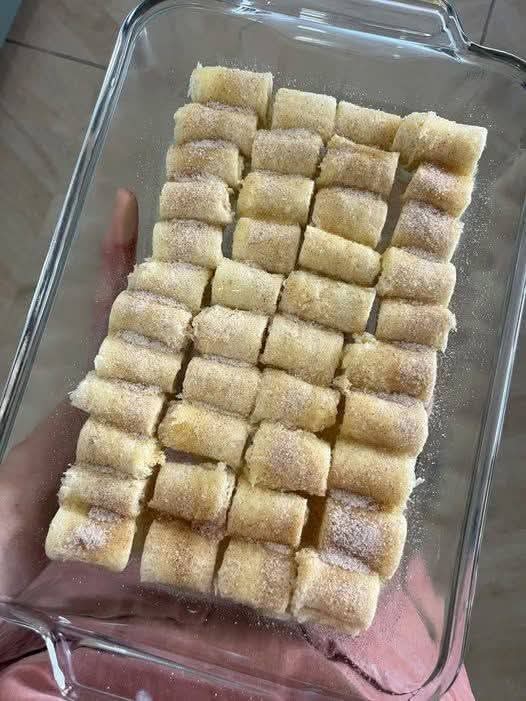
These homemade Sugar Snails are soft, buttery sweet rolls filled with cinnamon sugar and shaped into beautiful spirals that resemble tiny snail shells. Each roll has a fluffy yeast dough, a rich buttery center, and delicate layers of caramelized sugar in every bite. A simple vanilla glaze finishes the warm pastries and gives them an irresistible bakery-style appearance.
Sugar Snails are perfect for weekend breakfast, holiday brunch, afternoon coffee, family gatherings, bake sales, potlucks, and homemade food gifts. They have the comforting flavor of classic cinnamon rolls but are usually smaller, lighter, and easy to serve without a knife or fork.
This sweet roll recipe uses affordable baking ingredients, including flour, milk, yeast, butter, sugar, cinnamon, eggs, and vanilla. The dough is soft and easy to shape, making it suitable for home bakers who are still learning how to work with yeast.
You can serve these pastries plain, dust them with powdered sugar, brush them with warm honey, or cover them with a thin vanilla glaze. They can also be customized with brown sugar, cardamom, raisins, chopped nuts, chocolate, fruit preserves, or cream cheese filling.
Whether you call them Sugar Snails, cinnamon spirals, sweet snail rolls, or sugar swirl buns, these golden pastries make the kitchen smell warm and inviting. They are especially delicious when served slightly warm with coffee, tea, hot chocolate, or cold milk.
Why You Will Love These Sugar Snails
The first reason to love this recipe is the texture. The dough is enriched with milk, butter, and egg, creating a roll that is soft and fluffy rather than dry or bread-like. The edges become lightly golden while the centers stay tender.
The cinnamon-sugar filling is simple but flavorful. Softened butter helps the sugar stick to the dough and creates distinct layers as the rolls bake. Cinnamon adds warmth without overpowering the buttery pastry.
These Sugar Snails also look impressive without requiring difficult shaping techniques. The dough is rolled into a rectangle, covered with filling, rolled into a log, and sliced into spirals. Each cut reveals the decorative swirl naturally.
The recipe is flexible enough for different occasions. Small rolls are ideal for parties and dessert boards, while larger rolls make a satisfying breakfast. You can bake them close together for soft sides or spread them farther apart for crispier edges.
They are also convenient for meal planning. The dough can be prepared the night before, refrigerated after shaping, and baked fresh in the morning. Finished rolls can be frozen and reheated individually whenever you want a homemade sweet treat.
Another advantage is that the recipe does not require expensive kitchen equipment. A mixing bowl, whisk, rolling pin, baking pan, and oven are enough. A stand mixer can make kneading easier, but the dough can be prepared completely by hand.
What Are Sugar Snails?
Sugar Snails are sweet spiral-shaped pastries made by rolling yeast dough with butter and sugar, then slicing the roll into individual coils. The curved layers resemble the shell of a snail, which gives the pastries their playful name.
Recipes vary across European and home-baking traditions. Some versions are made from brioche-style dough, while others use puff pastry, crescent dough, or leftover pie crust. The filling may contain plain sugar, cinnamon sugar, vanilla sugar, raisins, nuts, custard, or chocolate.
This recipe uses a soft enriched yeast dough and a cinnamon-sugar filling. The result is similar to a light cinnamon roll, but the individual spirals are smaller and have a slightly more defined shape.
The pastries are not made with actual snails. The name describes only their coiled appearance.
Sugar Snails can be served for breakfast, brunch, dessert, or an afternoon snack. Their small size makes them particularly suitable for sharing.
Ingredients for Homemade Sugar Snails
For the Sweet Yeast Dough
- 3 1/2 to 4 cups all-purpose flour
- 2 1/4 teaspoons active dry yeast or instant yeast
- 3/4 cup whole milk
- 1/4 cup warm water
- 1/3 cup granulated sugar
- 1/2 cup unsalted butter, softened
- 1 large egg, at room temperature
- 1 large egg yolk, at room temperature
- 1 teaspoon vanilla extract
- 1 teaspoon salt
For the Cinnamon-Sugar Filling
- 6 tablespoons unsalted butter, softened
- 3/4 cup packed light brown sugar
- 1/4 cup granulated sugar
- 1 1/2 tablespoons ground cinnamon
- 1 tablespoon all-purpose flour
- 1/4 teaspoon salt
For the Egg Wash
- 1 large egg
- 1 tablespoon milk
For the Vanilla Glaze
- 1 1/2 cups powdered sugar
- 2 to 3 tablespoons milk or heavy cream
- 1 teaspoon vanilla extract
- Small pinch of salt
Optional Garnishes
- Coarse sugar
- Powdered sugar
- Chopped toasted pecans
- Chopped walnuts
- Orange zest
- Melted chocolate
- Caramel sauce
Ingredient Notes
All-Purpose Flour
All-purpose flour gives the dough enough structure while still allowing the rolls to remain soft. Bread flour can be used for a slightly chewier texture, but the dough may need a little more liquid.
Do not add all the flour immediately. Begin with the lower amount and add more only when necessary. The dough should be soft and slightly tacky rather than dry and stiff.
For accurate baking results, measure flour with a digital kitchen scale. When using measuring cups, spoon the flour lightly into the cup and level the top instead of scooping directly from the bag.
Yeast
Active dry yeast or instant yeast can be used. Active dry yeast is usually dissolved in warm liquid first, while instant yeast can be mixed directly with the flour.
The liquid should feel warm but not hot. Excessive heat can damage the yeast, while cold liquid can slow the rising process.
Whole Milk
Whole milk adds richness and helps create a tender crumb. Reduced-fat milk can be substituted, although the rolls may be slightly less soft.
Unsweetened dairy-free milk can also be used. Choose a neutral variety without strong flavoring.
Butter
Butter enriches both the dough and filling. Use softened butter rather than melted butter for the filling so it stays in place while the dough is rolled.
Salted butter can be used, but reduce the additional salt slightly.
Egg and Egg Yolk
The whole egg provides structure, while the extra yolk adds richness, color, and tenderness.
Room-temperature eggs blend more easily into the dough than cold eggs.
Brown Sugar
Brown sugar adds moisture and a mild caramel flavor. Light brown sugar creates a gentle sweetness, while dark brown sugar provides a stronger molasses taste.
Cinnamon
Ground cinnamon creates the classic warm filling. Use fresh cinnamon for the best aroma.
Cardamom, nutmeg, or pumpkin pie spice can be added in small amounts for different seasonal variations.
Recommended Kitchen Equipment
You will need a large mixing bowl, measuring cups, measuring spoons, a whisk, a wooden spoon or silicone spatula, a rolling pin, a sharp knife, and a baking pan.
A stand mixer fitted with a dough hook can knead the dough efficiently, but hand kneading works equally well.
A digital kitchen scale helps measure ingredients accurately and divide the dough into equal rolls.
Dental floss without flavoring is useful for slicing the dough log without flattening the spirals. Slide the floss under the log, cross the ends over the top, and pull in opposite directions.
A 9-by-13-inch baking dish creates soft-sided rolls. Two round cake pans can also be used. For more separate, bakery-style spirals, arrange the rolls on large parchment-lined baking sheets.
How to Make Sugar Snails
Step 1: Activate the Yeast
Warm the milk and water until they reach approximately 105°F to 115°F. The liquid should feel comfortably warm rather than hot.
Pour the warm liquid into a large mixing bowl. Add one teaspoon of the granulated sugar and sprinkle the active dry yeast over the surface.
Stir gently and allow the mixture to rest for five to ten minutes. The top should become creamy or foamy, indicating that the yeast is active.
When using instant yeast, you can skip this waiting period and combine the yeast directly with the flour. However, testing it in warm liquid can still confirm that it is active.
Step 2: Add the Wet Ingredients
Add the remaining granulated sugar, softened butter, whole egg, egg yolk, vanilla extract, and salt to the yeast mixture.
Whisk until reasonably smooth. Small pieces of softened butter may remain, but they will blend into the dough during kneading.
Step 3: Add the Flour
Add three cups of flour and stir with a sturdy wooden spoon or the paddle attachment of a stand mixer.
Continue adding flour gradually until a soft dough forms and begins pulling away from the sides of the bowl.
Avoid adding flour too quickly. A soft dough creates lighter rolls, while excess flour can produce dry pastries.
Step 4: Knead the Dough
Turn the dough onto a lightly floured surface.
Knead for approximately eight to ten minutes by hand. Push the dough away with the heel of your hand, fold it back, rotate it, and repeat.
When using a stand mixer, knead with the dough hook on low to medium-low speed for approximately six to eight minutes.
The finished dough should feel smooth, elastic, and slightly tacky. It should spring back gradually when pressed with a finger.
Step 5: First Rise
Lightly grease a clean bowl with butter or neutral oil.
Shape the dough into a ball and place it in the bowl, turning once to coat the surface lightly.
Cover the bowl with plastic wrap or a clean kitchen towel.
Allow the dough to rise in a warm, draft-free location for approximately one to one-and-a-half hours, or until doubled in size.
Rising time depends on room temperature. A cooler kitchen may require additional time.
Step 6: Prepare the Filling
While the dough rises, combine the brown sugar, granulated sugar, cinnamon, flour, and salt in a small bowl.
The small amount of flour helps absorb melted butter and reduces the chance of all the filling leaking from the rolls.
Keep the six tablespoons of butter softened and ready for spreading.
Step 7: Roll Out the Dough
Lightly flour a clean work surface.
Press the risen dough gently to release large air bubbles, then turn it onto the prepared surface.
Roll the dough into a rectangle approximately 14 by 18 inches.
Try to keep the thickness even so the Sugar Snails bake at a similar rate.
Position the rectangle with one long edge facing you.
Step 8: Add the Butter and Sugar
Spread the softened butter evenly over the dough, leaving approximately one-half inch uncovered along the far long edge.
Sprinkle the cinnamon-sugar mixture over the butter.
Use your fingers or the back of a spoon to distribute the filling evenly from corner to corner.
Press it lightly into the butter so it does not shift excessively while rolling.
Step 9: Roll into a Log
Beginning with the long edge nearest you, roll the dough tightly but gently into a log.
Keep the roll even across its length. Do not pull so firmly that the filling is forced out.
Pinch the uncovered edge lightly against the log to seal it.
Place the log seam-side down on the work surface.
Step 10: Slice the Sugar Snails
Use a sharp serrated knife or unflavored dental floss to divide the log into 12 equal pieces.
First mark the center, then divide each half into six portions. This makes it easier to create evenly sized rolls.
Use a gentle sawing motion when cutting with a knife. Pressing straight down can flatten the spiral.
Step 11: Arrange in the Pan
Grease a 9-by-13-inch baking dish or line it with parchment paper.
Arrange the rolls cut-side up, leaving a small amount of space between them.
The rolls will expand during the second rise and touch as they bake, creating soft sides.
For separate rolls with more golden edges, place them farther apart on two lined baking sheets.
Step 12: Second Rise
Cover the shaped rolls loosely with plastic wrap or a clean kitchen towel.
Allow them to rise for approximately 30 to 45 minutes, or until visibly puffy.
They do not need to double completely. Overproofed rolls may collapse or lose their spiral definition.
Step 13: Preheat the Oven
Preheat the oven to 350°F during the final part of the second rise.
Position a rack near the center of the oven so the rolls bake evenly.
Step 14: Apply the Egg Wash
Whisk one egg with one tablespoon of milk.
Brush the mixture lightly over the exposed dough surfaces.
Avoid flooding the filling with egg wash. A thin coating gives the pastries a glossy, golden finish.
Sprinkle coarse sugar over the top when desired.
Step 15: Bake
Bake the Sugar Snails for approximately 22 to 28 minutes.
They are ready when the tops are golden, the centers look set, and the dough no longer appears raw between the spirals.
The internal temperature of a fully baked enriched roll is generally around 190°F.
If the tops brown too quickly, cover the pan loosely with aluminum foil during the final baking time.
Step 16: Cool Briefly
Remove the pan from the oven and place it on a wire rack.
Allow the rolls to cool for approximately 10 to 15 minutes before glazing.
Glaze added immediately can melt completely and collect at the bottom. Glaze added after the rolls are fully cold will remain thicker and more opaque.
Step 17: Prepare the Vanilla Glaze
Place the powdered sugar, vanilla, salt, and two tablespoons of milk in a bowl.
Whisk until smooth.
Add additional milk one teaspoon at a time until the glaze reaches your preferred consistency.
For a thick white glaze, use less milk. For a thin bakery-style drizzle, add a little more.
Step 18: Glaze and Serve
Drizzle or spread the glaze over the warm Sugar Snails.
Serve immediately or allow the glaze to set for several minutes.
These pastries taste best while slightly warm, when the dough is tender and the cinnamon-sugar layers are soft.
How to Know When Yeast Dough Has Risen Enough
The dough should approximately double in size during the first rise. Bowl markings or a small piece of tape can help you judge the increase.
Gently press one finger about one-half inch into the dough. When the indentation slowly springs back but does not disappear completely, the dough is usually ready.
If it springs back immediately, it may need more rising time. If it collapses or does not respond, it may have risen too long.
Do not rely only on the clock. Yeast activity changes according to room temperature, ingredient temperature, and dough consistency.
Tips for Soft and Fluffy Sugar Snails
Use fresh yeast and warm, not hot, liquid. Yeast that is expired or overheated may not produce enough rise.
Do not add excessive flour. The dough should remain soft and slightly tacky.
Knead until the dough becomes smooth and elastic. Proper gluten development helps trap the gas created by the yeast.
Allow enough time for both rises, but do not overproof.
Use room-temperature butter and eggs so the dough ingredients combine evenly.
Roll the dough to an even thickness. Uneven areas can produce rolls that bake at different rates.
Do not bake until the pastries become dark brown. Overbaking dries the soft interior.
Keep freshly baked rolls covered after they cool to prevent them from losing moisture.
How to Keep the Filling Inside the Rolls
Use softened butter instead of melted butter. Melted butter runs quickly and carries sugar out of the spirals.
Include a tablespoon of flour in the filling to absorb some moisture.
Leave a narrow uncovered edge along the far side of the dough so the log can be sealed.
Roll firmly enough to create defined layers but not so tightly that the filling is squeezed outward.
Place the rolls in the baking pan soon after slicing.
A small amount of filling may still melt into the bottom of the pan. This creates caramelized edges and is completely normal.
How to Prevent Dry Sweet Rolls
Measure the flour carefully and stop adding it when the dough becomes manageable.
Avoid baking longer than necessary.
Use whole milk, butter, egg, and egg yolk to enrich the dough.
Do not leave the rolls uncovered for long periods after baking.
Store them in an airtight container once completely cool.
Reheat individual rolls gently with a small amount of moisture to restore softness.
Easy Sugar Snail Variations
Cardamom Sugar Snails
Replace half of the cinnamon with ground cardamom.
Cardamom gives the rolls a fragrant Scandinavian-inspired flavor that pairs well with coffee.
Orange Sugar Snails
Add finely grated orange zest to the filling and glaze.
Replace part of the milk in the glaze with fresh orange juice for a bright citrus finish.
Chocolate Sugar Snails
Sprinkle mini chocolate chips over the cinnamon-sugar filling before rolling.
Finish the baked pastries with melted dark chocolate instead of vanilla glaze.
Walnut Sugar Snails
Add finely chopped toasted walnuts to the filling.
Walnuts contribute crunch and a slightly earthy flavor that balances the sweetness.
Pecan Caramel Sugar Snails
Add toasted pecans to the filling and drizzle caramel sauce over the warm rolls.
A small pinch of flaky sea salt creates a salted caramel variation.
Raisin Sugar Snails
Soak raisins in warm water for approximately ten minutes, drain them well, and pat them dry.
Sprinkle them over the filling before rolling the dough.
Apple Cinnamon Sugar Snails
Add finely diced sautéed apples to the filling.
Cook the apples first to remove excess moisture and allow them to cool completely before using.
Cream Cheese Sugar Snails
Spread a thin layer of sweetened cream cheese over the dough before adding cinnamon sugar.
Keep the layer thin so the rolls remain easy to shape.
Maple Sugar Snails
Add maple extract to the glaze and use maple sugar in the filling when available.
A maple glaze pairs beautifully with walnuts or pecans.
Lemon Sugar Snails
Omit the cinnamon and combine granulated sugar with fresh lemon zest.
Finish with a lemon juice and powdered sugar glaze.
Coconut Sugar Snails
Sprinkle sweetened shredded coconut over the butter and sugar filling.
Add coconut extract to the glaze for stronger flavor.
Pumpkin Spice Sugar Snails
Replace cinnamon with pumpkin pie spice and add a small amount of pumpkin puree to a cream cheese glaze.
This variation is ideal for fall breakfast and Thanksgiving brunch.
Quick Sugar Snails with Puff Pastry
For a faster version, use thawed frozen puff pastry instead of yeast dough.
Roll the pastry sheet gently to smooth the seams.
Brush it with melted butter and sprinkle it with cinnamon sugar.
Roll the pastry into a log and chill it for approximately 20 minutes.
Slice the log into spirals and arrange them on a parchment-lined baking sheet.
Bake according to the puff pastry package instructions until deeply golden and crisp.
Puff pastry Sugar Snails are flaky and crunchy rather than soft and bread-like.
Quick Sugar Snails with Crescent Dough
Refrigerated crescent dough provides another convenient shortcut.
Unroll the dough and press the perforated seams together to create one sheet.
Spread with softened butter and sprinkle with cinnamon sugar.
Roll into a log, slice, and place the spirals on a lined baking sheet or in a greased muffin pan.
Bake according to the dough package instructions until golden.
Finish with vanilla glaze or powdered sugar.
Can You Prepare Sugar Snails Overnight?
Yes. Prepare the dough, complete the first rise, add the filling, shape the rolls, and arrange them in the baking pan.
Cover the pan tightly and refrigerate overnight.
The cold temperature slows the second rise without stopping it completely.
The next morning, remove the pan from the refrigerator and let the rolls stand at room temperature for approximately 45 to 75 minutes.
They should look puffy before baking.
Apply the egg wash and bake according to the recipe.
Do not leave the shaped rolls in the refrigerator for much longer than 16 hours because the dough may overproof or develop a strong yeast flavor.
Make-Ahead Instructions
The unbaked dough can be prepared one day in advance and refrigerated after the first rise.
Allow it to sit at room temperature briefly before rolling and shaping.
The shaped rolls can also be refrigerated overnight as described above.
The cinnamon-sugar filling can be mixed several days ahead and stored in an airtight container.
The vanilla glaze can be prepared one or two days in advance and refrigerated. Bring it to room temperature and whisk before using.
Baked Sugar Snails can be stored for several days or frozen for longer meal preparation.
How to Store Sugar Snails
Allow the rolls to cool completely before storing them.
Place them in an airtight container at room temperature for up to two days.
For longer storage, refrigerate them for up to five days.
Refrigeration can make yeast rolls feel firmer, so warm them gently before serving.
When the rolls have cream cheese frosting, refrigerate them within two hours.
Separate layers with parchment paper to protect the glaze.
How to Reheat Sugar Snails
Microwave one roll for approximately 10 to 20 seconds. Use short intervals to avoid overheating.
Place a damp paper towel loosely over the roll to help retain moisture.
For oven reheating, place the rolls in a covered baking dish and warm them at 300°F for approximately eight to twelve minutes.
An air fryer can be used at a low temperature, but check frequently because the exterior can become crisp quickly.
Add a small amount of fresh glaze after reheating when desired.
Can You Freeze Sugar Snails?
Yes. Both baked and unbaked Sugar Snails can be frozen.
Freezing Baked Rolls
Allow the rolls to cool completely.
Freeze them without glaze for the best appearance.
Wrap individual rolls in plastic wrap and place them in a freezer-safe container or bag.
Freeze for up to three months.
Thaw at room temperature or overnight in the refrigerator, then warm and glaze before serving.
Freezing Unbaked Rolls
Shape the rolls and place them on a parchment-lined baking sheet.
Freeze until firm, then transfer them to a freezer-safe container.
Thaw overnight in the refrigerator in the baking pan.
Allow them to rise at room temperature until puffy before applying egg wash and baking.
Frozen yeast dough may rise more slowly than freshly prepared dough.
What to Serve with Sugar Snails
Sugar Snails pair naturally with coffee, cappuccino, espresso, black tea, chai tea, hot chocolate, and cold milk.
For breakfast, serve them with fresh fruit, Greek yogurt, scrambled eggs, or a breakfast casserole.
For brunch, add them to a table with muffins, croissants, quiche, fruit salad, breakfast potatoes, and cheese.
For dessert, serve a warm roll with vanilla ice cream, whipped cream, caramel sauce, or chocolate drizzle.
Fresh berries add a light, tart contrast to the sweet pastry.
The rolls can also be arranged on a dessert board with cookies, chocolate, nuts, and fruit.
How to Serve Sugar Snails for Holidays
For Christmas morning, prepare the rolls the night before and bake them fresh after waking.
Add orange zest, cranberries, or white chocolate for a festive variation.
For Easter brunch, finish the rolls with lemon glaze and pastel sprinkles.
For Thanksgiving breakfast, use pumpkin pie spice and maple glaze.
For Valentine’s Day, add raspberry preserves and pink-tinted glaze.
For birthday brunches, arrange the spirals on a large platter and add colorful sprinkles.
Keep warm rolls loosely covered until serving so they stay soft.
Common Baking Mistakes to Avoid
Do not use liquid that is too hot. Excessive heat can kill the yeast.
Avoid adding too much flour. Dry dough creates dense rolls.
Do not skip kneading. Under-kneaded dough may not rise or hold its shape properly.
Avoid rushing the first rise. The dough needs enough time to become light and airy.
Do not use melted butter in the filling. It can cause excessive leakage.
Avoid rolling the dough log too loosely. Loose spirals may separate during baking.
Do not cut the log with heavy downward pressure. This flattens the coils.
Avoid overproofing the shaped rolls. They can collapse or lose definition.
Do not overbake. The centers should remain soft.
Avoid storing warm rolls in a sealed container because condensation can make them soggy.
Frequently Asked Questions
Why Are They Called Sugar Snails?
The rolled dough forms a spiral that resembles a snail shell. The name refers to the shape rather than an ingredient.
Are Sugar Snails the Same as Cinnamon Rolls?
They are very similar. Sugar Snails are often smaller and may use a simpler sugar filling, while American cinnamon rolls are usually larger and heavily frosted.
Can I Make Them without Cinnamon?
Yes. Use plain granulated sugar, vanilla sugar, citrus sugar, chocolate, or fruit preserves.
Can I Use Instant Yeast?
Yes. Mix instant yeast directly into the flour or activate it in warm liquid as directed.
Why Did My Dough Not Rise?
The yeast may be expired, the liquid may have been too hot or cold, or the dough may have been placed in a cold location.
Why Is My Dough Sticky?
Enriched dough should feel slightly tacky. Knead it before adding much more flour because the texture often improves as gluten develops.
Why Are My Rolls Dense?
Dense rolls may result from excess flour, insufficient kneading, inactive yeast, rushed rising, or overbaking.
Can I Use Bread Flour?
Yes. Bread flour creates a slightly chewier roll and may require a little additional liquid.
Can I Use Dairy-Free Ingredients?
Yes. Replace milk with unsweetened plant milk and butter with a high-quality dairy-free baking alternative.
Can I Make the Rolls Egg-Free?
Yes. Replace the egg and yolk with additional milk and a small amount of neutral oil or yogurt. The texture will be slightly different.
Can I Add Raisins?
Yes. Soak and drain them before sprinkling them over the filling.
Can I Bake Them in a Muffin Pan?
Yes. Place one spiral in each greased muffin cup. The rolls will have more golden edges and a neat individual shape.
How Many Sugar Snails Does This Recipe Make?
The recipe makes approximately 12 medium rolls. Cut the log into 16 pieces for smaller pastries.
How Long Do They Stay Fresh?
They have the best texture on the day they are baked but can be stored at room temperature for two days or refrigerated for up to five days.
Can I Skip the Glaze?
Yes. Brush the warm rolls with melted butter and sprinkle them with sugar, or dust the cooled rolls with powdered sugar.
Food Safety and Allergy Notes
This recipe contains wheat, milk, eggs, and yeast.
Optional nuts, chocolate, and packaged ingredients may contain additional allergens.
Do not eat raw dough because uncooked flour and eggs may contain harmful bacteria.
Wash your hands and clean work surfaces after handling raw eggs.
Keep dairy ingredients refrigerated until needed.
When preparing the rolls with cream cheese frosting, store them in the refrigerator.
Identify nut-containing variations clearly when serving guests.
Why Sugar Snails Are Perfect for Family Baking
The spiral shape makes these rolls fun for children and adults. Children can help mix the cinnamon sugar, spread the filling, or drizzle glaze over cooled pastries.
An adult should handle the hot oven, sharp knife, and warm baking pans.
The recipe also teaches useful baking skills, including activating yeast, kneading dough, checking proofing, rolling, and shaping.
Because the filling can be customized, family members can prepare different sections with cinnamon, chocolate, raisins, or nuts.
The pastries are easy to share and can be packed for picnics, school events, church gatherings, and family visits.
Printable Sugar Snails Recipe
Soft Cinnamon-Sugar Snails
Prep Time: 30 minutes
Rising Time: Approximately 2 hours
Baking Time: 22 to 28 minutes
Total Time: Approximately 3 hours
Yield: 12 Sugar Snails
Category: Breakfast and dessert
Cooking Method: Oven baked
Cuisine: European-inspired
Ingredients
Sweet Dough
- 3 1/2 to 4 cups all-purpose flour
- 2 1/4 teaspoons active dry yeast or instant yeast
- 3/4 cup whole milk
- 1/4 cup warm water
- 1/3 cup granulated sugar
- 1/2 cup unsalted butter, softened
- 1 large egg
- 1 large egg yolk
- 1 teaspoon vanilla extract
- 1 teaspoon salt
Cinnamon-Sugar Filling
- 6 tablespoons unsalted butter, softened
- 3/4 cup packed light brown sugar
- 1/4 cup granulated sugar
- 1 1/2 tablespoons ground cinnamon
- 1 tablespoon all-purpose flour
- 1/4 teaspoon salt
Egg Wash
- 1 large egg
- 1 tablespoon milk
Vanilla Glaze
- 1 1/2 cups powdered sugar
- 2 to 3 tablespoons milk or heavy cream
- 1 teaspoon vanilla extract
- Small pinch of salt
Instructions
- Warm the milk and water to approximately 105°F to 115°F.
- Combine the warm liquid, one teaspoon of sugar, and yeast in a large mixing bowl.
- Let the mixture stand for five to ten minutes, until foamy.
- Add the remaining sugar, softened butter, egg, egg yolk, vanilla, and salt.
- Whisk until combined.
- Add three cups of flour and begin mixing.
- Add more flour gradually until a soft dough forms.
- Knead by hand for eight to ten minutes or with a dough hook for six to eight minutes.
- Place the dough in a lightly greased bowl and cover it.
- Allow it to rise for one to one-and-a-half hours, or until doubled.
- Combine the brown sugar, granulated sugar, cinnamon, flour, and salt.
- Roll the risen dough into a rectangle approximately 14 by 18 inches.
- Spread the softened butter evenly over the dough.
- Sprinkle the cinnamon-sugar mixture over the butter.
- Roll the dough tightly from one long edge into a log.
- Pinch the seam gently to seal.
- Cut the log into 12 equal spirals.
- Arrange the rolls cut-side up in a greased 9-by-13-inch baking dish.
- Cover and let them rise for 30 to 45 minutes, until puffy.
- Preheat the oven to 350°F.
- Whisk the egg and milk for the egg wash.
- Brush the exposed dough lightly with egg wash.
- Bake for 22 to 28 minutes, until golden and cooked through.
- Cool for 10 to 15 minutes.
- Whisk the powdered sugar, vanilla, salt, and enough milk to make a smooth glaze.
- Drizzle the glaze over the warm Sugar Snails.
- Serve slightly warm.
Storage
Store cooled Sugar Snails in an airtight container at room temperature for up to two days or refrigerate for up to five days.
Freezing
Freeze unglazed baked rolls in airtight freezer-safe packaging for up to three months.
Overnight Option
Shape the rolls, arrange them in the pan, cover tightly, and refrigerate overnight. Let them become puffy at room temperature before baking.
Final Thoughts
These homemade Sugar Snails combine fluffy yeast dough, buttery cinnamon-sugar layers, and a simple vanilla glaze in one charming spiral pastry.
The recipe is easy enough for home bakers while still producing a beautiful result suitable for brunch, holidays, parties, bake sales, and homemade gifts.
The basic filling can be customized with cardamom, chocolate, nuts, raisins, apples, citrus, caramel, maple, or cream cheese.
Prepare the rolls the night before for an easy holiday breakfast, or freeze a batch so homemade sweet rolls are available whenever you need them.
For the softest texture, avoid adding too much flour and remove the pastries from the oven as soon as they are golden and fully baked.
Serve them warm with coffee, tea, hot chocolate, fresh fruit, or a larger brunch spread. With their playful shape, sweet filling, and tender layers, Sugar Snails are a memorable homemade pastry that both children and adults can enjoy.