
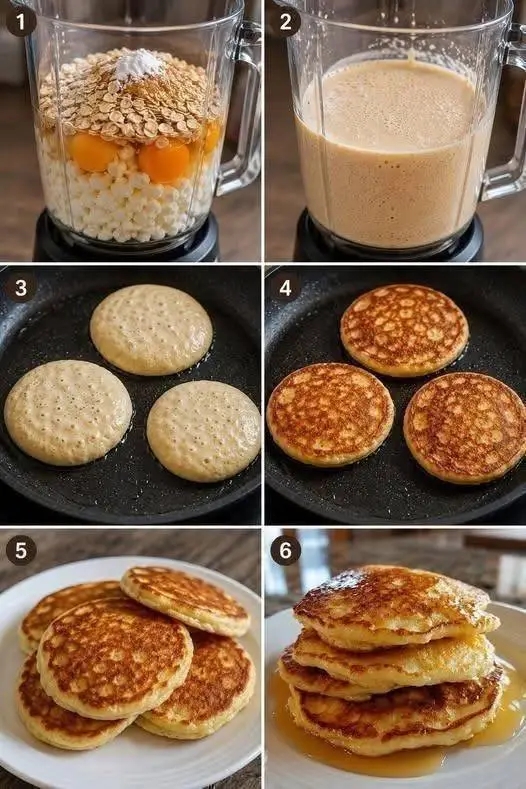
There are pancakes that are merely breakfast, and then there are pancakes that are a revelation. Cottage Cheese Oat Pancakes fall gloriously into the second category. They’re impossibly fluffy, tender, and satisfying – yet they pack a protein punch that will keep you full and focused for hours. The combination of creamy cottage cheese and wholesome rolled oats creates a batter that blends into a silky, pourable consistency, then puffs up into golden, cloud‑like pancakes that rival any traditional stack. They’re the breakfast that makes you feel like you’re indulging, even as you’re nourishing your body.
If you’ve been searching for a high‑protein breakfast that doesn’t taste like a protein shake or a brick of eggs, this recipe is your answer. These pancakes are naturally gluten‑free (if you use certified oats), lower in carbs than traditional flour‑based pancakes, and packed with muscle‑building protein from the cottage cheese and eggs. But the real magic is in the texture – they’re light, airy, and impossibly fluffy, with a subtle sweetness from the vanilla and cinnamon that makes them feel like a weekend treat, even on a busy Tuesday morning.
What Are Cottage Cheese Oat Pancakes?
At their heart, these pancakes are a blender‑based, high‑protein breakfast that transforms simple, wholesome ingredients into something truly special. The batter starts with cottage cheese and rolled oats, which are blended together with eggs, milk, and a few flavorings until completely smooth. The result is a thick, pourable batter that cooks up into pancakes that are fluffy, tender, and satisfyingly dense – not the heavy, rubbery texture that sometimes plagues protein pancakes.
This recipe falls into the category of “healthy comfort food” – dishes that deliver the satisfaction of a classic favorite while sneaking in extra nutrition. The cottage cheese provides a creamy richness and a significant protein boost (about 25 grams per cup), while the oats offer complex carbohydrates that provide sustained energy. Together, they create a balanced breakfast that supports muscle repair, stabilizes blood sugar, and keeps hunger at bay until lunch.
What makes these pancakes especially brilliant is their versatility. The base recipe is delicious on its own, but it’s also a canvas for endless variations – add fruit, spices, or a scoop of protein powder to customize it to your taste. They’re equally perfect for a leisurely Sunday brunch or a quick, meal‑prepped weekday breakfast.
Why You’ll Love This Recipe
There are countless reasons to fall in love with these Cottage Cheese Oat Pancakes. Here are just a few that will have you making them on repeat:
High in protein – each serving delivers 20+ grams of quality protein to keep you full and energized.
Naturally gluten‑free – use certified gluten‑free oats and you’re good to go.
Wholesome, clean ingredients – no refined flour, no preservatives, no junk.
Incredibly fluffy texture – light, airy, and tender – not dense or rubbery.
Easy blender recipe – just toss everything in and blend – minimal cleanup.
Make‑ahead friendly – the batter keeps in the fridge, and the pancakes freeze beautifully.
Customizable – add fruit, chocolate chips, spices, or protein powder.
Kid‑approved – even picky eaters love these fluffy, sweet pancakes.
Nutritious comfort food – they taste indulgent while nourishing your body.
Perfect for meal prep – make a big batch and enjoy all week.
This is the recipe that will make you excited to wake up in the morning. It’s proof that healthy eating doesn’t have to mean boring, bland, or unsatisfying.
Ingredients for Cottage Cheese Oat Pancakes
This recipe uses simple, wholesome ingredients that you likely already have in your kitchen. Here’s what you’ll need:
Core Ingredients
1 cup cottage cheese (full‑fat or low‑fat, your choice)
1 cup rolled oats (use certified gluten‑free if needed)
2 large eggs
¼ cup milk (any kind – dairy, oat, almond, etc.)
1 teaspoon baking powder
1 teaspoon pure vanilla extract
½ teaspoon ground cinnamon
1 tablespoon honey or maple syrup (optional, for added sweetness)
Pinch of salt
Butter or oil for cooking
Ingredient Notes and Substitutions
Cottage Cheese: Full‑fat cottage cheese gives the richest, creamiest texture, but low‑fat or non‑fat versions work well too. If you’re not a fan of the curd texture, don’t worry – the blender completely smooths it out. For an ultra‑creamy result, use a high‑speed blender. If you want even more protein, you can substitute Greek yogurt for half the cottage cheese.
Rolled Oats: Old‑fashioned rolled oats are ideal. They blend into a fine flour‑like consistency and create a thick, satisfying batter. Do not use steel‑cut oats – they won’t soften properly. Quick oats can be used in a pinch, but the texture may be slightly less fluffy. For gluten‑free pancakes, use certified gluten‑free rolled oats.
Eggs: Large eggs are essential for structure and fluffiness. They help the pancakes rise and hold together. If you need an egg substitute, you can try flax eggs, but the texture will be different.
Milk: Any milk works – dairy milk, oat milk, almond milk, or soy milk. The milk adds moisture and helps the batter reach the right consistency. If you use a thicker milk like oat milk, you may need to add an extra splash to thin the batter.
Sweetener: The honey or maple syrup is optional but adds a lovely, natural sweetness. If you prefer a sugar‑free version, you can omit it or use a sugar‑free syrup. The pancakes will still be delicious, especially with toppings.
Step‑by‑Step Instructions
Follow these simple steps to create a perfect batch of Cottage Cheese Oat Pancakes. The process is quick, easy, and virtually foolproof.
1. Add Everything to the Blender
In a high‑speed blender, combine the cottage cheese, rolled oats, eggs, milk, baking powder, vanilla, cinnamon, honey or maple syrup (if using), and a pinch of salt. Make sure the oats are fully submerged in the liquid.
2. Blend Until Smooth
Blend on high for 30–60 seconds, stopping to scrape down the sides as needed, until the batter is completely smooth and creamy. There should be no visible oat pieces or cottage cheese curds. The batter should be thick but pourable – like a thick milkshake. If it’s too thick, add an extra splash of milk.
3. Let the Batter Rest
Allow the batter to rest for 5–10 minutes. This gives the oats time to absorb the liquid and thicken slightly, which helps the pancakes hold together better. You’ll notice the batter becoming even thicker during this rest.
4. Heat the Skillet
Heat a nonstick skillet or griddle over medium‑low heat. This is important – medium‑low heat ensures the pancakes cook through without burning the outside. Add a small amount of butter or oil and let it melt, swirling to coat the pan.
5. Pour the Pancakes
Using a ¼‑cup measuring cup or a ladle, pour small rounds of batter onto the skillet. Keep the pancakes small – about 3–4 inches in diameter – so they flip easily and cook through evenly. Leave space between each pancake to allow for spreading.
6. Cook Until Bubbles Appear
Cook for 2–3 minutes, until small bubbles form on the surface and the edges look set. The underside should be golden brown. If the pancakes are browning too quickly, reduce the heat.
7. Flip and Finish Cooking
Gently flip the pancakes using a thin spatula and cook for another 1–2 minutes, until the other side is golden brown and the pancakes are cooked through. They should feel firm to the touch and spring back slightly.
8. Serve Warm
Serve immediately with your favorite toppings: warm maple syrup, Greek yogurt, fresh berries, sliced bananas, peanut butter, or a dusting of powdered sugar. These pancakes are equally delicious on their own.
Expert Tips for the Perfect Pancakes
This recipe is simple, but a few expert tricks will elevate it to perfection. Here’s what I’ve learned from making these pancakes countless times:
Use medium‑low heat – this is the most important tip. These pancakes need gentle, even heat to cook through without burning. Rushing with high heat will give you dark outsides and raw centers.
Keep them small – smaller pancakes are much easier to flip and cook more evenly. Use a ¼‑cup measure for the perfect size.
Let the batter rest – don’t skip the rest time. It allows the oats to absorb liquid and thicken, which prevents thin, runny pancakes.
Don’t over‑grease the pan – too much butter or oil can make the pancakes greasy and crispy instead of fluffy. Use just enough to coat the surface.
Wait for the bubbles – don’t flip too early. The bubbles indicate that the bottom is set and the pancake is ready to flip.
Use a thin spatula – a thin, flexible spatula makes it easier to get under the pancakes without breaking them.
Blend until completely smooth – if you still see oat pieces or curds, keep blending. A smooth batter yields fluffy, uniform pancakes.
Adjust the consistency – if the batter is too thick, add a splash of milk. If it’s too thin, add a few extra oats and let it rest longer.
Delicious Variations
One of the best things about this recipe is how easily it adapts to different tastes and cravings. Here are some of my favorite ways to switch it up:
Blueberry Cottage Cheese Oat Pancakes
Fold ½ cup of fresh or frozen blueberries into the batter after blending. The berries burst during cooking, creating sweet, jammy pockets. This is the most popular variation for good reason.
Chocolate Chip Cottage Cheese Pancakes
Fold in ¼ cup of mini chocolate chips after blending. The chocolate melts into the pancakes, creating a dessert‑like breakfast that still packs a protein punch.
Apple Cinnamon Oat Pancakes
Add ½ teaspoon of extra cinnamon, ¼ teaspoon of nutmeg, and fold in ½ cup of finely diced apple. The warm spices and sweet apples make these perfect for fall mornings.
Protein Packed Pancakes
Add ½ scoop of vanilla or unflavored protein powder to the blender along with an extra splash of milk. This boosts the protein content to over 30 grams per serving.
Banana Oat Pancakes
Add ½ ripe banana to the blender. The banana adds natural sweetness and a subtle flavor that pairs beautifully with the cinnamon. Reduce the honey or maple syrup if you add banana.
Vegan Version
Replace the eggs with 2 flax eggs (2 tablespoons ground flaxseed + 6 tablespoons water, set for 5 minutes) and use plant‑based milk. The texture will be slightly different but still delicious.
Savory Cottage Cheese Oat Pancakes
Omit the vanilla, cinnamon, and sweetener. Add ¼ cup of grated Parmesan, ½ teaspoon of garlic powder, and 1 tablespoon of fresh chives. Serve with sour cream and smoked salmon for a unique savory breakfast or brunch.
Serving Suggestions
These pancakes are incredibly versatile and can be served in countless ways. Here are some of my favorites:
Classic style – with butter and warm maple syrup.
Fresh and fruity – topped with Greek yogurt, fresh berries, and a drizzle of honey.
Indulgent – with a dollop of whipped cream, chocolate chips, and a sprinkle of powdered sugar.
Nutty – with peanut butter or almond butter and sliced bananas.
Savory – with a poached egg, smoked salmon, or avocado.
Simple – just a dusting of cinnamon and a squeeze of lemon juice.
Storage and Reheating Guidelines
These pancakes keep beautifully, making them a fantastic make‑ahead option for busy mornings.
Refrigeration: Store leftover pancakes in an airtight container in the refrigerator for up to 4 days. Layer them with parchment paper to prevent sticking.
Reheating: For the best texture, reheat in a toaster oven or regular oven at 350°F for 5–7 minutes. You can also reheat in a skillet over low heat for 1–2 minutes per side, or microwave for 20–30 seconds.
Freezing: These pancakes freeze beautifully. Place cooled pancakes in a single layer on a baking sheet, freeze until solid, then transfer to a freezer‑safe bag or container. Freeze for up to 3 months. Reheat directly from frozen in a toaster or oven.
Batter Storage: The batter can be stored in the refrigerator for up to 2 days. Stir well before using – it may thicken, so add a splash of milk to thin it if needed.
Nutritional Information
Approximate values per serving (based on 4 servings, using full‑fat cottage cheese and no added sweetener):
- Calories: 265
- Carbohydrates: 26g
- Protein: 21g
- Fat: 9g
- Saturated Fat: 3.5g
- Fiber: 4g
- Sugar: 6g
- Sodium: 420mg
For a lower‑fat version (using low‑fat cottage cheese and milk), calories drop to approximately 220 per serving. Adding protein powder, fruit, or chocolate chips will increase the calories and nutritional values.
Want the full truth and the practical next steps?
Page 2 continues with the real explanation, the key details many readers skip, and the simple takeaways that make this guide more useful.