
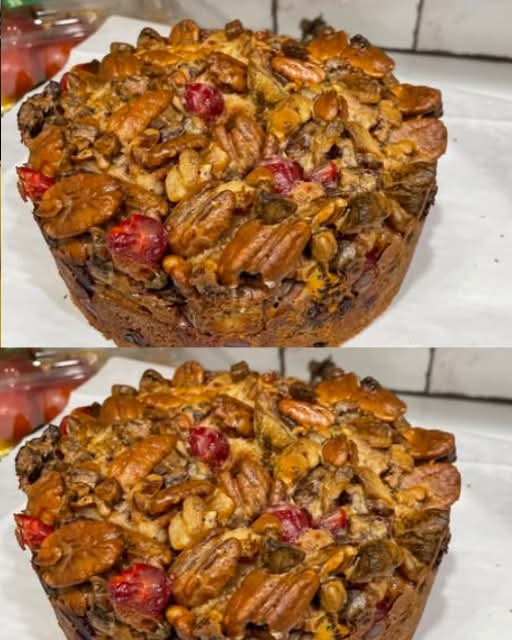
There are fruitcakes that get re‑gifted, and then there is this fruitcake – the one that disappears from the holiday table before the turkey even gets carved. This is not the dense, overly sweet, neon‑colored fruitcake that people love to mock. This is a southern heirloom recipe from my husband’s cousin, passed down through generations, and it is absolutely loaded with the good stuff: buttery pecan halves, chewy dried apricots, sticky sweet dates, and jewel‑bright candied cherries. No citron. No mysterious “mixed peel.” No bitter, candied rinds that ruin the whole experience. Just rich, moist, nutty, fruity perfection. Every Christmas, I make several loaves of this fruitcake, and by New Year’s Eve, they are gone. Trust me – if you have not yet joined Mama Sue’s Southern Kitchen, you are missing a lot. This recipe alone is worth the visit. Let me show you how to make the fruitcake that will change your mind about fruitcake forever.
⏲️ Prep: 25 mins🔥 Bake: 90-100 mins🍽️ Yields: 2 loaves🍑 Loaded with fruit & nuts🚫 No citron⭐ Southern heirloom recipe
✨ Why This Fruitcake Is Different (And Why You Will Love It)
Most commercial fruitcakes are packed with bitter, rubbery citron and that neon green and red “fruitcake mix” that tastes like nothing. This recipe is the opposite. Every bite delivers a perfect balance of textures and flavors: crunchy toasted pecans, tender sweet dates, chewy tangy apricots, and bright, juicy candied cherries. The cake itself is moist, buttery, and just sweet enough to complement the fruit without being cloying. A touch of vanilla and a splash of bourbon or apple cider (your choice) adds warmth and depth. The loaves stay fresh for weeks – in fact, they get better with age, especially if you brush them with a little bourbon or brandy every few days. This is the fruitcake that fruitcake haters devour. It is the one you will be proud to give as a gift, and the one you will hide in the back of the pantry so you can sneak slices for yourself.
💡 The secret to this fruitcake: No citron, no mixed peel – just real, high‑quality dried and candied fruits that you actually want to eat. The pecans add crunch, the dates add natural sweetness, and the apricots add a bright, tangy note that balances everything beautifully.
📝 The Complete Ingredient List (From My Husband’s Cousin)
This recipe makes two generous loaves – perfect for gifting or freezing one for later. For the fruit and nut base, you need one cup of pecan halves (plus extra for topping the loaves – about a half cup more). One cup of dried apricots, chopped into small, bite‑sized pieces. One cup of pitted dates, chopped (Medjool dates are wonderful, but Deglet Noor work too). One cup of candied cherries, halved – look for bright red or green, or a mix of both. Do not use maraschino cherries packed in syrup; you want the firm, candied kind sold in the baking aisle.
For the cake batter, you need two cups of all‑purpose flour (plus a few tablespoons for dredging the fruit). One cup of unsalted butter, softened to room temperature. One cup of granulated sugar. Four large eggs, at room temperature. One teaspoon of baking powder. Half a teaspoon of salt. One teaspoon of vanilla extract. Two tablespoons of bourbon, apple cider, or orange juice – bourbon is traditional for a true southern fruitcake, but cider or juice works beautifully for a non‑alcoholic version.
Optional finishing touches: a few tablespoons of bourbon or brandy for brushing over the baked loaves (this is the classic “feeding” method), and whole pecans or extra cherry halves for decorating the tops before baking.
👩🍳 Step‑by‑Step Instructions (The Way Mama Sue Would Make It)
First, preheat your oven to 300°F (150°C). Yes, this fruitcake bakes low and slow – that is the secret to its moist, tender crumb. Grease two 8×4‑inch loaf pans generously with butter or non‑stick spray, then line the bottoms with parchment paper for easy removal.
Next, prepare the fruit and nuts. In a large bowl, combine the chopped apricots, chopped dates, halved cherries, and pecan halves. Sprinkle two tablespoons of the measured flour over the fruit and nuts, tossing well to coat. This little trick prevents the fruit from sinking to the bottom of the batter during baking. Set aside.
Make the cake batter. In a separate large mixing bowl, beat the softened butter and sugar together until light and fluffy – about three to four minutes with an electric mixer. Add the eggs one at a time, beating well after each addition. Stir in the vanilla extract and the bourbon (or cider/juice).
Combine the dry ingredients. In a medium bowl, whisk together the remaining flour (about one cup and three quarters, since you used two tablespoons for the fruit), the baking powder, and the salt. Gradually add the dry ingredients to the butter mixture, mixing on low speed just until combined. Do not overmix – the batter should be thick and smooth.
Fold in the fruit and nuts. Pour the flour‑coated fruit and pecan mixture into the batter. Use a sturdy spatula to fold everything together gently until the fruit and nuts are evenly distributed. The batter will be very thick and chunky – that is exactly right.
Fill the loaf pans. Divide the batter evenly between the two prepared loaf pans. Smooth the tops with a spatula. If you like, press a few extra pecan halves or cherry halves onto the tops for decoration.
Bake low and slow. Place the pans in the preheated oven and bake for ninety minutes to one hundred minutes, or until a wooden skewer inserted into the center comes out clean or with just a few moist crumbs. The loaves should be deep golden brown, and the edges will have pulled away slightly from the sides of the pans. If the tops are browning too quickly, tent loosely with foil after the first hour.
Cool the loaves. Let the fruitcakes cool in the pans for fifteen minutes, then turn them out onto a wire rack to cool completely. At this point, they are ready to eat – but they get even better with age.
Optional: “Feed” the fruitcakes for extra flavor and moisture. Once the loaves are completely cool, wrap them in cheesecloth and brush lightly with bourbon, brandy, or apple cider. Then wrap tightly in plastic wrap and then foil. Store in a cool, dark place for up to two weeks, brushing with more bourbon every few days. This is the traditional method, and it produces an incredibly rich, moist, deeply flavorful fruitcake.
💡 Pro Tips for the Best Southern Fruitcake
Use the best quality dried fruit you can find. Soft, plump dates and apricots make a huge difference. If your dried fruit feels hard, soak it in hot water or apple cider for ten minutes, then drain and pat dry before chopping.
Do not overmix the batter. Once you add the flour, mix just until combined. Overworking the gluten can make the cake tough. The fruit and nuts will do the rest.
Bake low and slow. 300°F is the magic temperature. A hotter oven will dry out the cake and burn the fruit before the center is done.
Make ahead for the holidays. This fruitcake actually improves with age. Bake it two to four weeks before you plan to serve it, and feed it with bourbon or brandy weekly. The flavors meld and deepen, and the cake becomes incredibly moist.
Do not skip the flour dredge. Coating the fruit and nuts in a little flour before adding to the batter prevents them from sinking to the bottom. Every slice will have fruit and nuts throughout.
🥗 Nutritional Snapshot (per slice, 1/16 of a loaf)
🔥 Calories: 310
💪 Protein: 5g
🥑 Fat: 16g
🍚 Carbs: 42g
🌾 Fiber: 3g
🍬 Sugar: 28g
Values are estimates using butter, pecans, dried fruit, and candied cherries. This fruitcake is a rich, indulgent holiday treat – best enjoyed in thin slices with a cup of coffee or tea.
🌟 7 Delicious Variations to Try
Bourbon‑Spiked Fruitcake: Use a full quarter cup of bourbon in the batter and brush the baked loaves with bourbon weekly. The bourbon adds warmth, complexity, and traditional southern character.
Gingerbread Spice Fruitcake: Add one teaspoon of ground ginger, one teaspoon of cinnamon, and a half teaspoon of cloves to the dry ingredients. Replace the bourbon with molasses (reduce sugar slightly).
Chocolate Cherry Fruitcake: Add a half cup of dark chocolate chips along with the fruit. Use dark cherries instead of red candied cherries. The chocolate and cherry combination is divine.
Cranberry Orange Fruitcake: Replace the apricots with dried cranberries and the dates with golden raisins. Add the zest of one orange and replace the bourbon with fresh orange juice. A bright, tangy holiday twist.
Nut‑Free Fruitcake: Omit the pecans and add an extra half cup each of apricots, dates, and cherries. The fruit alone makes a dense, chewy, nut‑free version.
Gluten‑Free Fruitcake: Substitute the all‑purpose flour with a high‑quality gluten‑free 1:1 baking blend (like King Arthur or Bob’s Red Mill). Add one teaspoon of xanthan gum if your blend does not already contain it.
Mini Fruitcake Loaves for Gifting: Use mini loaf pans (about 4×2 inches) and reduce the baking time to forty‑five to fifty minutes. These make perfect homemade holiday gifts.
❄️ How to Store, Feed & Freeze Fruitcake
One of the best things about this fruitcake is how well it keeps. Unfed (plain), the loaves can be wrapped tightly in plastic wrap and stored at room temperature for up to two weeks. If you want the traditional “fed” fruitcake experience, wrap each cooled loaf in a double layer of cheesecloth. Place the wrapped loaves in an airtight container or a large zip‑top bag. Every three to four days, unwrap and brush the loaves with two tablespoons of bourbon, brandy, apple cider, or even spiced rum. Rewrap and store in a cool, dark place. Fed fruitcake can last for months – in fact, some families make them months ahead of Christmas. To freeze, wrap the unfed, cooled loaves tightly in plastic wrap, then foil. Freeze for up to six months. Thaw overnight in the refrigerator or at room temperature, then feed as desired. Do not freeze after feeding; the alcohol can cause off flavors.
📦 Gift giving tip: Wrap a fed fruitcake in a festive tea towel or parchment paper, tie with baker’s twine, and attach a small bottle of bourbon with a note: “Feed me every few days for the best flavor!” It makes a beautiful, personal, and delicious homemade gift.
Want the full truth and the practical next steps?
Page 2 continues with the real explanation, the key details many readers skip, and the simple takeaways that make this guide more useful.