
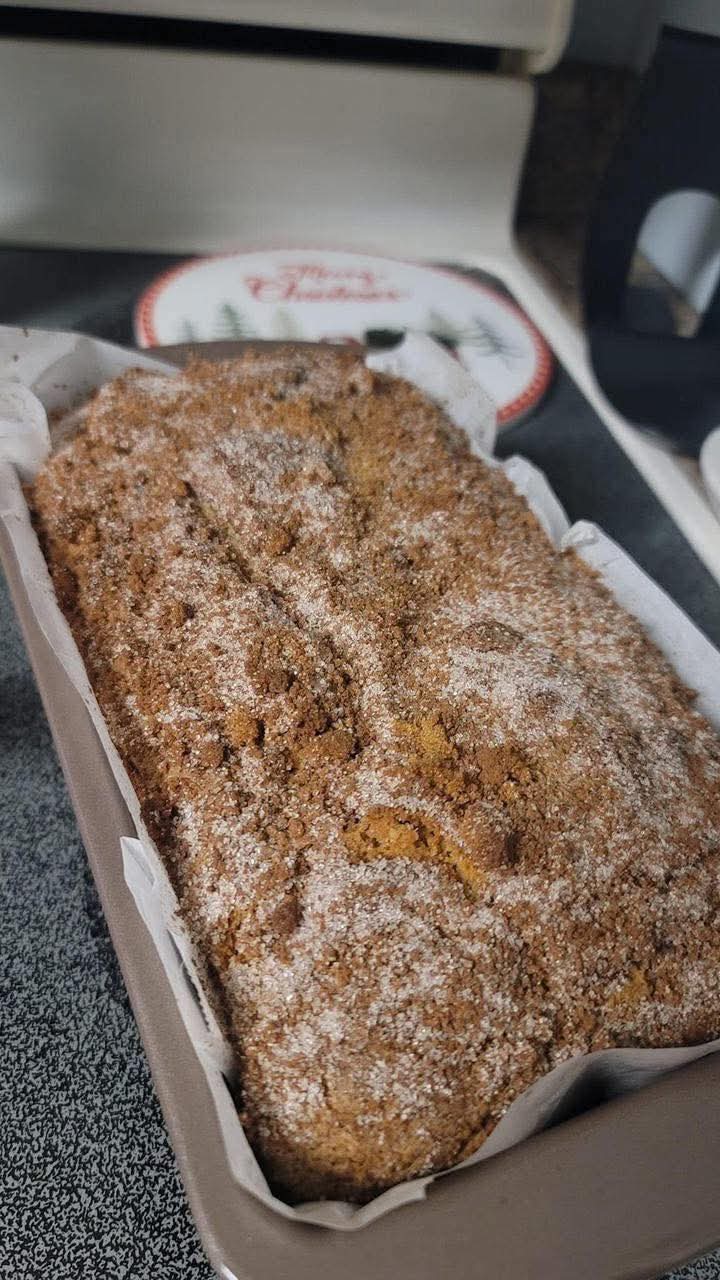
There are cinnamon breads that are good, and then there is Sourdough Cinnamon Donut Bread – the kind of loaf that makes you close your eyes and smile after the first bite. Imagine the tender, buttery crumb of a classic sourdough quick bread, swirled with a generous ribbon of cinnamon sugar, and finished with a crackly, crunchy topping that tastes exactly like the cinnamon sugar coating on a fresh donut. Every slice has that perfect balance: a slight tang from the sourdough discard, warmth from the cinnamon, sweetness from the sugar, and a melt‑in‑your‑mouth texture that is neither too dense nor too airy. If you are searching for a sourdough cinnamon donut bread that will use up your discard and satisfy your donut cravings, this is the one.
Whether you are an avid sourdough baker looking for creative ways to use discard, or simply a lover of all things cinnamon sugar, this loaf delivers. It is a quick bread – no yeast, no kneading, no waiting for dough to rise. Just mix, swirl, bake, and brush with melted butter before rolling in cinnamon sugar. The result is a loaf that tastes like a cinnamon donut in bread form, perfect for breakfast, brunch, afternoon coffee, or even dessert. This sourdough discard cinnamon sugar loaf will become your new favorite way to use that jar of discard in the fridge.
In this complete guide, you will learn the master recipe for sourdough cinnamon donut bread, including pro tips for achieving the perfect crackly crust, delicious variations (add nuts, raisins, or a cream cheese swirl), storage and freezing instructions, and why this loaf is a game‑changer for sourdough bakers. Let’s preheat that oven.
Why Sourdough Cinnamon Donut Bread Is Pure Magic
This loaf combines two beloved things: the nostalgic, crackly crunch of a cinnamon sugar donut and the rich, tangy depth of sourdough. The sourdough discard (unfed starter) adds moisture, tenderness, and a subtle complexity that plain buttermilk or milk cannot replicate. The butter and sugar create a soft, cake‑like crumb, while the cinnamon swirl and topping give you that donut shop experience. And because it is a quick bread, you can go from mixing to eating in about an hour. This is an easy sourdough donut recipe that requires no deep frying, no yeast, and no complicated shaping.
Here is why you will love it:
Uses up sourdough discard – No more throwing it away.
No yeast, no kneading – A simple quick bread method.
Incredibly moist and tender – Thanks to the discard and butter.
That crackly cinnamon sugar crust – Brushed with butter and rolled in cinnamon sugar after baking.
Perfect for breakfast, brunch, or dessert
Customizable – Add pecans, raisins, or a cream cheese swirl.
Freezes beautifully – Make two and save one.
Once you try this cinnamon swirl sourdough bread, you will be looking for excuses to feed your starter just to have discard.
The Complete Sourdough Cinnamon Donut Bread Recipe
This recipe makes one 9×5 inch loaf. It can easily be doubled.
Ingredients – For the Bread:
1 ½ cups (360g) sourdough discard (unfed, straight from the fridge is fine)
½ cup (113g, 1 stick) unsalted butter, softened
1 cup (200g) granulated sugar
2 large eggs, room temperature
1 teaspoon vanilla extract
1 ¾ cups (210g) all‑purpose flour
1 teaspoon baking soda
½ teaspoon salt
Ingredients – For the Cinnamon Swirl and Topping:
½ cup (100g) granulated sugar (for swirl + topping)
2 tablespoons ground cinnamon (divided)
4 tablespoons (56g) unsalted butter, melted (for brushing after baking)
Optional Add‑ins:
½ cup chopped pecans or walnuts
½ cup raisins or dried cranberries
½ cup mini chocolate chips
Equipment:
9×5 inch loaf pan
Parchment paper or non‑stick spray
Mixing bowls
Whisk or electric mixer
Rubber spatula
Cooling rack
Pastry brush
Step‑by‑Step Instructions
Step 1 – Preheat and Prepare
Preheat your oven to 350°F (175°C). Grease a 9×5 inch loaf pan with butter or non‑stick spray, then line the bottom with a strip of parchment paper (leaving overhangs on the long sides for easy removal).
Step 2 – Make the Cinnamon Sugar Mixture
In a small bowl, combine the ½ cup of granulated sugar and 2 tablespoons of cinnamon. Mix well. Remove 2 tablespoons of this mixture and set aside for the topping. The rest will be used for the swirl inside the bread.
Step 3 – Cream Butter and Sugar
In a large mixing bowl (or stand mixer with paddle attachment), beat the softened butter and 1 cup of granulated sugar together on medium speed until light and fluffy, about 2‑3 minutes. Scrape down the sides.
Step 4 – Add Eggs, Vanilla, and Sourdough Discard
Add the eggs one at a time, beating well after each addition. Mix in the vanilla extract. Then add the sourdough discard and mix until just combined. The batter may look slightly curdled – that is normal.
Step 5 – Add Dry Ingredients
In a separate bowl, whisk together the flour, baking soda, and salt. Gradually add the dry ingredients to the wet mixture, mixing on low speed just until no streaks of flour remain. Do not overmix. Fold in any optional add‑ins (nuts, raisins, chocolate chips) at this stage.
Step 6 – Layer the Batter and Cinnamon Swirl
Pour half of the batter into the prepared loaf pan and spread evenly. Sprinkle half of the reserved cinnamon sugar mixture (the portion for swirling, not the reserved 2 tablespoons) over the batter. Use a knife or skewer to gently swirl it into the batter. Pour the remaining batter on top and spread evenly. Sprinkle the remaining swirl cinnamon sugar over the top, then swirl again lightly with a knife to create ribbons of cinnamon throughout the bread.
Step 7 – Bake
Bake for 45‑55 minutes, or until a toothpick inserted into the center comes out clean or with just a few moist crumbs. The top should be golden brown and the loaf should spring back when lightly pressed. If the top is browning too quickly, tent loosely with foil for the last 15 minutes.
Step 8 – Cool and Apply Donut Coating
Let the bread cool in the pan for 10‑15 minutes, then lift it out using the parchment overhangs and transfer to a wire rack. While the bread is still warm (but not hot), brush the top and sides generously with the melted butter. Immediately sprinkle the reserved 2 tablespoons of cinnamon sugar mixture over all surfaces, pressing gently to adhere. This creates that iconic donut‑style coating.
Step 9 – Cool Completely and Slice
Let the bread cool completely on the wire rack (about 1 hour). This allows the crumb to set and the coating to harden slightly. Slice with a serrated knife. Serve warm or at room temperature.
Pro Tips for the Best Sourdough Cinnamon Donut Bread
Follow these expert tips for a perfect sourdough breakfast loaf every time:
Use unfed sourdough discard – Straight from the fridge is fine. Do not use active, bubbly starter – it can make the bread too tangy or affect the texture.
Do not overmix – Overmixing develops gluten, making the bread tough. Mix just until the flour disappears.
Swirl gently, not vigorously – You want ribbons of cinnamon, not a muddy brown loaf. A few gentle figure‑eights with a knife are enough.
Apply the butter and cinnamon sugar while the bread is warm – This helps the coating stick and creates that crackly donut crust. If the bread is too hot, the butter will soak in too much; if too cold, the sugar won’t adhere. Warm is perfect.
Let the bread cool completely before slicing – Cutting too soon will cause crumbling and a gummy texture.
For extra donut flavor, add ¼ teaspoon of nutmeg to the cinnamon sugar mixture.
Double the recipe – This bread freezes beautifully, so make two and save one for later.
Delicious Variations (Same Sourdough Base)
Once you master the classic sourdough cinnamon donut bread, try these fun twists. These sourdough quick bread variations will keep your baking exciting.
1. Cinnamon Pecan Sourdough Donut Bread
Add ½ cup of finely chopped toasted pecans to the batter. Sprinkle extra pecans on top before baking. The nutty crunch pairs wonderfully with the cinnamon sugar.
2. Raisin Cinnamon Sourdough Bread
Fold in ½ cup of raisins (plumped in hot water for 10 minutes, then drained). The raisins add little bursts of sweetness. This version tastes like a cinnamon raisin bagel in loaf form.
Want the full truth and the practical next steps?
Page 2 continues with the real explanation, the key details many readers skip, and the simple takeaways that make this guide more useful.