
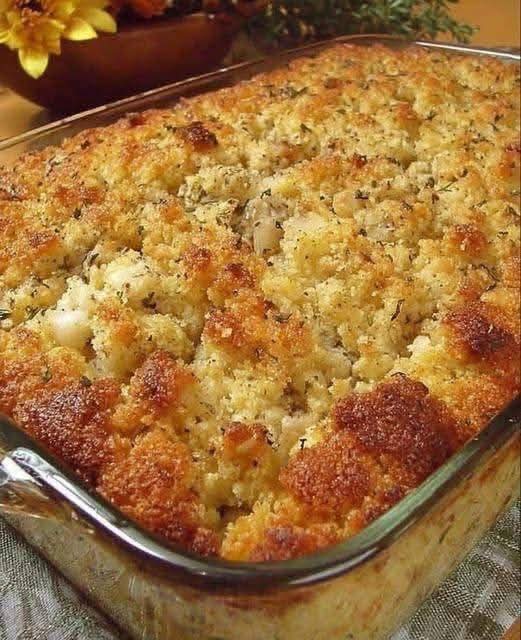
There are side dishes, and then there are side dishes. Cornbread dressing belongs to the second category. It is the golden, savory, herb‑flecked spoonful that people plan their Thanksgiving and Christmas meals around. While the turkey may be the centerpiece, it is the dressing – moist, flavorful, and redolent of sage, celery, and onion – that guests remember and crave year after year.
Unlike the bread stuffing of the North, which is often cooked inside the turkey, Southern cornbread dressing is almost always baked separately in a casserole dish, resulting in a crispy top and a soft, custard‑like center. Made with crumbled cornbread, toasted white bread, aromatic vegetables, broth, and eggs, it is the ultimate comfort food.
In this guide, you will learn the history of cornbread dressing, the complete from‑scratch recipe (including how to make the cornbread), pro tips for the perfect texture, delicious variations (sausage, oyster, gluten‑free), make‑ahead instructions, storage advice, and answers to common questions. Whether you are a seasoned Southern cook or a first‑timer attempting holiday dinner, this recipe will help you create a dressing that disappears before the turkey does.
What Is Cornbread Dressing? (And How It Differs from Stuffing)
The terms “dressing” and “stuffing” are often used interchangeably, but there is a regional and practical difference.
· Stuffing is traditionally cooked inside the cavity of the turkey or chicken. It absorbs the bird’s juices and has a softer, denser texture. This is more common in the North and Northeast.
· Dressing is baked separately in a casserole dish. It has a crispy top and a moist, almost custard‑like interior. This is the Southern way.
Cornbread dressing specifically uses cornbread as the primary base, often mixed with some white bread for lightness. It is seasoned with sage, thyme, celery, and onion, and bound with eggs and broth. The result is a dish that is savory, herbaceous, and deeply satisfying – the soul food of holiday tables.
Why This Cornbread Dressing Recipe Works
This recipe has been passed down through generations and tested in countless home kitchens. It strikes the perfect balance between crispy edges and a soft, scoopable center. The cornbread provides a slightly sweet, crumbly foundation, while the white bread adds structure. The vegetables are sautéed until sweet and tender, and the herbs are classic Southern sage and thyme.
Here is what makes it the best:
· Two types of bread – Cornbread for flavor and color; white bread for lightness.
· Made from scratch cornbread – Once you make your own, you will never use a box mix again.
· Rich turkey or chicken broth – The secret to deep savory flavor.
· Eggs for a custard‑like texture – This is what gives Southern dressing its unique mouthfeel.
· Sage is the star – Dried sage is non‑negotiable for authentic flavor.
· Make‑ahead friendly – Assemble the day before and bake when ready.
· Freezer‑friendly – Make a double batch and save one for later.
The Complete Cornbread Dressing Recipe
This recipe serves 10‑12 people. It bakes in a 9×13‑inch casserole dish.
For the Cornbread
· 1 cup (120g) yellow cornmeal (not self‑rising unless you adjust)
· 1 cup (120g) all‑purposeark
· 1 tablespoon baking powder
· ½ teaspoon salt
· 1 cup (240ml) buttermilk (or regular milk with 1 tbsp vinegar)
· 2 large eggs
· ¼ cup (60ml) vegetable oil or melted butter
For the Dressing
· 8 cups (about 1½ recipes) crumbled cornbread (from the recipe above)
· 4 cups (about 8 slices) day‑old white bread, torn into small pieces (or toasted)
· 1 cup (2 sticks) unsalted butter
· 2 cups finely chopped yellow onion (about 2 medium onions)
· 2 cups finely chopped celery (about 4‑5 ribs)
· 4 cloves garlic, minced
· 2 tablespoons dried sage (rubbed sage is best)
· 1 tablespoon dried thyme
· 1 teaspoon dried rosemary (optional)
· 1 teaspoon salt
· 1 teaspoon black pepper
· 4 cups (960ml) low‑sodium turkey or chicken broth (warm)
· 4 large eggs, lightly beaten
Optional Add‑Ins
· 1 lb (450g) cooked, crumbled breakfast sausage
· 1 cup chopped pecans or walnuts
· 1 cup chopped fresh parsley
· ½ cup dried cranberries (for a sweet‑savory twist)
Equipment
· 9×13‑inch baking dish
· Large mixing bowl
· Large skillet
· Whisk
Step‑by‑Step Instructions
Part 1 – Make the Cornbread (Day Before or Earlier)
Step 1 – Preheat and Prepare
Preheat your oven to 425°F (220°C). Grease an 8×8‑inch or 9×9‑inch square baking pan (or a cast iron skillet).
Step 2 – Mix Dry Ingredients
In a bowl, whisk together the cornmeal, flour, baking powder, and salt.
Step 3 – Mix Wet Ingredients
In another bowl, whisk together the buttermilk, eggs, and oil/butter.
Step 4 – Combine
Pour the wet ingredients into the dry and stir until just combined. Do not overmix.
Step 5 – Bake
Pour batter into the prepared pan. Bake at 425°F for 20‑25 minutes, until golden brown and a toothpick comes out clean.
Step 6 – Cool and Crumble
Let the cornbread cool completely. Then crumble it into large, irregular pieces (not too fine). You need about 8 cups of crumbled cornbread. This is best done a day ahead so the cornbread dries out slightly.
Part 2 – Assemble the Dressing
Step 1 – Preheat and Prepare
Preheat your oven to 375°F (190°C). Grease a 9×13‑inch baking dish.
Step 2 – Prepare the Bread
If using fresh white bread, tear it into small pieces and spread on a baking sheet. Toast at 300°F for 10‑15 minutes until dried out but not browned. Day‑old bread is ideal.
Step 3 – Sauté Vegetables
In a large skillet, melt the butter over medium heat. Add the chopped onion and celery. Cook, stirring occasionally, until softened and translucent, about 8‑10 minutes. Add the minced garlic and cook for 1 more minute. Remove from heat.
Step 4 – Combine Dry Ingredients
In a very large mixing bowl, combine the crumbled cornbread and the toasted white bread pieces. Add the sautéed vegetables (including all the butter from the skillet).
Step 5 – Add Seasonings
Sprinkle the dried sage, thyme, rosemary (if using), salt, and pepper over the bread mixture. Toss well to distribute.
Step 6 – Add Broth and Eggs
In a separate bowl, whisk together the warm broth and the beaten eggs. Pour the broth mixture over the bread mixture. Stir gently until everything is evenly moistened. The dressing should be very wet – it will firm up as it bakes. If it seems dry, add a little more warm broth.
Step 7 – Transfer to Dish
Spoon the dressing into the prepared 9×13‑inch baking dish. Spread evenly. Do not pack down.
Step 8 – Bake
Cover the dish with foil. Bake at 375°F for 30 minutes. Remove foil and bake for another 20‑30 minutes, until the top is golden brown and crispy, and the center is set. A knife inserted in the center should come out clean.
Step 9 – Rest and Serve
Let the dressing rest for 10‑15 minutes before serving. This allows it to set slightly. Serve warm.
Pro Tips for the Best Cornbread Dressing
Use Day‑Old Breads
Stale bread absorbs the liquid better without becoming mushy. If you are in a pinch, toast fresh cornbread and white bread in a low oven to dry them out.
Do Not Overmix
Once you add the liquid, stir gently until just combined. Overmixing will make the dressing dense and gummy.
Adjust the Liquid
Different cornbreads absorb different amounts of liquid. Start with 4 cups of broth; after mixing, the dressing should be very moist but not swimming. Add more if needed.
The Sage is Essential
Dried rubbed sage is the quintessential Southern dressing flavor. Do not omit it. If you only have fresh sage, use 2 tablespoons finely chopped.
Sauté Vegetables Thoroughly
Raw onion and celery will not cook enough inside the dressing. Sautéing them first softens them and releases their sweetness.
Make It Creamier
For an even richer dressing, add ½ cup of heavy cream along with the broth.
For Extra Crunchy Top
After baking uncovered, you can broil for 1‑2 minutes to get an extra‑crispy crust. Watch carefully.
Add Sausage for a Heartier Dressing
Brown 1 lb of breakfast sausage or Italian sausage (casings removed). Drain fat and add to the bread mixture before adding liquid. This turns the dressing into a main dish.
Want the full truth and the practical next steps?
Page 2 continues with the real explanation, the key details many readers skip, and the simple takeaways that make this guide more useful.