
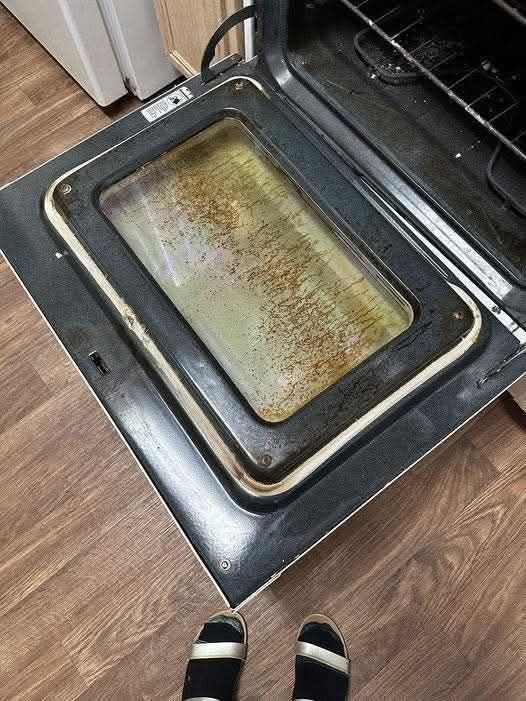
Few kitchen cleaning jobs are as frustrating as looking at your oven door and seeing that hazy, brown, streaky mess. You scrub. You spray. You try baking soda, vinegar, even commercial cleaners. And somehow, the glass still looks dirty.
Those baked‑on stains are not ordinary grease. They are a combination of carbonized food, smoke film, and polymerized oil that has bonded to the glass through repeated high‑heat cooking. Ordinary dish soap barely touches them.
But here is the good news: those stains are not permanent. You do not need to buy a new oven. And you do not need to scrub until your arms ache.
The secret is not more elbow grease. It is softening the buildup first, then using the right tools to lift it safely.
In this guide, you will learn exactly why oven door stains are so hard to remove, a step‑by‑step method that actually works, the best products to use, and how to keep your oven glass sparkling clean with minimal effort.
Why Oven Door Stains Are So Hard to Remove
Let us start with the science. When you cook at high temperatures — roasting, baking, broiling — tiny particles of grease and food splatter land on the glass. The heat then causes these fats to oxidize and polymerize. That means they turn into a hard, plastic‑like film that resists water, soap, and even some degreasers.
Over time, this film builds up into those brown, cloudy, or even black stains you see. The longer it sits, the more it bakes on.
Common Causes of Brown Oven Door Stains
· Roasting meats – Grease splatters and smokes.
· Baking at high heat – Dripping cheese, pie fillings, casseroles.
· Using the broiler – Intense heat accelerates polymerization.
· Self‑cleaning cycles – Can bake existing residue into a harder crust.
· Neglecting small spills – Fresh grease wipes off easily; baked‑on grease does not.
Understanding why these stains are stubborn is the first step to removing them effectively. You need to soften the residue before you can wipe or scrape it away.
What NOT to Do First (Important!)
Before we get to the solution, let us cover the common mistakes that make things worse.
Do Not Use Steel Wool or Metal Scrubbers
These will scratch the glass. Once scratched, the glass becomes even harder to clean because grime gets trapped in the micro‑scratches. Plus, a scratched oven door looks permanently damaged.
Do Not Scrape Aggressively at a Steep Angle
Using a razor scraper is fine, but hold it at a shallow angle (about 30 degrees or less). Digging in at 90 degrees can gouge the glass.
Do Not Use Cleaners on a Hot Oven Door
Hot glass plus cold cleaner can cause thermal shock and cracking. Always let the oven cool to warm (not hot) before cleaning.
Do Not Use Abrasive Powders Dry
Baking soda is safe, but rubbing it dry can be slightly abrasive. Always mix it into a wet paste.
Do Not Assume More Scrubbing = Better
If the stain is truly baked on, scrubbing harder will just exhaust you. Let chemistry and time do the work first.
Step‑by‑Step Guide to Remove Brown Stains from Oven Door Glass
This method combines gentle heat, a powerful paste, and safe scraping to remove even the worst buildup.
Step 1: Warm the Oven Slightly
Before cleaning, turn your oven on to the lowest setting (about 170–200°F / 75–95°C) for 5 minutes. Then turn it off.
You want the glass to feel slightly warm to the touch — not hot, not cold. A little warmth helps soften the greasy polymer and makes your cleaner work more effectively.
If your oven has a “warm” or “proof” setting, use that briefly. Do not heat the oven to 400°F; that is too hot.
Step 2: Make a Thick Cleaning Paste
A thin, watery paste will drip off the glass and do very little. A thick, spreadable paste stays in place and works longer.
Homemade paste recipe:
· ½ cup baking soda
· 1 tablespoon dish soap (Dawn or similar degreasing soap works best)
· 2–3 tablespoons water (add gradually)
Mix until you have a consistency like frosting or thick toothpaste. It should not run.
Apply the paste generously to the stained areas of the glass. Use a sponge or your fingers (wear gloves if you prefer). Cover the entire dirty area, not just the darkest spots. The paste needs to be in contact with the residue.
Let it sit for 30 to 60 minutes. This waiting time is crucial. The baking soda and dish soap work together to break down the grease bonds. If your stains are extremely heavy, let it sit for 2 hours, keeping the paste slightly damp by covering it with plastic wrap.
Step 3: Scrape Away the Baked‑On Film
After the paste has sat, you will notice that some of the brown residue has softened. Wipe off the paste with a damp cloth. If the glass still looks brown and rough, it is time for the most effective tool: a scraper.
What to use:
· A razor blade scraper (the kind with a handle)
· A glass cooktop scraper (designed for ceramic stoves)
How to scrape safely:
- Keep the glass slightly damp (spray with water or vinegar).
- Hold the scraper at a shallow angle (almost flat against the glass).
- Push gently away from you in straight, even strokes.
- Do not saw back and forth; use smooth, single‑direction passes.
- The brown film will come off in thin, sticky ribbons.
A lot of people stop too early because they assume the residue needs more cleaner, when what it really needs is gentle scraping. This step often removes 80–90% of the baked‑on buildup.
Important: Do not use a scraper on the rubber gasket around the door. Only scrape the glass surface.
Step 4: Wipe, Rinse, and Deglaze
After scraping, wipe away the loosened residue with a damp cloth or paper towel. You will probably see brown smears — that is the dissolved gunk.
Now, spray the glass with:
· White vinegar (cuts remaining baking soda residue and adds mild degreasing), or
· A kitchen degreaser (like Simple Green or Mrs. Meyer’s)
Wipe again with a clean, damp microfiber cloth. Repeat until the glass looks clear. If you still see haze, go back to the scraper for any missed spots.
Step 5: Use a Stronger Cleaner If Needed
If the homemade paste and scraping only removed part of the stain, you may need a stronger commercial product. This is especially true for very old, heavily carbonized stains.
Highly effective products:
· Bar Keepers Friend Soft Cleanser – Contains oxalic acid; great for polymerized grease. Apply with a non‑abrasive sponge, let sit for 1–2 minutes, then wipe and rinse.
· The Pink Stuff paste – Mildly abrasive but safe on glass. Works well for remaining haze.
· Oven cleaner (fume‑free variety) – Use only as a last resort. Spray on, let sit for 10–15 minutes (according to label), then wipe. Never use oven cleaner on a warm oven or on the door seal.
Follow the label directions carefully. For many oven doors, one of these products plus a scraper is what finally cuts through the toughest residue.
Want the full truth and the practical next steps?
Page 2 continues with the real explanation, the key details many readers skip, and the simple takeaways that make this guide more useful.