
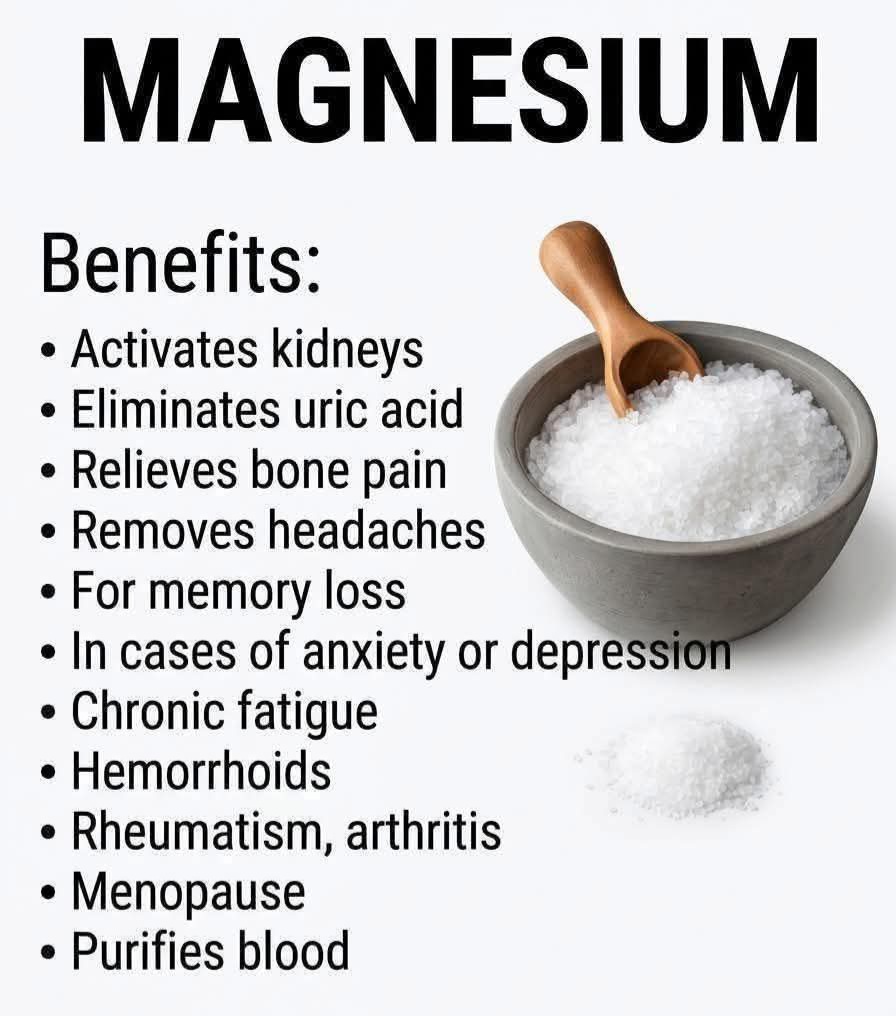
magnesium “eliminates uric acid,” “purifies blood,” and more. We analyze 11 health claims with scientific evidence, recommended intake, and safety guidelines.
Let’s be honest: you’ve seen the posts. A list of bullet points claiming magnesium can “activate kidneys,” “eliminate uric acid,” “relieve bone pain,” “remove headaches,” “help memory loss,” “treat anxiety,” “cure chronic fatigue,” “fix hemorrhoids,” “stop rheumatism,” “ease menopause,” and “purify blood.” The image promises that a simple mineral can solve a dozen different health problems.
It sounds almost too good to be true – and that’s because, in many cases, it is.
Here’s the reality: magnesium is an essential mineral that plays a vital role in over 300 enzymatic reactions in the human body, including energy production, muscle function, nerve transmission, and blood pressure regulation. Low magnesium levels are genuinely linked to a range of health issues, from migraines to mood disorders. However, the idea that magnesium alone can “cure” or “eliminate” these conditions is a dangerous oversimplification.
In this guide, I’ll take each claim from the viral image, examine what the scientific evidence actually says, and separate the legitimate benefits from the hype. You’ll learn what magnesium can realistically do, how much you need, and – most importantly – when you need to see a doctor instead of relying on a supplement.
First: What Does Magnesium Actually Do in Your Body?
Before we break down the claims, let’s understand the basics. Magnesium is the fourth most abundant mineral in the human body. It’s essential for:
· Energy production – helps convert food into cellular energy (ATP)
· Nerve and muscle function – regulates nerve impulses and muscle contractions
· Blood pressure and blood sugar regulation – helps maintain healthy levels
· Bone health – about 60% of the body’s magnesium is stored in bones
· DNA and protein synthesis – critical for cell replication and repair
A magnesium deficiency – which affects up to half of some populations – can contribute to hypertension, type 2 diabetes, osteoporosis, migraines, depression, and chronic inflammation.
Now, let’s examine each claim from the image.
Claim 1: “Activates Kidneys”
Verdict: ⚠️ Partially True (Indirectly, Not Directly)
Magnesium does not “activate” kidneys like a switch. However, magnesium is crucial for kidney function. The kidneys help regulate magnesium levels in the body by excreting excess or retaining it when levels are low. Severe magnesium deficiency can impair kidney function.
More importantly, research shows that magnesium depletion is linked to kidney stone formation, especially in patients with gout. One study found that higher magnesium depletion scores were associated with a significantly increased risk of kidney stones.
The truth: Maintaining adequate magnesium levels supports normal kidney function, but magnesium does not “activate” kidneys beyond their natural capacity.
Claim 2: “Eliminates Uric Acid”
Verdict: ✅ Moderate Evidence – Reduces Risk, Not a Cure
This claim has the strongest scientific support of all the claims. Multiple studies have found a clear association between higher magnesium levels and lower uric acid – and therefore lower gout risk.
A 2025 multi‑study analysis found that higher serum magnesium levels causally reduced gout risk by about 37% (OR = 0.630). Higher dietary magnesium intake was also associated with lower gout risk.
Additionally, a study on gout patients found that magnesium depletion fully explained the effect of uric acid on kidney stone formation, suggesting that disrupted magnesium metabolism plays a key role in gout‑related injury.
The truth: Magnesium does not “eliminate” uric acid, but adequate levels are associated with significantly lower gout risk. It’s a supportive factor, not a cure.
Claim 3: “Relieves Bone Pain”
Verdict: ✅ Moderate Evidence – Through Arthritis Support
Magnesium is essential for bone health – about 60% of the body’s magnesium is stored in bones and teeth. Magnesium deficiency is linked to worse arthritis symptoms and accelerated joint disease progression.
In rheumatoid arthritis, magnesium supplementation has been shown to alleviate joint pain and improve physical function by modulating oxidative stress and cytokine production. In osteoarthritis, magnesium inhibits cartilage degradation and enhances joint function.
The truth: Magnesium can help relieve arthritis‑related bone and joint pain, but it will not cure arthritis or reverse existing joint damage.
Claim 4: “Removes Headaches”
Verdict: ✅ Strong Evidence – Especially for Migraines
This is one of the most well‑supported claims. Magnesium plays a central role in stabilizing nerve cells and regulating blood vessel tone in the brain. Low magnesium levels are linked to migraine attacks.
A 2025 meta‑analysis found that intravenous magnesium significantly improved acute migraine symptoms, including better headache response and reduced pain intensity. Oral magnesium was as effective as the prescription drug sodium valproate for migraine prevention.
The American Headache Society recommends magnesium oxide at 400–500 mg per day for migraine prevention.
The truth: Magnesium is an established complementary therapy for migraine prevention and acute treatment. It does not “remove” all headaches, but it is highly effective for migraine sufferers.
Claim 5: “For Memory Loss”
Verdict: ⚠️ Limited Evidence – Possible Protective Effect
This claim is more speculative. A 2024 systematic review found that higher dietary magnesium intake is associated with lower odds of mild cognitive impairment. One large cohort study found that the lowest serum magnesium levels were linked to a 24% higher dementia risk.
Additionally, a study found that people who consumed more magnesium had a larger hippocampus – a brain region critical for memory and learning – and brain volumes equivalent to being one year younger.
The truth: Magnesium may support brain health and reduce dementia risk, but it is not a treatment for established memory loss or Alzheimer’s disease.
Claim 6: “In Cases of Anxiety or Depression”
Verdict: ✅ Moderate Evidence – Supportive, Not Curative
Magnesium plays a key role in neurotransmission and regulation of the stress response (HPA axis). Observational studies consistently show that low magnesium intake is linked to more depressive and anxiety symptoms.
Some trials report small‑to‑moderate reductions in depressive scores with oral magnesium, particularly in people with low baseline intake. For anxiety, there is a possible anxiolytic effect, though evidence remains limited.
The truth: Magnesium may provide modest benefit as an adjunct for anxiety and depression, especially in people with deficiency. It is not a replacement for therapy or medication.
Claim 7: “Chronic Fatigue”
Verdict: ⚠️ Limited but Promising Evidence
One older randomized trial found that patients with chronic fatigue syndrome who received magnesium treatment reported improved energy levels, better emotional state, and less pain. However, other studies have found no significant difference in magnesium levels between CFS patients and healthy controls.
A 2025 review noted that while many supplements show potential for CFS, high‑quality research is lacking. Magnesium is among the most promising, but not proven.
The truth: Magnesium may help some people with CFS, but the evidence is mixed. It should not be relied upon as a primary treatment.
Claim 8: “Hemorrhoids”
Verdict: ⚠️ Indirect Benefit – Through Constipation Relief
Hemorrhoids are often caused or worsened by straining during bowel movements. By alleviating constipation, magnesium – particularly magnesium citrate – may reduce the strain that leads to hemorrhoid flare‑ups.
Magnesium also promotes blood flow and muscle relaxation, which may ease rectal pressure and support healing.
The truth: Magnesium does not treat hemorrhoids directly, but it can help by preventing constipation. It is a supportive tool, not a cure.
Claim 9: “Rheumatism, Arthritis”
Verdict: ✅ Moderate Evidence – Anti‑Inflammatory Effects
Magnesium has documented anti‑inflammatory properties. A 2025 meta‑analysis found that magnesium supplementation significantly reduced C‑reactive protein (CRP) levels – a key marker of inflammation. In rheumatoid arthritis, magnesium alleviates joint pain and improves physical function by modulating cytokine production.
The truth: Magnesium can help reduce arthritis‑related inflammation and pain, but it is not a cure for rheumatism or autoimmune arthritis.
Claim 10: “Menopause”
Verdict: ⚠️ Limited Evidence – May Help Some Symptoms
Magnesium may help reduce hot flashes, sleep disturbances, and mood changes associated with menopause. It influences several key hormones, including estrogen, progesterone, and stress hormones like cortisol.
However, evidence specifically for hot flashes is limited. One source notes that there’s no concrete evidence backing magnesium for hot flashes specifically.
The truth: Magnesium may offer modest relief for some menopausal symptoms, but more research is needed.
Claim 11: “Purifies Blood”
Verdict: ❌ Misleading – Not a “Detox” Mineral
This is the most exaggerated claim. Your body already “purifies” blood through your liver and kidneys – no supplement is required.
However, magnesium does play a role in supporting these natural processes. Magnesium is a cofactor for glutathione production – the body’s master antioxidant – which helps neutralize toxins and facilitates excretion of heavy metals. It also competes with lead and cadmium for absorption, binding them for urinary excretion.
The truth: Magnesium supports your body’s natural detoxification systems, but it does not directly “purify blood.” No supplement can replace your liver and kidneys.
How Much Magnesium Do You Actually Need?
The National Institutes of Health (NIH) recommends:
Life Stage Recommended Daily Amount
Adult men 400–420 mg
Adult women 310–320 mg
Pregnant women 350–360 mg
Most people can meet these needs through diet alone.
Best Food Sources of Magnesium
You don’t necessarily need supplements. Magnesium is found naturally in:
· Leafy greens – spinach, kale, Swiss chard
· Nuts and seeds – almonds, cashews, pumpkin seeds
· Legumes – black beans, chickpeas, edamame
· Whole grains – brown rice, quinoa, oats
· Avocados and bananas
Choosing a Magnesium Supplement – Which Form Is Best?
Not all magnesium supplements are the same. Here’s a quick guide based on your goal:
Goal Best Form
General deficiency Magnesium citrate, glycinate, gluconate
Constipation Magnesium citrate, oxide
Anxiety, insomnia, stress Magnesium glycinate, taurate
Migraine prevention Magnesium oxide (400–500 mg/day)
Muscle pain, fatigue Magnesium malate
Cognitive health Magnesium L‑threonate
Heart health Magnesium taurate
Magnesium glycinate is often the best choice for long‑term use – it’s highly absorbable, gentle on the stomach, and has calming effects. Magnesium oxide is poorly absorbed and best used only for migraine prevention or as a laxative.
Safety, Side Effects, and Who Should Be Cautious
Magnesium supplements are generally safe for most people. However:
· Digestive side effects – diarrhea and cramping are common, especially with magnesium citrate. Reduce the dose if this occurs.
· Kidney disease – people with advanced kidney disease should not take magnesium supplements without medical supervision.
· Medication interactions – magnesium can interact with certain antibiotics, diuretics, and medications for osteoporosis.
· Upper limit – The safe upper limit for supplemental magnesium is 350 mg per day for adults. Extremely high doses (5,000 mg+) can be toxic.
Always consult a healthcare provider before starting any new supplement, especially if you have underlying health conditions or take regular medications.
The Bottom Line – Magnesium Is a Supportive Tool, Not a Miracle Cure
The viral image promises that magnesium can “eliminate,” “remove,” “treat,” and “purify” a dozen different health problems. Here’s the honest summary:
Claim Verdict
Activates kidneys ⚠️ Indirectly – supports normal function
Eliminates uric acid ✅ Moderate evidence – reduces gout risk
Relieves bone pain ✅ Moderate evidence – arthritis support
Removes headaches ✅ Strong evidence – migraine prevention
For memory loss ⚠️ Limited evidence – possible protection
Anxiety/depression ✅ Moderate evidence – modest adjunct benefit
Chronic fatigue ⚠️ Limited, mixed evidence
Hemorrhoids ⚠️ Indirect – through constipation relief
Rheumatism, arthritis ✅ Moderate evidence – anti‑inflammatory
Menopause ⚠️ Limited evidence – may help some symptoms
Purifies blood ❌ Misleading – supports natural detox, not a “purifier”
Magnesium is an essential mineral that most people don’t get enough of. It offers real, evidence‑backed benefits – particularly for migraine prevention, gout risk reduction, and anxiety/depression support. But it is not a cure‑all, and it should never replace prescribed medical treatment.
Your health is too important to trust to viral lists. If you have a serious condition – gout, chronic migraines, arthritis, or depression – see a doctor. Use magnesium as a supportive tool, not as a replacement for real medicine.
Now it’s your turn! Have you tried magnesium supplements? What benefits did you notice – or not? Drop a comment below – I’d love to hear your experience.
And if you found this guide helpful, share it with a friend who’s been tempted by viral “miracle mineral” posts. Pin it for later, and subscribe to our newsletter for more evidence‑based, no‑hype health information.
Stay balanced, stay informed, and trust science – not social media. 🔬✨
More Recipes You Might Like
-

The Ultimate Creamy Jalapeño Popper Dip – Easy Party Appetizer
If you’re looking for an appetizer that disappears within minutes at every single party, this Creamy Jalapeño Popper Dip is about to become your new secret weapon. Just look at that photo—a rich, creamy base loaded with spicy jalapeños, sharp cheddar, and savory green onions, all topped with a sprinkle of red pepper flakes. It’s…
-

Better Than Sex Cake – Rich, Gooey, and Absolutely Irresistible
If you’re looking for a dessert that lives up to its legendary name, this Better Than Sex Cake is about to become your new obsession. Just look at that photo—a moist chocolate cake soaked in sweetened condensed milk and caramel, topped with a creamy whipped layer, crunchy toffee bits, and a decadent chocolate drizzle. It’s…
-

Salted Caramel Chocolate Chip Pretzel Bars – The Ultimate Sweet & Salty Dessert
If you’re looking for a dessert that hits every single flavor note—sweet, salty, buttery, gooey, and chocolatey—these Salted Caramel Chocolate Chip Pretzel Bars are about to become your new obsession. Just look at that photo: a crunchy, golden pretzel base, a thick layer of rich, glossy caramel, and a generous scattering of semi-sweet chocolate chips,…